
When the precious bond you share with your grandchild is at risk, the future can feel uncertain and overwhelming. Understanding your rights as a grandparent in Texas is the first step toward protecting that cherished connection. While Texas law gives grandparents a path to seek court-ordered visitation, these rights are not automatic. The law strongly favors a parent's right to decide who their child sees, meaning grandparents face a challenging legal journey. You must prove that visitation is in the child's best interest and that denying it would cause the child significant harm.
Your Guide to Grandparent Visitation in Texas

The bond between a grandparent and a grandchild is one of life's most precious gifts. When family disputes threaten that connection, the pain can feel overwhelming. If you're a grandparent worried about losing contact with a grandchild you love dearly, please know you are not alone. Many have felt the profound ache of being kept from their grandchildren and have desperately sought clear answers. This guide is for you, offering clarity and practical guidance during a difficult time.
Understanding the Legal Landscape
While Texas law heavily prioritizes a parent’s right to raise their child as they see fit, it carves out specific legal pathways for grandparents to seek court-ordered time. This right is found in the Texas Family Code, Chapter 153, which handles all suits affecting the parent-child relationship, including custody and visitation matters.
But getting a court to intervene requires much more than simply showing how much you love your grandchild. The law starts with a powerful presumption: a fit parent makes decisions that are best for their child, including who gets to be in that child’s life. This concept is often referred to as a parent’s right to make decisions concerning their child’s upbringing, free from government interference.
To have any chance of success, you must overcome this presumption by proving two critical things to a judge:
- Denial of access would significantly impair the child's physical health or emotional well-being.
- Granting you visitation is in the best interest of the child—the single most important principle in every Texas custody and visitation case.
Think of it this way: the court isn't there to decide if seeing you would be a nice thing for your grandchild. It must be convinced that not seeing you would be actively harmful to them.
What to Expect From This Guide
Throughout this guide, we'll walk you through the high legal standard you have to meet, the kinds of evidence that matter to a court, and the practical steps involved in filing a case. We'll break down complex legal ideas like "significant impairment" and the "best interest of the child" standard into plain English. Our goal is to empower you with the knowledge you need to protect your cherished family connection. The path can be difficult, but understanding the rules is the first and most essential step toward a positive outcome.
The High Bar for Grandparent Visitation Rights in Texas

Winning grandparent visitation rights in Texas isn’t as simple as telling a judge how much you love your grandchild. The law sets an incredibly high bar, designed to protect a parent’s fundamental right to raise their child as they see fit. To have a chance of success, you must pass a crucial two-part legal test that goes far beyond your good intentions.
Texas courts start with a powerful legal assumption: fit parents act in the best interest of their children. This means a judge automatically gives "special weight" to a parent's decision to deny visitation. To overcome this, the entire burden of proof falls squarely on your shoulders.
Proving "Significant Impairment"
The first and most challenging hurdle is proving that denying you access to your grandchild would significantly impair the child's physical health or emotional well-being. This is the make-or-break phrase in nearly every grandparent visitation case.
It’s not enough to show that your grandchild would be happier, more loved, or have a better life with you in it. You must provide clear, convincing evidence that they will be actively and genuinely harmed by your absence.
This tough standard is laid out in the Texas Family Code Sections 153.432 to 153.434, which create the legal framework for these cases. The law demands that you prove 'significant impairment,' which is a world away from just showing that visitation would be a nice thing for the child.
What Does "Significant Impairment" Actually Look Like?
This is where most cases stumble. "Significant impairment" isn't about your feelings or opinions; it requires concrete evidence that a judge can see and measure. You must draw a direct line from your absence to a real, negative impact on the child.
So, what kind of evidence actually works?
- You were the primary caregiver. Did you live with the child and function as a parent for a long time? If you were the one handling doctor's appointments, homework, and daily routines, your sudden removal could be proven harmful.
- Expert testimony. A child psychologist who has evaluated your grandchild could testify that severing your bond would cause them measurable emotional distress, anxiety, or other psychological damage.
- Observable negative changes. Can a teacher, school counselor, or coach testify that the child’s grades, behavior, or emotional state took a nosedive right after you were cut out of their life?
Simply being the "fun grandparent" who brings presents on holidays is almost never enough to meet this demanding legal standard. In some extreme situations, proving significant impairment might overlap with showing that a parent is unfit. While these are separate legal arguments, understanding how to prove a parent is unfit can give you an idea of the kind of serious evidence courts look for.
Navigating the difference between what feels harmful and what the law considers harmful is critical. Many grandparents believe that showing how much they'll enrich a child's life is enough, but Texas law requires much more. The table below breaks down the kind of evidence that meets the high bar versus what typically falls short.
Proving Harm vs. Showing Benefit in Grandparent Visitation Cases
| Evidence That May Prove 'Significant Impairment' | Evidence That Only Shows 'Benefit' (Legally Insufficient) |
|---|---|
| Testimony from a therapist that the child is suffering from anxiety or depression directly due to the grandparent's absence. | Statements that the child seems sad or misses the grandparent. |
| School records showing a sharp decline in grades or behavior that started immediately after visitation stopped. | The grandparent's testimony that they can provide enriching experiences like museum trips or vacations. |
| Evidence that the grandparent was the child's primary caregiver for an extended period, providing daily stability, meals, and care. | The grandparent's belief that they can offer a more stable or loving environment than the parent. |
| A doctor's report linking the child’s physical health issues (like stress-induced stomachaches) to the emotional trauma of separation. | General claims that seeing the grandparent would make the child happier or more well-rounded. |
This distinction is key: your case must be built on preventing concrete harm to the child, not just on promoting a positive relationship. A judge's decision will hinge on the evidence in the left column, not the sentiments in the right.
The "Best Interest of the Child" Standard
Even if you manage to prove significant harm—and that’s a big "if"—you’re not done. You still have to clear the second hurdle: showing a judge that ordering visitation is in the best interest of the child. This principle is the North Star in every single Texas family law case involving kids. In simple terms, it means the court’s decision must prioritize the child’s emotional and physical well-being above all else.
While there’s no rigid checklist, courts look at a range of factors to figure out what "best interest" means for a specific child. For you, this involves proving that your involvement promotes stability and emotional well-being without undermining the parent’s authority.
Ultimately, your love for your grandchild is the starting point, but it won't win your case. A successful petition requires a solid legal strategy built with compelling evidence that proves your grandchild won't just benefit from you being there—they'll be genuinely harmed if you're not.
How Parental Rights Shape Your Case
To truly understand your rights as a grandparent, you must first appreciate the powerful legal shield that protects parents. In Texas, a parent’s right to raise their child without government interference is a bedrock principle of family law. This isn't just a local rule; it's a fundamental constitutional right, and it’s the lens through which a judge will view every part of your case.
This can be a tough pill to swallow, especially when you know in your heart that your presence is a positive force in your grandchild's life. But here’s the reality: a court’s first job isn't to weigh your wishes against the parent’s. Its primary duty is to protect that parent’s established legal rights. The judge walks into the courtroom with a built-in legal assumption: a fit parent knows what’s best for their child. That includes deciding who gets to spend time with them.
The Landmark Case That Defines the Law
The game-changer in this area of law was a U.S. Supreme Court decision called Troxel v. Granville. This 2000 case sent ripples across the country, dramatically reshaping the legal landscape for grandparent rights in Texas and beyond. The Supreme Court essentially said that a state law letting courts grant visitation to anyone over a fit parent's objection was unconstitutional because it trampled on a parent's fundamental rights.
You can read more about how Troxel set the precedent that fit parents are presumed to act in their child's best interests.
This ruling created what’s known as the "special weight" standard. It means a judge has to give a fit parent’s decision serious deference. Your love for your grandchild, as deep as it is, simply isn't enough on its own to win a court order. You have to overcome this powerful legal presumption.
This very idea is stitched into the fabric of the Texas Family Code. It’s the reason you’re required to prove that denying you visitation would cause your grandchild significant impairment. It’s a deliberately high bar, designed to be difficult to meet precisely because your case challenges a parent’s authority.
When Parental Fitness Becomes an Issue
Now, the entire conversation shifts if a parent's fitness can be seriously questioned. While the court starts by assuming a parent is fit, that assumption isn't bulletproof. It can be challenged, but it takes strong, compelling evidence. Proving a parent is unfit is its own legal battle, but it can open the door for a grandparent seeking visitation or even custody.
What does "unfit" actually look like to a Texas judge? We're not talking about disagreements over screen time, organic snacks, or bedtime. The court is looking for serious situations that create a dangerous or deeply unstable environment for a child.
Here are the kinds of issues that might legally point to parental unfitness:
- Documented Substance Abuse: Hard proof of an ongoing, untreated drug or alcohol addiction that puts the child in danger.
- A History of Neglect: Evidence showing the parent has failed to provide basic needs like food, shelter, medical care, or proper supervision.
- Family Violence or Abuse: A documented history of physical, emotional, or sexual abuse toward the child or others in the home.
- Incarceration: The parent is in jail or prison for a significant amount of time.
- Extreme Instability: A pattern of behavior that consistently puts the child in harm's way, like exposing them to ongoing criminal activity.
If these serious issues aren't part of the picture, your path to securing visitation gets much, much steeper. The court will almost certainly side with the fit parent’s wishes. This is why your case must be built on solid evidence of harm to the child, not just on the undeniable benefits of your loving relationship. Having this clear-eyed perspective from the start is crucial for setting realistic expectations and building a smart legal strategy.
Steps to File for Grandparent Visitation
Stepping into the court system can feel intimidating. But if you truly believe your grandchild is being harmed by your absence, having a clear roadmap can give you a sense of purpose and control. Let's break down the practical steps you’ll need to take to seek grandparent visitation rights in Texas.
This flowchart boils down the single most important question a Texas court will ask, and it all comes down to the parent's fitness.
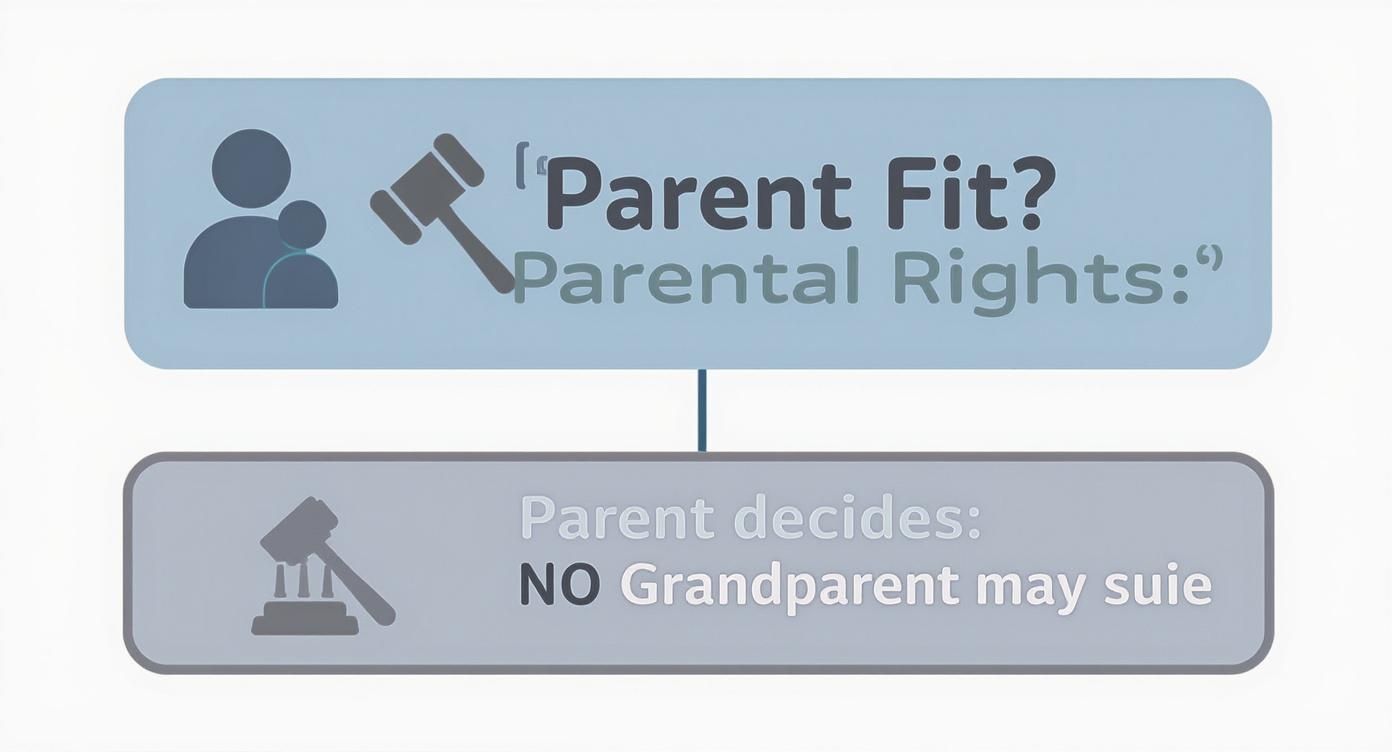
As you can see, the law gives a tremendous amount of weight to a fit parent's decisions. Their "no" is the final word unless you can prove otherwise in a courtroom.
Getting the Case Started
To get the court's attention, you must file a formal lawsuit. The specific document you’ll file is called an Original Petition in a Suit Affecting the Parent-Child Relationship (SAPCR). This is the standard legal filing for any case involving a child in Texas, whether it’s for custody, visitation, or child support.
Your petition officially names the child’s parents as the "respondents" and lays out two critical things: why you have the legal standing (the right) to sue, and why giving you visitation is truly in your grandchild’s best interest. This document puts everyone on notice that you're seeking a legally enforceable court order.
If this all sounds new to you, our detailed guide on how to file for custody in Texas provides more context on these initial steps.
Building Your Case with Strong Evidence
Once the lawsuit is filed, the real work begins. Your success hinges entirely on the quality of the evidence you can present. Because you have to prove your grandchild will suffer significant harm without you, your own words are rarely enough. You need objective, credible proof. The legal term for this evidence-gathering phase is discovery, where both sides are required to exchange information.
Your mission is to find evidence that directly connects your absence to your grandchild's well-being. Think about things like:
- Witnesses: Who has seen the change in your grandchild? Teachers, school counselors, doctors, or therapists can provide powerful, unbiased testimony about negative emotional or behavioral shifts that happened after your contact was cut off.
- Documentation: Look for report cards showing a sudden drop in grades. Gather emails or text messages that show your close bond and the caregiving role you played. Collect photos and videos that document your consistent, loving presence in the child’s life.
- Expert Evaluations: In some cases, the court may appoint a child psychologist to evaluate the family dynamics. Their professional opinion on the potential harm of denying you visitation can carry enormous weight with a judge.
What Happens Next: Mediation and Court Hearings
Going to trial isn't always the only path forward. In fact, Texas courts strongly encourage—and often require—everyone to try mediation before a final hearing. Mediation is a confidential meeting where a neutral, third-party mediator helps you and the parents try to find common ground. It’s a chance to reach a solution on your own terms, in a less hostile setting that can sometimes help preserve what’s left of the family relationship.
If you can't reach an agreement in mediation, your case will move on to court hearings. There might be a temporary orders hearing to set a short-term visitation plan while the case is pending. Eventually, it will lead to a final trial where a judge hears all the evidence and makes a final, binding decision. A grandparent visitation case can take anywhere from a few months to more than a year, depending on the complexity and level of conflict.
When to Seek Custody Instead of Visitation
Sometimes, just asking for visitation doesn't feel like enough. When a grandchild's home situation is not just unstable but genuinely concerning, your focus can shift from securing a few hours a month to providing a safe, stable home full-time. This is a monumental step. It means moving beyond a request for visitation and into the complex world of seeking custody.
In Texas, what most people call "custody" is legally known as managing conservatorship. This gives you the legal right to make major decisions about a child's life, such as their education and medical care, and determines where the child will live. If you share this responsibility with a parent, it is called joint managing conservatorship. Pursuing conservatorship is a world away from a visitation request and involves a much higher, more urgent legal standard.
When Custody Becomes a Necessity
To ask a court to remove a child from a parent and place them in your care, you have to prove that the child’s current living situation presents a "serious, immediate question concerning the child's physical health or welfare." This is an emergency-level standard. It’s not enough to show that your home is simply "better" or more stable. You must show that the child is in an environment that is actively and imminently dangerous to their well-being.
The legal bar for a grandparent to gain managing conservatorship is designed to be extraordinarily high. It directly challenges a parent's constitutional right to raise their child, an action the court will never take lightly. Success requires clear and convincing evidence of immediate danger.
Scenarios That May Justify Seeking Custody
So, what kind of situations might meet this demanding threshold? While every case is unique, Texas courts are looking for concrete evidence of severe problems that put a child's safety on the line.
These scenarios often include things like:
- Documented Abuse or Neglect: This could be physical, emotional, or sexual abuse that has been reported to Child Protective Services (CPS) or law enforcement. It can also include severe neglect, like a parent failing to provide adequate food, shelter, or medical care.
- Parental Abandonment: A parent has left the child in your care for an extended period with no contact and has shown no real intent to resume their parental duties.
- Severe Substance Abuse: The parent's drug or alcohol addiction is so out of control that it directly endangers the child—for example, by leaving them unsupervised or exposing them to illegal activities.
- Incarceration or Incapacitation: The parent is in jail for a significant period or is mentally or physically unable to care for the child safely.
Pursuing this path requires a robust legal strategy. You can learn more about the complexities involved by reviewing our guide on how to get full custody in Texas, which explains the process in much greater detail.
Deciding whether to pursue visitation or full-blown conservatorship (custody) is one of the most critical choices a grandparent can make. It's helpful to see the two legal paths side-by-side to understand the fundamental differences in what you're asking the court to do.
Grandparent Visitation vs. Grandparent Custody (Conservatorship)
| Legal Action | Required Proof | Typical Scenario | Outcome if Successful |
|---|---|---|---|
| Grandparent Visitation | Parent has denied access, and the child's physical or emotional well-being would be significantly impaired without the grandparent. | A parent is preventing you from seeing your grandchild, and you have a strong, established relationship that is being unfairly severed, causing harm to the child. | A court-ordered possession schedule for you to have time with your grandchild, such as one weekend a month or during holidays. |
| Grandparent Custody | The child’s current home presents a serious, immediate question concerning their physical health or welfare. | The child is in an environment with documented abuse, neglect, severe parental substance abuse, or abandonment. | You are named the managing conservator, giving you the legal right to make major decisions about the child's life and have them live with you. |
Understanding whether your situation calls for a visitation petition or a more drastic suit for conservatorship is crucial. One seeks to supplement the parent-child relationship, while the other seeks to replace it entirely for the child’s protection. Knowing which legal path aligns with your grandchild's needs is the very first step toward safeguarding their future.
Key Takeaways and Next Steps
Navigating grandparent visitation rights in Texas takes more than just love. It demands a smart strategy, solid evidence, and a real understanding of how the law works. The deep connection you have with your grandchild is what’s fueling this fight, but winning in court comes down to taking the right legal steps.
The road ahead can feel overwhelming, especially when you’re up against the incredibly high legal standards Texas courts set. It’s completely natural to feel hurt or frustrated. The key is to channel those emotions into a focused, well-planned approach, because the law puts the entire burden of proof squarely on your shoulders.
Key Takeaways to Remember
Before you make your next move, it’s critical to keep these core legal realities in mind—they will shape your case:
- Parental Rights Come First: Texas law starts with a powerful assumption: fit parents know what's best for their own kids. A judge will always give a parent's decision "special weight."
- The "Significant Harm" Standard Is a Tough Hurdle: You have to prove, with clear and convincing evidence, that keeping you away from your grandchild would actually harm their physical or emotional well-being. It’s a very high bar to clear.
- Evidence is Everything: Your word alone isn't enough. A successful case is built on objective proof like school records, therapist reports, and testimony from neutral people like teachers or counselors who can back up your claims.
Your love for your grandchild is the reason you're fighting, but it's the strength of your evidence that will decide the outcome. The court needs to see a direct link between your absence and a real, negative impact on the child.
Your Next Steps
Taking control of the situation is the first step toward feeling empowered. Start by honestly measuring your case against these strict legal requirements. Next, pull together every piece of documentation you have that shows your consistent, positive, and caregiving role in your grandchild's life.
Most importantly, you don’t have to walk this path by yourself. An experienced family law attorney can bring the clarity and direction you need to protect that precious bond.
If you need help with a child custody or visitation case in Texas, our experienced attorneys can guide you every step of the way. Contact The Law Office of Bryan Fagan, PLLC today for a free consultation.
Your Top Questions About Grandparent Rights, Answered
When you’re worried about seeing your grandchild, a million questions can run through your mind. It’s natural. The stakes are incredibly high, and the law can feel confusing. Let’s cut through the noise and get straight to the most common concerns we hear from grandparents every day.
Can a Parent Really Just Stop Me From Seeing My Grandchild?
Yes, they can. This is often the most painful reality for grandparents to hear, but it’s the absolute starting point for Texas law. The courts operate on a powerful legal presumption: a fit parent knows what’s best for their child and has the constitutional right to make decisions for them. That includes deciding who gets to be in their child’s life.
A parent’s choice to cut off access isn’t just a personal preference; it carries immense legal weight. To challenge it, you can’t just tell a judge you disagree. You have to file a lawsuit and prove that the parent's decision will cause significant impairment to your grandchild’s physical health or emotional well-being. It’s a very high bar to clear.
What Kind of Evidence Actually Works in Court?
Your own stories about your bond with your grandchild are important, but a judge will be far more convinced by objective proof from neutral third parties. Think of it this way: your testimony provides the heart, but outside evidence provides the backbone of your case.
Strong evidence usually looks like this:
- Testimony from Professionals: A teacher, school counselor, or therapist who can tell the court about a clear, negative shift in the child's behavior or mood right after your visits were cut off.
- Proof of Your Caregiving Role: Were you basically a co-parent? Gather documents that show it—school pick-up lists with your name, medical records listing you as an emergency contact, or emails with the parents about day-to-day care.
- A Factual Timeline of Decline: School report cards showing a sudden drop in grades or a doctor’s note documenting new anxiety symptoms can paint a powerful picture for the judge.
The goal is to connect the dots for the judge, showing a clear cause-and-effect relationship: my absence directly harmed my grandchild's well-being.
Does it Help My Case if My Own Child Has Passed Away?
It can, yes. This tragic situation is one of the specific circumstances where the law gives you a direct path to the courthouse. Texas Family Code Section 153.433 explicitly grants you legal standing to file a suit if your child—the grandchild's parent—has died. The same standing applies if your child is incarcerated for at least three months, has been declared legally incompetent, or has no court-ordered access to the child.
But here’s the crucial part: getting your foot in the courthouse door doesn't win the race. You still have the very heavy burden of proving that losing you would significantly impair your grandchild’s physical or emotional health. A judge might be more sympathetic to your situation, but the tough legal standard you have to meet doesn't change.
If you need help with a child custody or visitation case in Texas, our experienced attorneys can guide you every step of the way. Contact The Law Office of Bryan Fagan, PLLC today for a free consultation.