Skip to content
When your child’s future is on the line, stepping into mediation can feel overwhelming. But the key to walking in with confidence isn't some secret legal trick. It’s simple: gather your key documents, get crystal clear on your goals, and work with a sharp attorney to map out a strategy. This is how you turn anxiety into action and set yourself up for a solid outcome, ensuring your child's best interests are protected every step of the way.
Your Guide to Texas Family Law Mediation
When parents can’t see eye-to-eye on custody, visitation, or child support, Texas courts almost always require them to try mediation before a judge will hear the case. This isn't a courtroom showdown. Think of it as a structured, confidential conversation designed to help you and the other parent find a path forward for your children.
It’s less about winning a fight and more about seizing a powerful opportunity to build custom-fit solutions for your family—solutions you get to control, not a judge.
A neutral, third-party mediator steers the ship. Their job isn’t to pick sides or tell you what to do. Instead, they’re there to keep the conversation productive, help you both communicate effectively, and explore compromises you might not have seen on your own.

Focusing on the Best Interests of the Child
In Texas, every discussion about where your children will live and how often they see each parent comes back to one guiding principle: the “best interests of the child.”
This isn't just a legal catchphrase; it's the bedrock of the entire system, spelled out in Texas Family Code Chapter 153. This standard forces everyone in the room—parents, lawyers, and the mediator—to look at critical factors like:
- The child's emotional, physical, and developmental needs, now and in the future.
- Each parent’s ability to provide a safe, stable, and loving home.
- The importance of the child having a healthy relationship with both parents.
- Any history of family violence or substance abuse that could endanger the child.
This legal framework shifts the focus from what the parents want to what the child needs. It’s the foundation for creating a realistic possession schedule (the Texas legal term for a visitation calendar) and deciding whether a joint managing conservatorship, where both parents share rights and duties, makes the most sense. A joint managing conservatorship is the preferred arrangement in Texas, as it allows both parents to remain deeply involved in their child's life.
Mediation gives you the power to craft an agreement that truly reflects your family’s unique needs. Unlike a one-size-fits-all court order, a mediated settlement is something you and the other parent build together. These agreements have a much higher success rate because they lead to better co-parenting and long-term stability for the kids.
Preparing for mediation is about more than just winning arguments. It's about being ready to advocate thoughtfully for your child’s future. When you understand the process and know your goals, you can walk into that room with the confidence to negotiate a positive resolution—saving time, money, and emotional heartache.
Why Your Preparation Is the Key to a Successful Mediation
When you’re facing a custody dispute, it’s easy to feel like you’ve lost control. The legal process can be intimidating, and the thought of a judge making decisions about your family’s future can be terrifying.
Mediation is your chance to take back control. Its success doesn’t come from a magic legal formula—it comes down to you.
Your preparation is the single biggest factor you can influence. This isn't just about gathering paperwork; it’s about shifting your mindset from a courtroom battle to a conference room solution. When you walk in having thought through your goals, your bottom line, and most importantly, your child's needs, mediation becomes a powerful tool for shaping a secure future.
Adopting a Mindset for Success
Before you touch a single document, the most important work is mental. A successful mediation is built on a foundation of realistic expectations and a genuine willingness to find common ground for the sake of your children.
Let’s be honest: you probably won't get 100% of what you want. The goal here isn’t to “win.” The real win is creating a stable, predictable, and loving environment for your kids.
You can set the stage for a positive outcome by grounding yourself in a few core principles:
- Be Willing to Negotiate: Walk into that room with an open mind. Be ready to truly hear the other parent's perspective and explore solutions you haven’t considered.
- Have Realistic Expectations: Know that compromise is necessary. A perfect outcome is rare, but a workable, fair agreement that puts your child first is absolutely within reach.
- Keep Your Kids Front and Center: Anchor every decision to your children's well-being. This focus is your best tool for pulling conversations out of past hurts and toward future stability.
I've seen countless parents treat mediation like another battleground. But the best outcomes happen when they treat it like a construction site. You’re there to build a new foundation for your co-parenting relationship, brick by brick, with your children's future as the blueprint.
Coming in prepared and ready to negotiate in good faith sends a powerful message: you’re serious about finding a solution. This approach doesn't just make the mediator's job easier; it often encourages the other parent to be more cooperative, which skyrockets the odds of walking out with a signed agreement.
Why Mediation Works When You’re Prepared
It’s completely normal to be skeptical, especially if communication with your co-parent has broken down. But the data doesn’t lie: mediation is an incredibly effective way to resolve family law disputes.
Time and again, mediation shows remarkably high success rates when parents show up prepared and willing to participate.
Research shows that experienced mediators can achieve settlement rates north of 94 percent. More broadly, the process consistently lands in the 70-80% success range. For Texas families, these aren’t just abstract numbers—they’re proof that the effort you put into preparing is a smart investment in your family's future.
You can see a full analysis of what makes mediations successful by reviewing the mediation success rate data here. The takeaway is clear: when you come to the table ready to negotiate, the process works.
Success in mediation isn't about who has the sharpest lawyer or the biggest stack of evidence. It's about being the most prepared, reasonable, and child-focused parent in the room. By taking this process seriously, you empower yourself to secure a stable and positive future for your children.
Gathering Your Essential Documents and Information
Confidence in mediation isn’t just about having the right mindset; it’s built on a foundation of solid, organized preparation. When you can back up your proposals with clear evidence, your position becomes stronger, more credible, and harder to dispute. The task of gathering paperwork can feel huge, but breaking it down into manageable categories transforms it from a source of stress into a strategic advantage.
Think of it this way: you’re building a clear, factual story of your family's life. Each document helps the mediator and the other parent understand the realities of your children's needs and your financial situation. Getting everything in order ahead of time is key, and it might be helpful to build an effective document management workflow to keep things straight.
This mindset is what sets the stage for a productive mediation. You have to be ready to negotiate, stay realistic about what's possible, and find some common ground.
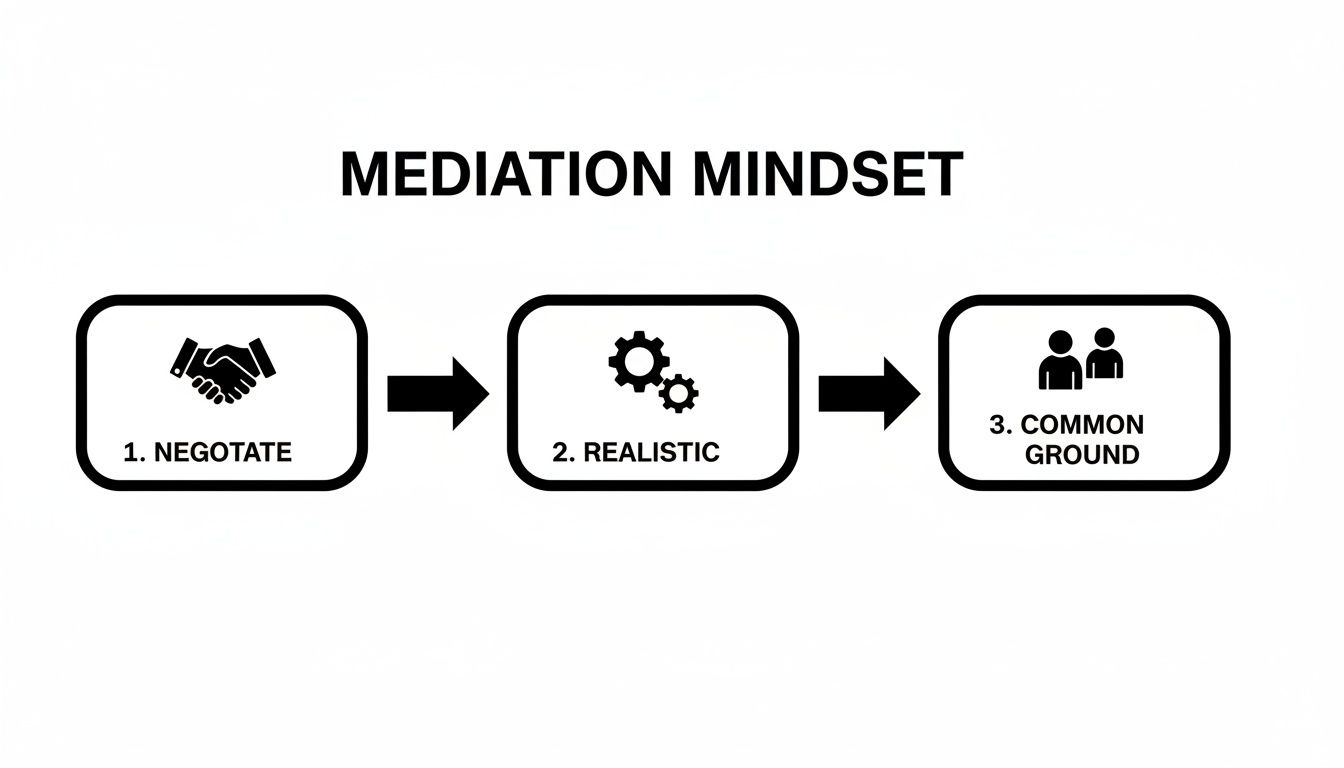
These elements work together to create an environment where agreements can be reached, all supported by the organized documents you bring to the table.
Your Texas Mediation Preparation Checklist
Use this checklist to gather the essential documents and information needed for your mediation session. Being organized isn't just about looking good; it's a key part of your negotiation strategy.
| Document Category | Specific Examples | Why It Matters in Mediation |
|---|---|---|
| Financial Records | • Recent pay stubs (3-6 months) • Tax returns (last 2-3 years) • Health/dental insurance costs for the kids • Business records (if self-employed) | Essential for calculating child support according to Texas guidelines. Clear numbers prevent disputes and speed up the process. |
| Children's Information | • School report cards & attendance • Medical/dental records & list of doctors • Extracurricular activity schedules | Grounds your proposed possession schedule (visitation) in reality. Shows what the child’s life actually looks like day-to-day. |
| Parental Involvement | • Photos/videos at school events • Emails/texts with teachers or coaches • Personal calendars showing time with kids | Demonstrates your consistent, active role in your child's life, supporting arguments for joint managing conservatorship. |
Walking in with this level of preparation doesn’t just make you look good; it makes reaching a fair settlement far more likely.
Financial Records for Child Support Calculations
A significant part of any custody case involves finances. In Texas, child support is largely determined by a formula based on the non-primary parent's net monthly resources. To get this calculation right, you need precise financial information. Ambiguity here only leads to arguments and drags things out.
While your attorney will guide you, get a head start by gathering these key items:
- Recent Pay Stubs: Collect at least three to six months of pay stubs. This shows a consistent income history, not just a snapshot.
- Tax Returns: Your last two to three years of federal tax returns (including W-2s and 1099s) provide a comprehensive picture of earnings.
- Health Insurance Costs: Find the document showing the exact monthly cost to cover the children's health, dental, and vision insurance. This is a key factor in the support order.
- Business Records: If you or the other parent are self-employed, this is crucial. Bring profit and loss statements, business bank statements, and any other relevant financial documents.
Having these documents organized and ready means you can run accurate child support numbers right there in mediation, clearing a major hurdle in most agreements.
Documents About the Children's Lives
The entire Texas Family Code is built around the "best interests of the child" standard. To meet that standard, you have to focus on their specific needs and routines. Your goal is to paint a clear, undeniable picture of what your child's day-to-day life looks like and what they truly need to thrive.
This kind of evidence helps ground your proposed possession schedule (the Texas term for a visitation calendar) in reality, not just wishful thinking.
I've seen it happen time and again. When a parent presents a detailed calendar of the child’s activities and a folder of recent report cards, it immediately shifts the conversation from "what I want" to "what the child needs." It shows you’re not just fighting for time; you’re advocating for your child's stability and success.
Consider gathering the following to tell that story:
- School Records: Report cards, attendance records, and any important communications with teachers or counselors.
- Medical and Dental Records: A list of doctors, dentists, therapists, and documentation of any special health needs or ongoing treatments.
- Extracurricular Schedules: Calendars showing sports practices, music lessons, tutoring, and other regular activities. This is vital for proving a proposed possession schedule is actually workable.
Evidence of Your Parental Involvement
Finally, you need to be able to show your active role in your child's life. This is especially important when you’re arguing that a joint managing conservatorship—where both parents share rights and responsibilities—is in the child’s best interest.
This isn’t about trying to prove you’re a "better" parent. It’s about demonstrating your consistent, positive, and hands-on involvement. Think about what a judge would want to see.
- Photos and Videos: Simple pictures of you at school events, holidays, and just doing everyday things can be surprisingly powerful.
- Communication Records: A few key emails or texts with teachers, coaches, or even the other parent (if they are civil) about the children can show your engagement.
- Personal Calendars: Your own calendar can be a great tool to track the time you spend with your children, noting doctor's appointments you attended or school projects you helped with.
Building Your Negotiation Strategy with Your Attorney
Walking into mediation without a clear plan is like trying to build a house without a blueprint. You might end up with something, but it probably won't be the stable, secure future you envision for your children. This is where your attorney shifts from a legal guide to your strategic partner, helping you build a smart, effective negotiation strategy.
This process isn't about gearing up for a fight; it’s about preparing for a structured, high-stakes conversation. Your attorney's job is to help you move past the raw emotion of the moment and think clearly about what a successful outcome actually looks like for your family. This is your chance to take control of the process with purpose.

Defining Your Goals: Must-Haves vs. Wants
First things first: you and your attorney need to get clear on your goals. You'll work together to separate your absolute "must-haves" from the "wants"—the things you're willing to compromise on. This isn't just a wish list; it's the strategic framework for the entire negotiation.
For example, your list might look something like this:
- Must-Have: A joint managing conservatorship that keeps you deeply involved in your child's education and medical decisions.
- Want: The child's primary residence is with you during the school year.
- Must-Have: A rock-solid possession schedule guaranteeing you have the kids for specific holidays each year, like Thanksgiving in even years and Christmas in odd years.
- Want: The other parent handles all the driving for exchanges.
This exercise is incredibly empowering. It gives you a clear vision and tells your attorney exactly where to stand firm and where there’s room to give a little. To get the most out of these strategy sessions, you need to be on the same page. Knowing which questions to ask your family law attorney ahead of time ensures you’re both perfectly aligned on your objectives.
Mastering Communication and Anticipating Arguments
How you communicate in mediation matters just as much as what you're asking for. A good attorney will coach you on practical communication techniques to keep the conversation from derailing.
One of the most powerful tools here is active listening. It’s about more than just hearing the words the other parent is saying; it's about trying to understand the real concerns behind them.
Your attorney will also help you game out the other parent's likely arguments and prepare calm, logical responses. By thinking through their proposals and concerns ahead of time, you eliminate the element of surprise. This allows you to respond thoughtfully instead of reacting emotionally.
A game-changer in mediation is using "I" statements focused on the kids. Instead of, "You're always late," which is an accusation, try framing it differently: "I'm concerned about the kids' routine when they're late for school." This simple shift turns a fight into a shared problem that needs a solution.
Understanding Your Best Alternative
A critical part of any negotiation strategy is knowing your Best Alternative to a Negotiated Agreement (BATNA). In plain English, your BATNA is your plan B: If you and the other parent can't reach an agreement in mediation, what is the most likely outcome if a judge has to decide?
Your attorney will give you a realistic, no-fluff assessment of what a judge might order based on Texas law and the specific facts of your case. Understanding your BATNA is your safety net. It gives you the confidence to know when a settlement offer is a good deal and when you should be prepared to walk away and take your chances in court.
Ultimately, building this strategy with your attorney is about empowerment. It transforms you from someone just reacting to the process into a proactive advocate for your children, armed with clarity, purpose, and a solid plan.
What to Expect on Mediation Day
Knowing the roadmap for mediation day can take a huge weight off your shoulders and help you focus on what really matters—your children. While every session has its own unique rhythm, most follow a predictable structure designed to keep things moving forward constructively. Stepping into that room prepared for the process itself is one of the most powerful things you can do.
The Mediator’s Opening Statement
The day will kick off with everyone together in one room. The mediator will start by laying out the ground rules, explaining their role as a neutral third party. They’ll make it crystal clear: their job isn’t to make decisions for you, but to help you and the other parent have a productive conversation.
A huge piece of this is confidentiality. The mediator will stress that what’s said in mediation stays in mediation. This is legally protected and designed to encourage open, honest discussion without you having to worry that your words will be used against you in court if you don't reach a deal. Think of it as a safe space to explore solutions.
The Caucus Sessions and Shuttle Diplomacy
After that initial meeting, you and your attorney will almost certainly move to a private room, while the other parent and their attorney go to another. This is called a caucus, and it’s where the real work of mediation happens.
From there, the mediator will go back and forth between the rooms in a process often called "shuttle diplomacy." This approach is a game-changer for a few key reasons:
- It lowers the temperature. By keeping everyone in separate spaces, the mediator can filter out the raw emotion and accusatory language, focusing only on the substance of the offers and concerns.
- It allows for candid conversation. You can speak freely with your attorney and the mediator, brainstorming ideas and talking through your bottom-line needs without the other parent listening in.
- The mediator can reality-test your positions. In these private talks, a good mediator might gently challenge your expectations, helping you see potential weaknesses in your position or the risks you might face by taking your chances in court.
Your attorney is your advocate in the room, but the mediator is your guide through the process. They’ve seen hundreds of cases like yours and can offer creative solutions you may not have considered, like unique holiday schedules or specific co-parenting communication rules.
Remaining Calm and Constructive
Mediation is an emotional marathon. You’re discussing deeply personal issues, so it’s completely natural to feel frustrated, angry, or sad. The key is to manage those emotions so they don’t derail the progress you’re making.
This is where your attorney becomes your anchor. If a proposal from the other side feels insulting, take a deep breath. Instead of reacting with anger, work with your attorney to build a calm, logical counteroffer that brings the focus back to your children’s best interests. This is a business negotiation about your family's future, not a time to rehash old wounds.
You can find more practical guidance in our collection of child custody mediation tips to help you stay composed and effective.
The Mediated Settlement Agreement (MSA)
If you successfully reach an agreement on all your issues, the mediator will draft a Mediated Settlement Agreement (MSA). This is the single most important document you will sign in your entire case.
Under Texas law, a properly written and signed MSA is binding and irrevocable.
That means once you sign it, you can’t wake up the next day and change your mind. It’s absolutely critical that you and your attorney review every single word to ensure it perfectly reflects the deal you made and fully protects your rights. Do not rush this step. Once signed by everyone, this agreement will be turned into a final court order, creating the legal framework for your family for years to come.
Key Takeaway & Next Steps
As you get ready for mediation, remember this: preparation is power. Every document you gather and every goal you clarify with your attorney strengthens your position and builds your confidence. How you prepare directly shapes your ability to secure a positive outcome for your family.
Go in with a cooperative mindset, always centered on your child’s best interests. This isn't about winning a fight; it's about building a stable, workable future for the people you love most.
Your Action Plan
- Start Gathering Documents: Use the checklist in this guide to organize your financial records and evidence of your parental involvement.
- Define Your Goals with Your Attorney: Clearly separate your non-negotiable needs from your wants. This will be your roadmap during negotiations.
- Trust the Process: Lean on the hard work you've put in. You have the tools and knowledge to handle this challenge effectively and advocate for your family.
For more hands-on help creating the framework for your agreement, our guide on developing a Texas parenting plan template is an excellent resource.
If you need help with a child custody or visitation case in Texas, our experienced attorneys can guide you every step of the way. Contact The Law Office of Bryan Fagan, PLLC today for a free consultation.
Common Questions Parents Ask About Mediation in Texas
It’s completely normal to feel a bit on edge before mediation. You’re making huge decisions about your kids, your money, and your future. Knowing what to expect can ease that anxiety and help you walk in feeling prepared and confident.
Let’s tackle some of the most common questions we hear from parents just like you.
What Happens If We Can't Agree On Everything?
One of the biggest myths about mediation is that it's an "all or nothing" deal. That couldn't be further from the truth. Reaching a partial agreement on some issues—like nailing down the Thanksgiving and Christmas schedule or deciding who provides health insurance—is a massive win.
Every issue you resolve in that room is one less thing a judge will decide for you later. That saves you an incredible amount of time, money, and stress. If you can't agree on everything, the unresolved issues simply move on toward a final hearing, but you'll be going to court with a much shorter list of problems to solve.
Is This Agreement Legally Binding?
Yes, and this is probably the most critical thing to understand. Once you and the other parent sign a Mediated Settlement Agreement (MSA), it becomes a powerful, legally binding contract.
In Texas, a properly signed MSA is irrevocable. That means there are no do-overs. You can't wake up the next day and change your mind. This finality is precisely why your attorney must review every single word of that document before you even think about picking up a pen.
Do I Have to Be in the Same Room with the Other Parent?
No, you do not. In fact, in most cases, especially high-conflict ones, you won't be. The process where each side stays in a separate room is called “caucusing,” and it's the standard way most family law mediations are handled in Texas.
You and your attorney will be in your own private room. The mediator acts as a go-between, shuttling back and forth between the two rooms with offers, questions, and information. This "shuttle diplomacy" approach keeps the emotional temperature down and allows everyone to focus on solutions instead of old arguments.
How Much Does Mediation Cost?
While the exact cost depends on the mediator's rates and whether you book a half or full day, mediation is almost always significantly cheaper than going to trial.
Typically, the mediator’s fee is split between you and the other parent. When you compare that to the thousands—or even tens of thousands—of dollars in legal fees a contested trial can cost, the choice is clear. Mediation isn't just a chance to resolve your case; it's an opportunity to protect your family's financial resources for the future.
If you need help with a child custody or visitation case in Texas, our experienced attorneys can guide you every step of the way. Contact The Law Office of Bryan Fagan, PLLC today for a free consultation.