
When your child’s future is on the line, understanding your rights matters most. That gut-wrenching feeling that your child is in real, immediate danger is a signal you cannot ignore. An emergency custody order in Texas is the legal tool designed for these exact moments. It allows a court to step in immediately when a child is facing a clear and present danger of physical or emotional harm.
This isn't a tool for settling everyday parenting disagreements. It's a powerful, fast-acting measure reserved for true crises, designed to bring your child to safety when every second counts.
What is an Emergency Custody Order in Texas?

When your protective instincts are blaring, knowing your legal options can cut through the panic and give you a clear path forward. An emergency custody order, often part of a Temporary Restraining Order (TRO) with Extraordinary Relief, is a judge’s immediate answer to a crisis. It temporarily overrides your current custody arrangement to get your child out of harm's way.
Think of it this way: your current custody order is the default rulebook. An emergency order is the referee stepping in to stop the game because a player is about to get seriously hurt. This happens in situations where the other parent has started using illegal drugs, is leaving your child unsupervised, or has made credible threats of violence. These aren't just poor parenting choices; they are scenarios that can cause severe and immediate injury to a child. The Texas Family Code gives judges the authority to intervene decisively in these moments, always prioritizing the child's well-being.
What Qualifies as a True Emergency?
One of the most common pitfalls for parents is confusing a serious disagreement with a legal emergency. A judge will not grant an emergency custody order in Texas because you have general anxieties or disagree with the other parent's lifestyle. The legal standard is incredibly high and very specific. The court must be convinced that waiting for a standard hearing would put the child in danger.
Situations that might rise to the level of "clear and present danger" often involve:
- Family Violence or Abuse: Documented incidents or credible threats of physical, sexual, or emotional abuse against the child or someone else in the household.
- Severe Neglect: A failure to provide basic needs like food, shelter, medical care, or proper supervision that puts the child's health and safety in jeopardy.
- Dangerous Substance Abuse: Hard evidence that a parent's drug or alcohol use makes them incapable of caring for the child and creates a hazardous environment.
- Threat of Abduction: A believable risk that the other parent plans to take the child and disappear, whether across state lines or to another country, in violation of a court order.
To help you distinguish between a true crisis and a standard custody issue, consider the situations below.
Emergency Grounds vs. Standard Custody Issues
| Situation | Qualifies for an Emergency Order? | Why or Why Not |
|---|---|---|
| Physical abuse allegations with police reports or photos | Yes | This presents a clear and immediate danger to the child's physical safety. |
| Parent leaving a young child home alone repeatedly | Yes | This is severe neglect that puts the child's health and safety at immediate risk. |
| Disagreement over school choice or extracurriculars | No | While important, this is a standard custody issue, not an immediate threat of harm. It can be addressed through a standard modification. |
| Parent has a new partner you don't like | No | Unless the new partner poses a specific, provable threat, this is a personal issue. |
| Evidence of heavy drug use in the child's presence | Yes | This creates a dangerous and unstable environment that qualifies as an emergency. |
| Parent consistently ignores bedtime or diet rules | No | This is a classic parenting style disagreement, best handled through mediation or a standard modification. |
This table shows that emergency orders are for situations where waiting for a normal hearing would be dangerous for the child. If you're dealing with a non-emergency issue, the proper path is filing a standard Petition to Modify the Parent-Child Relationship.
For a deeper dive into the specific legal framework, you can learn more about when Texas can exercise emergency custody jurisdiction.
The First Step: An "Ex Parte" Hearing
The process is built for speed. A judge can review your sworn statement (an affidavit) and any evidence you provide without the other parent even being there. This is known as an ex parte hearing. If the judge is convinced an immediate danger exists, they can sign the order, which law enforcement can then enforce.
This powerful legal maneuver gives you the ability to act when it matters most. But because it strips the other parent of their rights without giving them a chance to respond first, the burden of proof is entirely on you. You must come prepared with specific, factual evidence that proves to the judge that taking this drastic step is absolutely necessary for your child’s safety and well-being.
How to Prove a "Clear and Present Danger"
When you’re terrified for your child’s safety, every instinct tells you to act now. But in the eyes of a Texas court, your fear alone isn't enough to secure an emergency custody order. You have to prove that your child is in “clear and present danger” of physical or emotional harm.
This is a very high legal bar, and for good reason. A judge has to balance the urgent need to protect a child with a parent's constitutional rights. Since these first orders are often granted ex parte—meaning the other parent isn’t in the room to defend themselves—the court demands solid, compelling proof before taking the drastic step of removing a child from a parent's care.
What “Clear and Present Danger” Actually Looks Like
So, what does it take to convince a judge of an immediate threat? It’s not about general anxiety or parenting disagreements. It’s about specific, dangerous situations where waiting for a standard hearing would be a gamble with your child’s well-being.
Judges are looking for scenarios like these:
- Serious Drug or Alcohol Abuse: This means a recent DWI with the child in the car, a failed drug test from a court-ordered program, or credible witness statements about substance abuse that puts the child directly at risk.
- Credible Abduction Threats: This is more than an angry comment. It’s a parent threatening to flee the state or country with the child, especially if they’re taking steps to do it—like selling their house, quitting their job, or applying for a passport for the child behind your back.
- Police or CPS Involvement: Official reports from law enforcement or Child Protective Services detailing family violence, abuse, or neglect are powerful evidence. They create a strong presumption of danger.
- Extreme Neglect: This could be leaving a young child alone for hours, failing to provide essential medical care for a serious condition, or keeping the child in a dangerously unsanitary home.
These examples all point to specific actions with immediate consequences. Your goal is to show the judge not just what you fear might happen, but what has already happened that puts your child in jeopardy right now.
Your Affidavit: The Most Important Document You’ll File
The single most critical piece of your case is your affidavit. This is your sworn statement to the judge, made under penalty of perjury, explaining exactly why an emergency order is necessary. It cannot be filled with emotion or vague accusations; it must be a clear, factual account.
A weak affidavit says, “The other parent is unstable and I’m scared.” A strong one says, “On May 15, 2024, at 8:00 PM, the other parent left our five-year-old child home alone for three hours. A neighbor, Jane Doe, called me after seeing my child wandering in the street.”
Think of your affidavit as a detailed timeline. For every incident you report, you must include:
- Dates and specific times
- The exact location
- Who was there and what they saw or heard
- Direct quotes of any threats made
- A mention of any proof you have, like photos, police reports, or text messages
The Ex Parte Hearing: Your First Hurdle
Once you file for an emergency custody order in Texas, the judge will review your petition and affidavit in an ex parte hearing. This isn’t a big courtroom scene; it’s usually just the judge reviewing your paperwork in their chambers. The other parent won’t be there.
The judge has one job: to decide if the facts you’ve presented meet the high standard of a clear and immediate risk to the child. As outlined in Texas Family Code, general accusations won’t cut it. The judge will scrutinize every detail in your sworn affidavit.
If the judge agrees the danger is real, they will sign a Temporary Restraining Order (TRO) with extraordinary relief. This order immediately grants you temporary custody and, critically, sets a full hearing within 14 days. This TRO is the lifeline you need, giving you immediate protection while the rest of the legal process gets underway.
How to File for an Emergency Order in Court
Knowing you need an emergency order is one thing; navigating the courthouse to get one is another. When your child’s safety is on the line, the legal jargon and complex procedures can feel overwhelming. Our goal is to demystify this process so you can focus on what truly matters—protecting your child.
The legal journey starts with preparing and filing very specific documents. This isn't just about filling out forms; it's about strategically building the foundation of your case from the start. If you don't already have a custody case, you'll start by filing a Petition in a Suit Affecting the Parent-Child Relationship (SAPCR). This is the official start of a custody case.
If a case is already open, you’ll file a Petition to Modify the existing order. Alongside either petition, you'll file an Application for a Temporary Restraining Order (TRO) with Extraordinary Relief. This is the document where you officially ask the judge to step in and grant immediate protection.
Gathering Persuasive Evidence
To grant an emergency order, a judge needs far more than your word. Your claims must be backed by compelling, concrete evidence that paints a clear and undeniable picture of the immediate danger your child faces. This is where you turn your fears into factual proof.
Your sworn affidavit is the centerpiece, but it can't stand alone. You need to gather all evidence that supports your story. Think of it as building a case brick by brick. Examples include:
- Text messages or emails containing threats or admissions of dangerous behavior.
- Photographs or videos documenting injuries, a hazardous living environment (like drugs or weapons left out), or a parent’s incapacitation.
- Police reports or CPS records, which provide an official, third-party account of an incident.
- Medical records that detail injuries consistent with abuse or neglect.
- Statements from credible witnesses—teachers, neighbors, or family members—who have firsthand knowledge of the danger.
This process requires a strong affidavit, solid evidence, and a successful hearing.
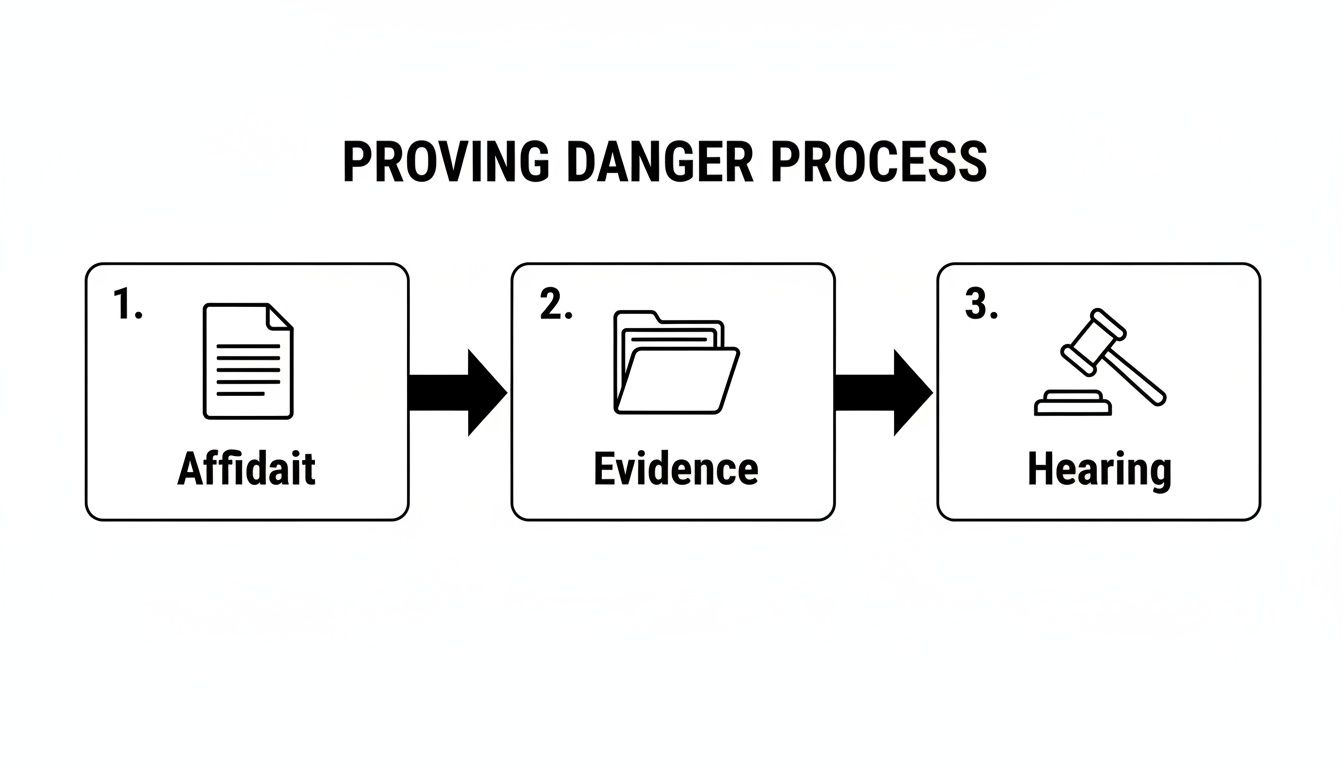
As you can see, a powerful affidavit supported by solid evidence is what gets you to a successful hearing.
Filing the Paperwork and the Ex Parte Hearing
Once your petition, application, and affidavit are ready, you will file them with the district clerk in the county where your child resides. After filing, your attorney presents these documents to a judge for an ex parte hearing. Remember, "ex parte" means this happens without the other parent being present or even knowing about it yet.
The judge reviews your affidavit and supporting evidence in their chambers. They are looking for specific, articulable facts that prove a clear and present danger to the child’s physical health or emotional well-being. If that high standard has been met, they will sign the TRO.
A Judge’s Perspective: When I review an ex parte application, I’m looking for specificity. An affidavit that says, 'He threatened me,' is weak. One that says, 'On Tuesday at 8 PM, he texted me, "If you don't let me see the kids, you'll regret it," and attached a photo of a weapon' is powerful and demands action.
This signed order is a legally binding command. It will typically grant you temporary exclusive possession of your child and may set other rules, like prohibiting the other parent from contacting you or coming near your child's school.
After the judge signs, the other parent must be formally notified. This is called service of process. A sheriff or private process server must personally serve the other parent with the lawsuit and a copy of the TRO. This notice also tells them the date and time for the full hearing, usually scheduled within 14 days.
This next hearing is not ex parte; the other parent has the right to be there and present their side. That’s why getting the initial filing right is so crucial—it sets the stage for that critical hearing. For a more detailed guide, check out our article on how to file for emergency custody in Texas.
What to Expect After the Judge Grants the Order
Getting an emergency custody order is a huge moment of relief. It’s that first deep breath you take when you finally know your child is safe. But it's critical to understand that this isn't the end of the road—it’s the beginning of the next legal chapter. The order a judge signs is temporary, designed for one thing: immediate protection. Think of it as a legal pause button that sets the stage for a more detailed court process.
This emergency order, a type of Temporary Restraining Order (TRO), is only valid for 14 days. That short window is intentional. It protects your child while honoring the other parent's constitutional right to be heard in court. This leads directly to the next critical event: a full evidentiary hearing.
Preparing for the Evidentiary Hearing
That upcoming hearing is where both sides get to tell their story. The other parent and their lawyer will be there, ready to respond to your allegations and present their own evidence. Your job over these next 14 days is to prove to the judge that the danger is real and ongoing. Don't assume the judge will automatically extend the order. You have to be prepared to prove your case all over again, this time with the other parent present to challenge you.
Your entire focus should be on building an even stronger case. Here’s what you and your attorney should be doing:
- Line Up Your Witnesses: Identify people who saw the danger firsthand. A neighbor, a teacher, or a family member who can testify about what they personally witnessed is incredibly powerful.
- Gather More Proof: Keep collecting new text messages, emails, photos, or any other documents that back up your claims. Organize everything in chronological order so it tells a clear, compelling story for the judge.
- Work Closely with Your Attorney: Your lawyer is your most important asset. They will help you prepare your testimony, anticipate the other side’s arguments, and ensure your evidence is presented in the most effective way.
From Emergency Order to Temporary Orders
At the end of the 14-day hearing, if you successfully prove the danger to your child is ongoing, the judge will likely turn the emergency order into temporary orders.
These temporary orders are far more detailed and will govern your family’s life until the entire custody case is finalized, which can often take months. These orders will clearly lay out key aspects of your co-parenting relationship, including:
- Conservatorship: This determines who makes decisions for the child. It can be Joint Managing Conservatorship (where parents share rights and duties) or one parent can be named the Sole Managing Conservator.
- Possession and Access: This is a specific possession schedule (visitation schedule) detailing when each parent sees the child. If there are safety concerns, visits may be supervised.
- Child Support: The financial duties of each parent are established.
- Geographic Restrictions: Rules about where the child is allowed to live are set.
If the judge makes you the sole managing conservator in the temporary orders, you will be the parent who decides where the child lives and receives child support. This hearing is your chance to establish a stable, safe routine for your child for the foreseeable future.
Common Mistakes to Avoid When Seeking an Emergency Order

When you're fighting to protect your child, the emotional pressure is immense. It’s far too easy to make a critical misstep that sinks your case for an emergency custody order in Texas. Filing for one of these orders is a fast-paced, high-stakes process where your credibility is everything. One wrong move can undermine your entire effort and leave your child in the very situation you fear.
As attorneys who have guided countless parents through these crises, we’ve seen the same heartbreaking—and avoidable—errors. Knowing these common pitfalls is your best defense.
Exaggerating or Being Vague in Your Affidavit
Your sworn affidavit is the foundation of your case. It must be built on specific, verifiable truth. The biggest mistake we see parents make is embellishing facts or relying on vague, emotional accusations. A judge will see right through a statement that sounds dramatic but lacks substance. For example, stating "the other parent is a danger to our child" is an opinion, not a fact. It's powerless.
Instead, provide concrete, provable details. "On June 1st, at 9:15 PM, the other parent sent me a text message stating, 'You will never see your child again.'" That is a specific, verifiable fact a judge can act on.
Your credibility is your most valuable asset in court. Once a judge doubts your honesty, they may question everything you present. Stick to the facts, be precise, and let your evidence speak for itself.
Filing with Insufficient Evidence
Your gut feeling that your child is in danger is valid, but feelings are not evidence. You cannot expect a judge to grant something as drastic as an emergency order based on suspicions alone. You must bring proof that a clear and present danger exists.
Before filing, focus on gathering objective evidence to back up every claim:
- Police Reports: Official documentation of family violence or other incidents.
- Text Messages or Emails: Verbatim threats, admissions of drug use, or other dangerous statements.
- Medical Records: Documentation of injuries, neglect, or related concerns.
- Failed Drug Tests: Official lab results are far more powerful than accusations.
Filing without this kind of hard proof almost always results in the judge denying your request. That not only leaves your child unprotected but also damages your credibility for future hearings.
Procedural Errors That Derail Your Case
The legal process for getting an emergency order is rigid and time-sensitive. A seemingly small procedural mistake can have devastating consequences. One of the most common errors is failing to properly serve the other parent with the lawsuit and notice of the hearing. If the other parent isn't legally notified according to the strict rules in Texas, the entire order can be thrown out, and you're back to square one.
Other procedural landmines include:
- Missing a court-ordered deadline.
- Failing to show up for the mandatory 14-day hearing.
- Accidentally violating the terms of the temporary restraining order yourself, like sending angry texts to the other parent.
To learn more about the high standard for these orders, you can discover more insights about emergency custody orders on mokololaw.com. Navigating these rules while under extreme stress is next to impossible without experienced guidance.
Next Steps: What to Do Right Now
Facing an emergency custody battle is one of the most terrifying experiences a parent can endure. It's normal to feel scared and overwhelmed. Your instinct to protect your child is right, and Texas law provides a path to safety—but you have to be focused and strategic.
Everything a judge does hinges on one guiding principle: the “best interest of the child.” This isn't just a legal catchphrase; it's the standard against which all evidence is measured. Your goal is not to prove you're the "better" parent. It's to show the judge, with facts, why the court must step in right now to protect your child's physical or emotional well-being.
Key Takeaways to Guide You
As you prepare to move forward, keep these core principles in mind. They will help you stay grounded and focused on what matters most.
- Facts Over Feelings: Your emotions are valid, but a judge works with objective, provable facts. An affidavit filled with specific, detailed incidents is far more powerful than one based on general fears.
- The Burden of Proof Is on You: Because an emergency order temporarily removes a parent's rights without them being present, the court sets a very high bar. You must prove the danger is immediate and severe.
- An Emergency Order Is Temporary: Getting the order is a huge first step, but it’s not the end. It is a temporary fix that triggers a full hearing, usually within 14 days, where you’ll have to prove your case all over again with the other parent present.
The goal of an emergency order is to create immediate safety. Think of it as a legal shield for your child, buying you and the court time to address the root problems in a more formal setting. It's about crisis intervention, not a permanent change to custody.
The Most Important Next Step
The single most critical step you can take right now is to speak with an experienced family law attorney. A lawyer does more than file paperwork—they provide a strategic advantage. They understand what judges in your county need to see, how to present your evidence effectively, and how to help you avoid the common mistakes that can sink your case.
Your attorney becomes your advocate, ensuring your story is heard and that every action is aimed at protecting your child and your parental rights. This is not a path you should walk alone.
If you need help with a child custody or visitation case in Texas, our experienced attorneys can guide you every step of the way. Contact The Law Office of Bryan Fagan, PLLC today for a free consultation.
Frequently Asked Questions About Emergency Custody Orders
When you’re worried about your child's immediate safety, you need clear answers now, not complicated legal jargon. As attorneys who handle these crises, we hear the same urgent questions from parents across Texas. Here are the answers to the ones that come up most often.
How Quickly Can I Get an Emergency Order?
This is almost always the first question a parent asks. The answer is: very quickly. The process is designed for speed because it’s meant for immediate, serious danger. In many cases, a judge can sign an emergency custody order in Texas within 24 to 48 hours after the proper paperwork is filed with the court.
Once your attorney files your petition and a detailed sworn affidavit, a judge reviews it "ex parte"—a legal term meaning they make an initial decision based only on your evidence, without the other parent present. If you’ve shown sufficient proof of a "clear and present danger," the judge can sign the order immediately, giving you the legal power to get your child to safety.
What Happens If My Request Is Denied?
Hearing that a judge has denied your request is incredibly disheartening, but it's vital to understand this isn't the end of your custody case. A denial simply means the evidence did not meet the extremely high legal bar for an immediate danger that justifies removing a parent's rights without a hearing.
Your case will then move forward as a standard custody modification. You will still have your day in court to present all your evidence and argue why changing the custody arrangement is in your child's best interest. The initial denial is a procedural step, not a final judgment on your concerns.
Can I Get an Order for Uncooperative Behavior?
No. An emergency custody order in Texas is reserved for true crises that pose a risk of physical or emotional harm. A co-parent who is difficult, frustrating, or has a different parenting style will almost never meet this high standard.
Judges will not grant an emergency order for common co-parenting frustrations, such as:
- Disputes over bedtimes, diets, or screen time.
- Arguments about school choices or extracurriculars.
- A parent who is consistently late for exchanges.
- Your personal dislike of the other parent's new partner (unless that person poses a direct, provable threat to the child).
These issues, while maddening, are best addressed through a standard custody modification, not an emergency action.
What Is the Difference Between a TRO and a Protective Order?
This is a common point of confusion. While both offer protection, they are distinct legal tools for different situations.
A Temporary Restraining Order (TRO) is a civil order issued within a family law case, like a divorce or custody suit. The emergency custody order you seek is technically a TRO with "extraordinary relief" that temporarily changes custody and sets rules for both parents. It is focused on the immediate circumstances surrounding the child.
A Protective Order, however, is a separate legal action directly tied to findings of family violence. It is granted based on evidence of past violence and the probability of future violence and can come with criminal consequences if violated. While you can request both, they serve different primary purposes.
If you need help with a child custody or visitation case in Texas, our experienced attorneys can guide you every step of the way. Contact The Law Office of Bryan Fagan, PLLC today for a free consultation.