Skip to content
When false accusations of spousal abuse surface in the middle of a custody battle, it feels like the floor has dropped out from under you. The shock, anger, and fear can be overwhelming, especially when your relationship with your children is suddenly on the line. While Texas courts take every allegation of family violence seriously, they also have systems in place to expose false claims and protect parents who have been wrongly accused. Your child's future is on the line, and understanding your rights is the first step toward protecting it.
Your Family's Future Is at Stake

The moment you discover you’ve been accused of spousal abuse, a wave of panic and helplessness is natural. Your reputation, financial stability, and most importantly, your parental rights can feel like they're slipping away. We understand this feeling. And we want you to know: you are not alone in this, and there is a clear path forward.
This guide is designed to move you from a state of panic into a position of strength. We will walk you through the practical, strategic steps you need to take to protect yourself and your relationship with your kids. Navigating this challenge requires a calm mind and a solid grasp of your legal options.
How Texas Courts View Abuse Allegations
In a Texas family court, an allegation of abuse is a serious matter that can dramatically alter the course of your case. A judge’s primary duty is to make decisions based on the “best interest of the child,” a legal standard under the Texas Family Code Chapter 153 that prioritizes a child's physical and emotional well-being above all else. A finding of family violence, even if based on a false claim, can lead to devastating consequences.
These potential outcomes include:
- Loss of Custody: The court could award the other parent Sole Managing Conservatorship, giving them the exclusive right to make nearly all decisions for your children.
- Supervised Visitation: Your time with your kids could be limited to supervised visits, stripping you of your ability to parent them independently. This is part of a possession schedule, which outlines when each parent has the children.
- Protective Orders: You could be forced out of your home and legally barred from contacting your children or the other parent.
- Damage to Your Reputation: These allegations can harm your relationships with friends, family, and your community.
You Are Not Alone in This Fight
It's critical to understand that false accusations are an unfortunate tactic in contentious family law disputes. If you feel unfairly targeted, know that you are not the first. Research shows that in the United States, roughly 20.6 million people have reported being falsely accused of abuse, with child custody fights being a common battleground for these claims. You can discover more insights about these findings on End Domestic Violence.
Facing a false accusation is not just a legal problem; it's a personal crisis. We believe in empowering parents by validating their emotions while emphasizing their legal options. The key is to respond strategically, not emotionally. Your actions in the coming days and weeks will be critical in building a defense that protects your family and your future.
This is a legal battle you can fight and win with the right information and guidance. By understanding the process and taking deliberate, informed steps, you can dismantle these claims and work toward securing your rightful place in your children’s lives.
What to Do Immediately After Being Accused
When you're faced with a false accusation of spousal abuse, your first instinct might be to panic or even lash out. It’s an understandable reaction—your character and your role as a parent are under attack. However, these first few hours and days are critical. Your actions will set the stage for your entire legal defense. The best thing you can do for your family is to take a deep breath and make calm, strategic moves.
Your number one priority is to create distance and cut off all direct communication with your accuser. We cannot stress this enough. Anything you say or write, no matter how well-intentioned, can be twisted and used against you in court. A simple text message asking, "Why are you doing this?quot; can be presented as harassment. To protect yourself, all communication must stop immediately.
Secure Your Digital and Physical Space
Once you’ve gone silent, it’s time to secure your personal environment. This is about more than physical safety; it's about protecting your private information and preventing your accuser from manufacturing misleading "evidence."
Here are your immediate next steps:
- Find a new place to stay: If you live together, leave voluntarily if it's safe. Remaining in the same home can escalate the situation and give your accuser more opportunities to build a false narrative.
- Change your passwords: Immediately secure all your digital accounts—email, social media, banking apps, and any shared cloud storage. This prevents snooping and protects your private conversations from being taken out of context.
- Stay off social media: Do not post anything about the accusations, the other parent, or your kids. Even an innocent picture could be framed as you being a neglectful or unconcerned parent. Silence is your best friend online.
Think of these first steps as defensive maneuvers. They're designed to protect your credibility and give you the space to think clearly and prepare for the legal fight ahead.
Assemble Your Legal Team
You cannot—and should not—try to handle this alone. A false spousal abuse allegation carries severe consequences that can damage your custody rights and even lead to criminal charges. The single most powerful step you can take is to find the right lawyer. When navigating the complexities of false accusations and preparing your defense, it is crucial to seek professional guidance. You may even want to consult with experts for personalized advice to better understand your situation.
You need an attorney who specializes in Texas family law and has experience with high-conflict cases like yours. They will know how to analyze the accuser's claims, gather counter-evidence, and advocate for you in court. A good lawyer is both your shield and your guide.
A false accusation feels deeply personal, but your response must be strategic and informed. You are not trying to win an argument with your accuser; you are trying to present a clear, credible, fact-based case to a judge. Every move you make should be aimed at that goal.
Your lawyer will take over all communication with the other side, preventing you from accidentally saying something that could harm your case. They will also start building a strategy to protect your parental rights, which is critical if a Temporary Restraining Order (TRO) has been filed that is keeping you from your children. Knowing how to choose a family law attorney is one of the most important first steps you can take to regain control. Acting quickly to hire legal help sends a clear signal: you are taking this seriously and are ready to defend your name and your relationship with your children.
Building Your Defense with Evidence and Documentation
When you're fighting false accusations of spousal abuse, your side of the story is critical—but in a Texas courtroom, solid evidence speaks louder than words. A strong defense isn't built on raw emotion. It's constructed, piece by piece, with credible proof that chips away at the other person’s claims until their story falls apart. Your job, starting right now, is to become a meticulous archivist of the truth.
This means gathering every text message, email, social media post, and voicemail that contradicts the narrative being built against you. These digital breadcrumbs are often the most powerful tools for exposing inconsistencies, painting a more accurate picture of events, or even revealing your accuser’s real motivations.
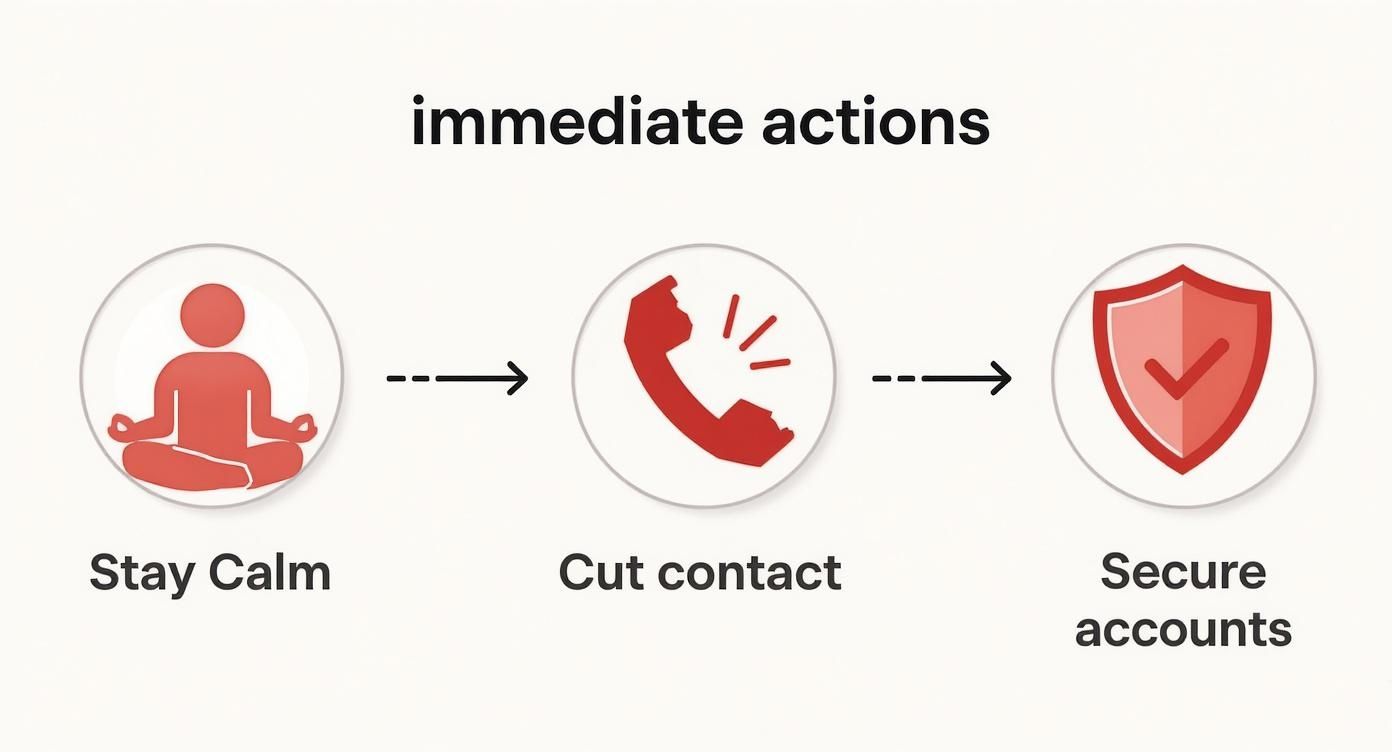
By immediately creating emotional and digital distance, you protect yourself from further false claims and keep your evidence clean and untainted.
What Really Counts as Strong Evidence in Texas
In Texas family courts, judges need to see tangible proof. Your testimony is important, but it becomes exponentially more powerful when it's backed up by solid documentation. The goal is to collect evidence that is both relevant to the case and admissible in court.
Here's what you should be laser-focused on gathering:
- Digital Communications: Save screenshots of texts and emails where your accuser says things that completely contradict their claims. Look for messages where they're friendly, loving, or even apologetic after an alleged incident was supposed to have happened.
- Social Media Activity: Archive public posts from the accuser. Are they posting photos of themselves out having fun, uninjured, and living a normal life during the exact timeframe they claim they were being abused? That's powerful.
- Credible Witnesses: Think about who can speak to your character as a person and a parent. This isn't just about finding people who will say nice things; it's about identifying friends, neighbors, or colleagues who have witnessed your interactions and can offer a balanced, believable perspective.
- Your Personal Timeline: Write down a detailed timeline of events from your point of view. For every single alleged incident, document where you were, who you were with, and what actually happened. This not only organizes your thoughts but gives your attorney a clear roadmap to work from.
In today's world, a lot of "evidence" comes in the form of photos. It’s a sad reality, but images can be manipulated. Learning how to check if a photo is real can be an incredibly useful skill, whether you're defending against doctored "proof" or verifying your own evidence.
This checklist can help you gather and organize the crucial evidence needed to build a strong defense.
Evidence Checklist to Counter False Allegations
| Evidence Type | What to Look For | How to Preserve It |
|---|---|---|
| Texts & Emails | Contradictory statements, friendly tones, apologies from the accuser. | Take clear screenshots of the full conversation. Don't delete originals. |
| Social Media | Public posts showing normal activity during alleged abuse periods. | Screenshot the posts, including dates and times. Archive the page if possible. |
| Witnesses | Friends, family, or neighbors who saw you interact calmly. | Make a list of names and contact info. Jot down what they witnessed. |
| Photos & Videos | Dated media showing you and the accuser together amicably. | Back up original files to a secure cloud service and an external hard drive. |
| Financial Records | Joint purchases or travel receipts that contradict claims of fear/control. | Download bank and credit card statements as PDF files. |
| Your Timeline | Alibis, locations, and names of people you were with during alleged incidents. | Keep a detailed, written log or a secure digital document. |
Staying organized is key. The more thorough and prepared you are, the easier it will be for your attorney—and the judge—to see the truth.
How to Preserve Your Evidence for Court
Gathering evidence is only half the battle. You have to preserve it correctly so it can actually be used in court. This is where the "best evidence rule" comes in, which basically means the original document or file is always preferred over a copy.
For digital evidence, that means you should never delete the original files. Take screenshots, yes, but also work with your attorney to properly download and save entire email threads or social media data. Voicemails should be saved to a separate device or cloud service, not just left on your phone where they could be accidentally erased.
Every piece of evidence you collect is a building block for your defense. Your goal is to construct a factual narrative so strong and well-supported that the judge can see the truth through the fog of false allegations.
This documentation will be invaluable not just for a final trial, but for every step along the way, from hearings for protective orders to depositions. When you're preparing for sworn testimony, having a well-organized file of evidence can make all the difference. To get a better sense of what that process involves, it helps to review common custody deposition questions and understand how they're used to establish facts.
The key is to be proactive. Start this process now. Organize everything chronologically in a secure place—whether it's a physical binder or a password-protected folder on your computer—and share it all with your family law attorney. The more organized you are, the stronger your defense will be.
Navigating Texas Protective Orders and Court Hearings
When you're hit with a false accusation of spousal abuse, things move at lightning speed. One of the first and most jarring experiences is often being served with a Temporary Restraining Order (TRO) or a notice for a Protective Order hearing.
These legal documents can instantly bar you from your own home and prevent you from seeing your children—all before you’ve even had a chance to tell your side of the story. It's a terrifying moment, but understanding what these orders are and how to fight them is the first step toward regaining control.
A TRO is a temporary, emergency order a judge can issue based solely on your accuser's claims, without hearing from you first. Its purpose is to keep things stable until a formal hearing can be held, usually within 14 days.
The Difference Between a TRO and a Protective Order
While both orders can feel similar, they carry very different legal weight under the Texas Family Code. Knowing the difference is absolutely crucial for your defense.
- Temporary Restraining Order (TRO): This is a civil order typically used in divorce or custody cases. It sets temporary rules, like preventing you from contacting the accuser or clearing out a bank account. Violating a TRO can lead to civil penalties, like fines. We've written a detailed guide explaining the ins and outs of a Texas Temporary Restraining Order that can provide more clarity.
- Protective Order: This is a much more serious matter. A Protective Order is issued after a hearing where a judge finds that family violence has occurred. It can last for up to two years, show up on your criminal record, and make it illegal for you to own a firearm. Violating a Protective Order is a criminal offense that can lead to arrest and jail time.
That first court date you're given is usually the hearing to decide whether to turn the emergency TRO into a long-term Protective Order. This hearing is your first and best opportunity to present your evidence and challenge the false claims head-on.
Preparing for Your Day in Court
Your hearing is not the time for emotional outbursts or trying to reason with your accuser. It is a formal legal proceeding where a judge needs to see a fact-based defense. Your goal is simple: show the judge that the accuser's claims are not credible and that family violence did not happen.
This is where all the evidence you’ve been gathering becomes vital. Your attorney will help you organize your texts, emails, witness statements, and timeline into a clear, compelling narrative. The objective is to highlight inconsistencies in the accuser’s story and prove that their allegations don't line up with reality.
In fact, a detailed national survey found that false allegations were commonly linked to contentious child custody disputes, which accounted for 27% of the cases studied. You can learn more about the research into false abuse claims.
Key Takeaway: The Protective Order hearing is a critical turning point. Winning here can stop the false narrative in its tracks, while losing can have severe and long-lasting consequences for your custody case and your life.
When Family Law and Criminal Defense Collide
Sometimes, a false accusation doesn't just stay in family court. Your accuser may also file a police report, triggering a parallel criminal investigation. This creates an incredibly complex situation where you are fighting battles on two different legal fronts at the same time.
What happens in one case can directly impact the other. For instance, anything you say in your family court hearing can be used against you in the criminal case. This is why it is absolutely essential to have an experienced legal team guiding you through this minefield.
It's often wise to have both a family law attorney and a criminal defense attorney working together. Your family lawyer will focus on the custody and visitation aspects, while a criminal defense lawyer will protect your rights and freedom. They can coordinate to ensure your defense strategy in one court doesn't jeopardize your case in the other. Your right to remain silent is a powerful tool, and your legal team will advise you on exactly when and how to use it.
Protecting Your Role as a Parent in Custody Disputes
When your child's future is on the line, the fear that a false accusation of spousal abuse could sever your parental rights is gut-wrenching. For most parents, this is their single greatest concern. It's critical to understand how Texas family courts approach these serious claims and, more importantly, how you can proactively protect your relationship with your children.
A false allegation does not have to mean losing custody.

The entire Texas custody framework is built on a single, guiding principle: the "best interest of the child." This legal standard, found in Texas Family Code Chapter 153, requires a judge to prioritize a child's physical and emotional well-being above everything else. When family violence is alleged, the court has a duty to investigate whether it poses a risk to the child.
How Custody Is Determined in Texas
In most Texas cases, courts prefer to name parents as Joint Managing Conservators. This arrangement allows both parents to share in the rights and responsibilities of raising their kids, including making key decisions about their education and healthcare. This is the default because Texas law presumes that having both parents actively involved is what’s best for a child.
However, a proven history of family violence flips that presumption on its head. If a judge finds credible evidence of abuse, they can name the other parent as the Sole Managing Conservator. This gives one parent the exclusive right to make most major decisions for the child. The other parent may be limited to supervised visitation, meaning your time with your children would be monitored by a neutral third party.
Proving Your Fitness as a Parent
When you're fighting false accusations, simply denying the claims isn't enough. You have to actively demonstrate that you are a stable, loving, and capable parent who is absolutely essential to your children’s lives. Your actions can speak louder than words and give the court a clear picture of your commitment.
Consider taking these proactive steps:
- Complete a Parenting Class: Voluntarily enrolling in a co-parenting or anger management class—even if you don't have an anger issue—shows the court you're taking the situation seriously and are committed to self-improvement.
- Engage in Counseling: Attending individual therapy can give you coping strategies for the immense stress you're under and shows a commitment to your own mental and emotional health.
- Maintain Consistency for Your Children: Do everything in your power to keep your children's lives as normal as possible. Stick to any temporary possession schedules without fail, and make every moment with them positive and focused on their needs.
A false accusation is a test of your character and resilience. By focusing on your actions and demonstrating unwavering dedication to your children's well-being, you provide the court with a powerful, positive narrative that stands in direct contrast to the accuser’s claims.
It’s an unfortunate reality that false claims often surface during heated custody battles. Research has shown that parents who are separated from their children face an 86% higher risk of being subjected to unsubstantiated abuse claims, showing just how often these accusations can be weaponized. To learn more about the weaponizing of abuse claims, it's important to understand the high-conflict context where these disputes arise.
Presenting a Positive and Stable Relationship
Beyond proactive classes and counseling, your defense hinges on presenting tangible evidence of your positive and healthy relationship with your children. This is where your diligent documentation really pays off. Your attorney can help you package this evidence effectively for the court.
This evidence might include:
- Testimony from Third Parties: Think teachers, coaches, daycare providers, or family friends who can speak to your positive parenting and your child's strong bond with you.
- Photos and Videos: A collection of media showing happy, normal interactions between you and your children over time.
- Communications: Texts or emails with the other parent about the children that show you engaged in routine, cooperative co-parenting before the accusation was made.
The goal is to build a mountain of evidence that shows you are a safe, fit, and essential parent. By focusing on the best interests of your child and presenting a clear, fact-based case, you can protect your parental rights and secure your future with your children.
Key Takeaway: Your Next Steps
Facing a false allegation is overwhelming, but you have the power to fight back with facts, strategy, and the right legal support. The most critical steps are to remain calm, cut off all communication with your accuser, and immediately begin documenting everything. By gathering evidence and working with an experienced family law attorney, you can build a strong defense that protects not only your reputation but, most importantly, your relationship with your children. Remember, a Texas court's final decision will be based on the best interest of your child, and proving you are the stable, truthful parent is the most powerful move you can make.
If you need help with a child custody or visitation case in Texas, our experienced attorneys can guide you every step of the way. Contact The Law Office of Bryan Fagan, PLLC today for a free consultation.