
When the precious bond you share with your grandchild is at risk, understanding your rights as a grandparent in Texas matters most. While Texas law provides a path for grandparents to secure time with their grandchildren, it's a journey filled with legal hurdles. Courts begin with a powerful assumption: that fit parents act in their children’s best interests, including deciding who they see. This makes securing grandparent rights in Texas a complex and often uphill legal battle.
The Reality of Grandparent Rights in Texas

The bond between a grandparent and a grandchild is a unique source of love, wisdom, and stability that can enrich a child's life in countless ways. When family dynamics shift—whether through divorce, a parent's passing, or conflict—the thought of that bond being severed is heartbreaking.
Navigating a High Legal Standard
If you're worried about losing contact with your grandchildren, it’s critical to understand the legal landscape from the very beginning. The U.S. Supreme Court has affirmed that parents have a fundamental right to raise their children as they see fit. Texas law reflects this principle by creating a legal presumption that a parent’s decisions are in their child’s best interest.
This sets a very high bar for grandparents. You can't just walk into court and argue that it would be nice for your grandchild to see you. Instead, you must prove that being denied a relationship with you would cause significant harm to the child’s physical health or emotional well-being.
In any Texas family law case, the court's primary focus is the “best interest of the child.” In simple terms, this legal standard puts a child’s safety, stability, and well-being above the wishes of any adult—including parents or grandparents.
What This Means for You
This legal framework means that while a path exists for grandparents to seek court-ordered visitation (known in Texas as possession and access) or even custody (conservatorship), it is a challenging road. You must be prepared to present clear and convincing evidence to overcome the powerful parental presumption.
This guide is designed to give you a compassionate but realistic overview of the process. We’ll validate your concerns while grounding you in the legal realities of the Texas Family Code. Understanding these challenges is the first step toward making informed decisions that protect your family and, most importantly, your grandchildren.
How to Prove You Have a Right to Sue

Before a judge can hear your story or consider the special bond you share with your grandchild, you must first unlock the courthouse door. In legal terms, this is called having “standing”—it’s your legal right to file a lawsuit.
Many grandparents are surprised to learn they don't automatically have standing just because of their relationship. The Texas Family Code lays out specific, and frankly, tough conditions you must meet. Think of it as having the right key; without it, you simply can't get inside to make your case.
The Foundational Requirements for Standing
To get your foot in the door, Texas law requires you to meet two conditions. First, you must be the biological or adoptive parent of one of the child's parents.
Second, your child (the grandchild's parent) must be unable to exercise their parental rights for one of these specific reasons:
- They have passed away.
- They have been incarcerated for at least three months.
- A court has declared them legally incompetent.
- They do not have actual possession or court-ordered access to the child.
If one of these situations applies, you have cleared the first hurdle for standing. But that’s just the beginning.
The Toughest Hurdle to Overcome
Even if you meet those initial criteria, you now face the most challenging requirement. You must present strong, persuasive evidence showing that denying you access to your grandchild would significantly impair the child’s physical health or emotional well-being.
This is where most grandparent access cases succeed or fail. The law sets this bar intentionally high. It’s not enough to prove that you're a loving, positive influence. The court must be convinced that your absence would cause actual, significant harm to the child.
This standard is a world away from showing it would just be "nice" for the child to see you. A judge must be convinced that keeping you away would create a real, negative impact on the child's development and stability.
Properly filing your petition in the correct courthouse is another critical first step. Getting the procedural rules right from the start can prevent frustrating delays. For more details on this, check out our guide on filing for custody in the correct Texas county.
Do You Qualify to File for Grandparent Access in Texas?
Use this checklist to understand the initial legal requirements (standing) for filing a lawsuit for visitation rights.
| Requirement | Does This Apply to Your Situation? |
|---|---|
| You are the biological or adoptive parent of the grandchild’s parent. | Yes / No |
| Your child (the grandchild’s parent) has passed away. | Yes / No |
| Your child (the grandchild’s parent) has been incarcerated for at least 3 months. | Yes / No |
| Your child (the grandchild’s parent) has been found legally incompetent by a court. | Yes / No |
| Your child (the grandchild’s parent) does not have actual or court-ordered possession or access to your grandchild. | Yes / No |
| You have evidence that denying you access would significantly impair the grandchild’s physical health or emotional well-being. | Yes / No |
If you can answer "Yes" to the first requirement, at least one of the next four, and the final (and most difficult) requirement, you may have the legal standing needed to move forward.
Choosing Between Visitation and Full Custody
Once you establish your legal right, or “standing,” to file a lawsuit, you’ve reached a critical crossroads. Now comes the big question: what legal outcome are you actually asking the court for? In Texas family law, this boils down to two very different paths—seeking visitation rights or pursuing full legal custody.
These aren't just legal terms for the same thing. They represent fundamentally different goals, with vastly different requirements. Getting this distinction right from the start is key to building a realistic legal strategy that serves your grandchild's best interests.
Path One: Seeking Possession and Access
The most common goal for grandparents is to secure legally protected time with their grandchildren. In Texas, the official term for this is “possession and access.” Think of it as the legal way of saying "visitation rights."
When you seek possession and access, you’re asking the court to create a formal, enforceable schedule that guarantees you time with your grandchild. The goal isn't to take over the parent's role but to ensure your vital relationship with the child continues, even if the parent objects. A possession schedule might include:
- Weekend Visits: One weekend a month.
- Holiday Time: Specific days during holidays like Thanksgiving or Christmas.
- Summer Vacation: A week or two during the child's summer break.
The final schedule will depend entirely on what the judge believes is in the best interest of the child.
Path Two: Pursuing Full Custody
The second path is far more drastic: seeking full legal custody. In Texas, this is known as being named a “conservator” of the child. When a judge names parents as conservators, they are often appointed as “joint managing conservators,” meaning they share the rights and responsibilities of raising their child. As a grandparent, seeking conservatorship means asking the court to remove the child from their parent’s care and place them with you.
This is an extraordinary step reserved for the most serious situations. To win a conservatorship case, you must prove that the child's current living situation with their parent presents a direct threat.
Texas law lets grandparents petition for custody, but the bar is set incredibly high. The Texas Family Code (Section 102.004) is clear: a grandparent can only file for conservatorship if the child’s present circumstances would significantly impair the child’s physical health or emotional development. Because Texas courts strongly prefer keeping children with their parents, these cases are exceptionally difficult to win and demand overwhelming evidence of harm. You can learn more about this stringent legal standard from the family law experts at Onda Family Law.
Think of it this way: seeking visitation is asking for a seat at the child's family table. Seeking conservatorship is asking the court to remove the child from that table and bring them to yours because their current home is unsafe.
Making the right choice between these two paths is a crucial first step. It shapes your entire legal strategy, the evidence you'll need to gather, and the emotional and financial resources required to see it through.
How Texas Determines the Best Interest of the Child
In any Texas case involving children, one phrase rules them all: the “best interest of the child.” This isn't just a heartfelt sentiment; it's the single legal standard every judge must use to make a decision. It’s not about what feels fair to the parents or even to you as a grandparent. It’s about what the court believes will truly foster that child’s long-term health, safety, and happiness.
Your entire case must be built on proving that what you’re asking for serves the child's best interests. This means your love and good intentions, while essential, aren't enough on their own. You must back them up with concrete evidence that a judge is legally required to consider.
The Holley Factors a Judge Will Consider
So, how does a judge make such a monumental decision? Texas courts rely on a set of guidelines known as the “Holley Factors.” Think of these as a multi-point inspection of a child’s life, helping a judge see the complete picture.
When a judge looks at a grandparent rights case, they’ll weigh evidence in these key areas:
- Emotional and Physical Needs: Does the grandparent understand and provide for the child’s needs, both now and in the future?
- Parental Abilities: What are the skills of each person asking for custody? The court looks for stability, sound judgment, and a track record of responsible caregiving.
- Stability of the Home: Is the proposed home a safe, stable environment? A judge will look at the physical house, who lives there, and the consistency it offers the child.
- Potential Dangers: Is there any physical or emotional danger to the child in either home? This includes exposure to substance abuse, domestic violence, or neglect.
- The Child's Desires: If a child is age 12 or older, the judge might talk to them privately to hear their preference. It’s important to remember this is just one piece of the puzzle, not the final word.
You can get a much deeper look into the kind of proof that works by reading our guide on how to prove the best interest of a child.
Table: Key Factors in a 'Best Interest' Determination
| Factor | What the Court Considers |
|---|---|
| Emotional & Physical Needs | The child's current and future needs and who is best equipped to meet them. |
| Potential Dangers | Any immediate or future risks of physical or emotional harm to the child. |
| Parental Abilities | The skills, stability, and fitness of each individual seeking custody. |
| Available Programs | Resources and programs available to assist the parties in promoting the child's best interest. |
| Plans for the Child | The plans and goals each party has for the child's upbringing. |
| Home Stability | The stability and security of the proposed home environment. |
| Acts or Omissions | Any actions or failures to act by a parent that might indicate an improper relationship. |
| Explanations for Acts | The reasons behind any concerning acts or omissions by a parent. |
| Child's Wishes | The expressed desires of a child who is mature enough (typically 12+). |
A Multi-Factor Test with a High Burden of Proof
These factors aren’t a simple checklist. A judge has significant freedom to weigh each one differently based on the unique facts of your case. The court is trying to piece together a complete picture of the child's world and decide which path gives them the best chance at a happy, healthy future.
This multi-factor test, combined with the incredibly high burden of proof on grandparents, means that Texas courts only grant grandparent visitation or custody in a small percentage of contested cases.
A judge’s decision is holistic. They are tasked with piecing together all the evidence to create a picture of the child’s world and then deciding which path offers the best chance for a happy, healthy future.
Successfully making your case requires a thoughtful, evidence-based strategy focused entirely on the child. You can discover more insights about these court considerations to understand why the standard is so demanding.
Navigating the Legal Process Step by Step
The thought of going to court over seeing your grandchild can be overwhelming. Knowing what the path ahead looks like can remove much of that fear and help you move forward with confidence. The legal journey for grandparent rights in Texas is a structured process designed to ensure every decision is made with the child's best interests at the center.
It all begins when you file an “Original Petition in a Suit Affecting the Parent-Child Relationship.” This is the formal start of your case. It’s where you tell the court what’s happening and what you’re asking for—whether that’s court-ordered visitation or, in more serious situations, being named a conservator. Our guide on how to file for custody in Texas breaks down the initial paperwork.
The Discovery Phase: Gathering Information
Once the petition is filed, the case moves into what’s called the discovery phase. Think of this as the official fact-finding mission. During discovery, your lawyer and the parent's lawyer will exchange information and evidence relevant to the case.
This process can include:
- Written Questions (Interrogatories): Formal, written questions sent to the other side that must be answered under oath.
- Requests for Documents: Formal requests for papers like school records, texts, or emails about the child.
- Depositions: Out-of-court interviews where someone answers questions under oath while a court reporter types every word.
This stage is crucial. It’s where you build your case, see what arguments the other side is planning to make, and get all the cards on the table.
Mandatory Mediation: A Chance to Find Common Ground
Before a final trial, Texas courts will almost always require you to try mediation. This is a confidential meeting where you, the parent(s), and your lawyers sit down with a neutral third-party mediator. The mediator’s job isn't to pick a side but to guide the conversation and help you find a resolution you can both agree on.
Mediation is a powerful tool. It gives you a chance to settle the case without the time, expense, and emotional drain of a trial. More importantly, it puts the power to decide back in your hands, instead of a judge’s.
A surprising number of cases are resolved here. If you reach an agreement, it’s written down, signed, and becomes a legally binding court order. It can also be helpful to understand the typical legal client intake process so you know what to expect when you first meet with an attorney.
The Final Hearing: Presenting Your Case to a Judge
If mediation doesn’t lead to an agreement, the final step is a hearing or trial. This is where you’ll present your evidence and make your arguments directly to a judge.
The judge’s decision will boil down to a few core principles. This is what they’re truly focused on:
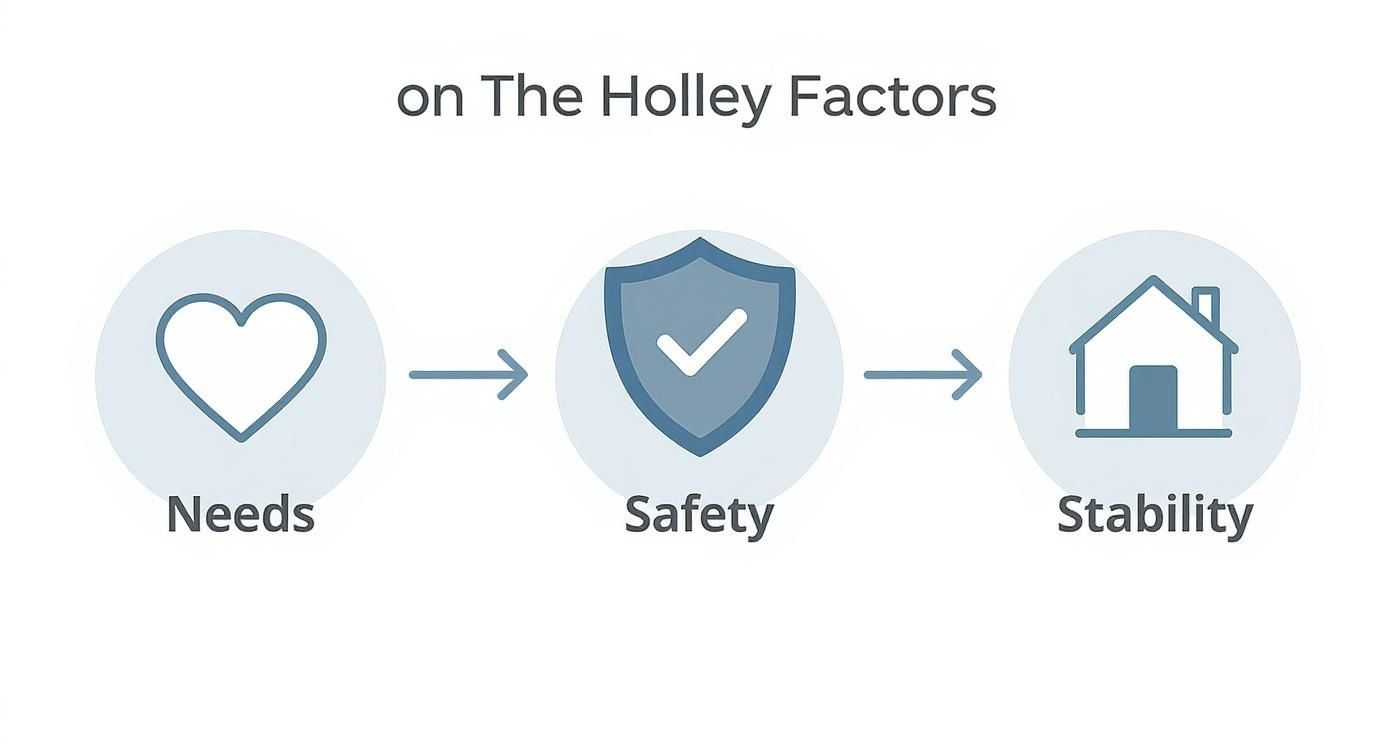
This image drives home the point: every piece of evidence, every story, and every argument must connect back to how your request serves the child’s best interests. The judge will listen to testimony, review all the documents from discovery, and then make a final ruling that becomes a legally enforceable order.
Key Takeaways and Next Steps
The journey to secure grandparent rights in Texas can feel emotionally draining and legally complex, but clarity and preparation are your greatest assets. Grounding yourself in the realities of Texas family law is the first step toward building the strongest possible case for your grandchildren. The entire legal system is built to protect the best interest of the child, and your strategy must align with that core principle.
Core Principles You Can't Ignore
- Parental Rights are Paramount: Texas law starts by presuming that fit parents know what’s best for their children. A court will not interfere with this fundamental right without a compelling reason.
- The Bar is Incredibly High: It’s not enough to be a loving grandparent. You must prove that denying you access would cause significant harm to your grandchild’s physical or emotional well-being.
- Standing is Not Automatic: You must first prove you have the legal right to file a lawsuit by meeting strict criteria laid out in the Texas Family Code.
The legal standard is set high for a reason: to protect the core family unit. Your entire case must be built on solid, compelling evidence of actual harm—not just on the benefits of having you in their life.
Your Next Steps: A Practical Game Plan
Feeling empowered comes from taking deliberate, thoughtful action. Before heading to the courthouse, here’s what you should be doing:
- Gather Evidence: Start collecting everything that supports your case: photos, emails, text messages, and calendars showing your deep involvement in the child's life. Think about witnesses—teachers, counselors, or family friends—who can speak to the potential harm your absence would cause.
- Weigh the Emotional Impact: A lawsuit can deepen family rifts and create more stress for everyone, especially your grandchild. Seriously consider alternatives like mediation first.
- Consult an Experienced Attorney: The laws around grandparent rights in Texas are a minefield. An experienced family law attorney can review the unique facts of your case, explain your options, and help you build a strategy that serves your grandchild's best interests.
If you need help with a child custody or visitation case in Texas, our experienced attorneys can guide you every step of the way. Contact The Law Office of Bryan Fagan, PLLC today for a free consultation.
Frequently Asked Questions About Grandparent Rights
Navigating the path of grandparent rights in Texas often brings up deeply personal and emotional questions. Getting clear, straight answers can be a lifeline when everything else feels uncertain. Below, we’ve tackled some of the most common concerns we hear from grandparents just like you.
Can a Parent Legally Stop Me From Seeing My Grandchild?
Yes. This is one of the toughest truths for grandparents to hear, but it’s the foundation of Texas law. Parents who are considered legally "fit" have a fundamental, constitutional right to decide who their children spend time with.
Unless you have a formal, court-enforceable order granting you visitation (known as possession and access), a parent can legally block you from seeing your grandchild. To change that, you must file a lawsuit and convince a judge that denying you access would cause significant harm to the child's physical health or emotional well-being.
What Kind of Evidence Do I Need to Prove My Case?
While your love for your grandchild is what fuels this journey, in court, that love needs to be backed by hard evidence. Simply stating you have a close bond isn’t enough to meet the high legal standard.
Strong evidence is what makes or breaks a case for grandparent rights in Texas. This can include:
- Testimony from Neutral Parties: Teachers, doctors, therapists, or counselors can provide powerful, unbiased observations about the child’s well-being and the negative impact of your absence.
- Written Communication: Emails, text messages, or letters can create a documented timeline showing your consistent, loving, and caregiving role in the child’s life.
- Visual Proof: Photos and videos paint a vivid picture for the judge of your deep and ongoing relationship with your grandchild.
- Official Records: School or medical records showing you as an emergency contact or the person who regularly took your grandchild to appointments can officially place you in a position of care and responsibility.
The goal is to build a detailed, undeniable case showing you are an integral part of your grandchild's stability—and that removing you would create a genuinely harmful void.
Does It Help if My Grandchild Lived With Me?
Yes, absolutely. This can be a game-changer. If your grandchild lived with you for at least six consecutive months, that fact alone carries significant legal weight. It helps you establish the legal "standing" you need to file the lawsuit.
More importantly, it serves as powerful proof that you’ve been a primary caregiver and a source of stability. It makes the argument much stronger that severing that bond would be disruptive and harmful, which is exactly what you need to prove to the court.
When a child has lived with you, you are no longer just a visitor in their life; you have been a central part of their home. This fact carries significant weight in court.
Do I Have to Sue My Own Child to Get Rights?
Legally speaking, yes. For many grandparents, this is the most gut-wrenching part of the process. To get a court to intervene, you must file a formal lawsuit, called a “Suit Affecting the Parent-Child Relationship.” In this filing, you are the “Petitioner” (the one suing) and the parent is the “Respondent.”
The thought of taking your own family member to court is daunting. This is why we almost always encourage families to try mediation first. It’s a less confrontational setting where you can work with a neutral third party to find common ground. However, if a peaceful agreement isn't possible, a lawsuit is the only legal path to getting a court order that protects your relationship with your grandchild.
If you need help with a child custody or visitation case in Texas, our experienced attorneys can guide you every step of the way. Contact The Law Office of Bryan Fagan, PLLC today for a free consultation.