Skip to content
When your child’s future is on the line, every single day of a custody battle can feel like an eternity. So when parents ask, "How long is this going to take?" the honest answer is this: a Texas custody case can wrap up in a few months if you’re both on the same page, but it can stretch to over a year if it’s a high-conflict fight.
The timeline really boils down to three things: how well you and the other parent can cooperate, how backed up the courts are, and just how complex your family’s situation is.
Understanding the Timeline of a Texas Custody Case
The hardest part for most parents we work with is the uncertainty. Not knowing how long you’ll be in this process—or what the outcome will be—is a huge source of stress and anxiety. We want you to know that's completely normal. Our goal is to replace that feeling of the unknown with clarity and a sense of control.
While no lawyer can stamp an exact end date on your calendar, understanding the legal road ahead is a game-changer. It empowers you to make smart, strategic decisions that protect your family. This isn't just a legal battle; it’s about laying the foundation for your child's stable, supportive future.
Key Factors Driving Your Case Timeline
A few core elements will set the pace for your Texas custody case. Getting a handle on them early helps set realistic expectations.
- Parental Cooperation: This is the big one. If you and the other parent can communicate and find common ground, you can often settle your case in just a few months, usually through mediation. High-conflict disputes? Those almost always take longer.
- Case Complexity: Things get more complicated—and take more time—when issues like relocation requests, allegations of substance abuse, or disagreements over a child’s special needs are involved. These require more time for investigation and gathering evidence.
- Court Availability: Let’s be real, family courts in major Texas counties are swamped. Just getting hearings and a final trial on the judge's calendar can add unavoidable delays to the process.
The judge’s ultimate goal is to create an order that is in the “best interest of the child,” a standard defined by the Texas Family Code. This principle guides every single decision, from temporary schedules to the final ruling.
Across the U.S., the average custody battle lasts around 8 to 10 months, though that can easily stretch out much longer if a case goes all the way to trial. Texas fits this pattern, but court backlogs in big metro areas can definitely tack on extra time.
Knowing what to expect can make all the difference. To help you prepare, we've put together this high-level look at typical timelines.
Estimated Timelines for Texas Custody Cases
This table gives you a general idea of what to expect based on how much you and the other parent agree.
| Case Type | Typical Timeframe | Key Influencing Factors |
|---|---|---|
| Uncontested / Amicable | 2 – 6 Months | Parents agree on most issues; case settled in mediation; minimal court involvement. |
| Moderately Contested | 6 – 12 Months | Disagreements on a few key issues; requires discovery and multiple hearings. |
| Highly Contested | 12+ Months | Significant conflict; complex issues (abuse, relocation); requires trial. |
Of course, these are just estimates. Every family is unique, and your specific circumstances will shape your journey.
To help you get a clearer picture, you might be interested in our more detailed breakdown of the Texas child custody case timeline. This guide provides a clear roadmap of the journey ahead, from filing the first papers to getting that final order.
How Texas Determines Custody: The Process Explained
When you’re facing a custody case, the legal system can feel like a confusing, intimidating maze. It’s stressful, we understand. But here’s the thing: while every family is unique, the process itself follows a predictable path. Think of this section as your roadmap—we’re going to break down each stage in plain English so you know what’s coming and can move forward with confidence.
Every Texas custody case kicks off when one parent files an Original Petition in Suit Affecting the Parent-Child Relationship. It sounds complicated, but it's just the legal document that officially opens the case and asks the court to step in and make decisions about your children. From that point on, the case unfolds in a series of steps, each with its own purpose and timeline.
The timeline below gives you a general idea of what to expect, from a case that settles quickly to one that requires more time in court.
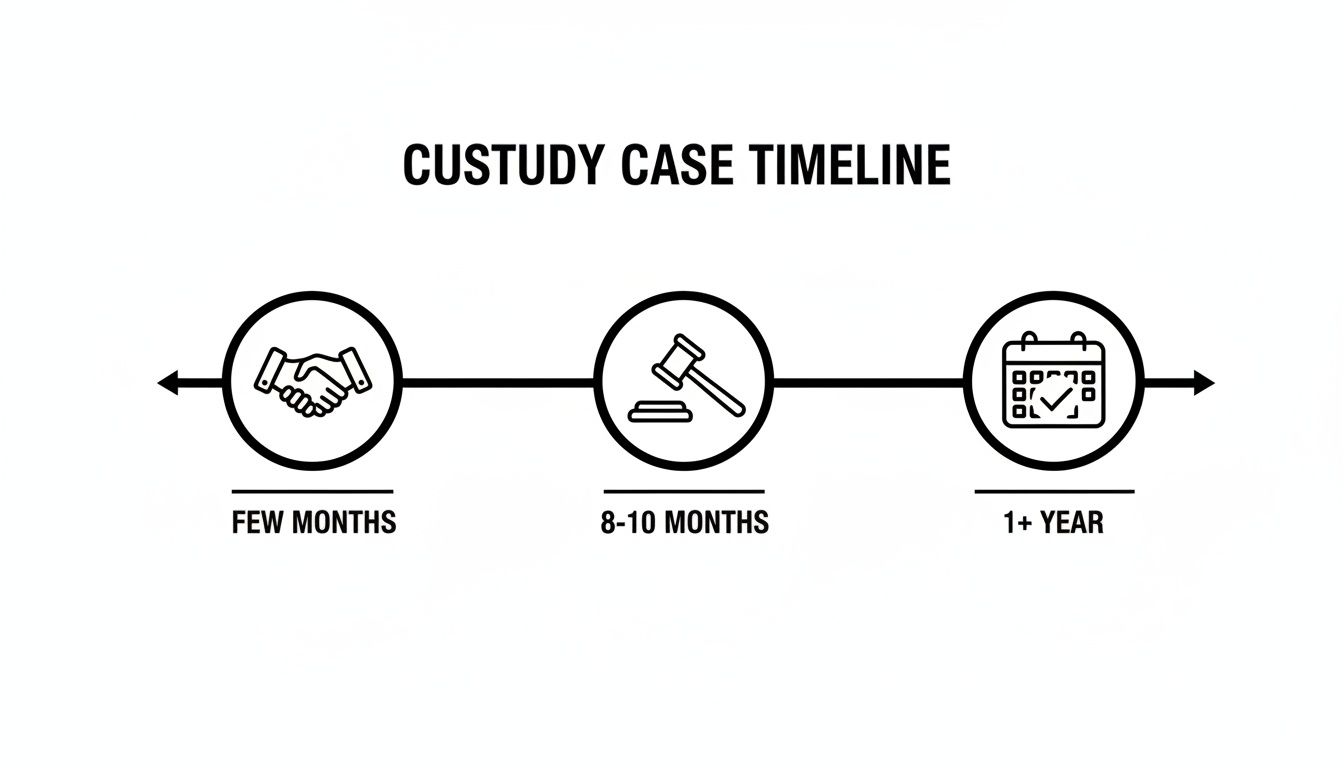
As you can see, some cases wrap up in just a few months. Most, however, land somewhere in the eight to ten-month range, with the really complex fights stretching out over a year.
The First Steps: Temporary Orders
One of the first, and frankly most important, milestones in any custody case is the Temporary Orders Hearing. This usually happens within the first few weeks or months after filing. The entire goal is to put some stability in place for your child while the rest of the case plays out.
A judge will listen to both parents and make some temporary rulings on the big issues, like:
- Who gets to decide where the child lives for now.
- A temporary visitation schedule, what we call a possession schedule in Texas.
- Who will pay temporary child support.
- Geographic restrictions, which prevent one parent from just picking up and moving away with the child.
These orders aren't set in stone, but they absolutely set the tone for the rest of the case. Having a solid game plan for this hearing is crucial. You can get a much better sense of what goes down by reading our guide on what happens at the first custody hearing.
Finding Common Ground Through Mediation
Before you can ever step foot in a courtroom for a final trial, Texas courts will almost always require you and the other parent to try mediation. This is a private, confidential meeting where you both sit down with a neutral third-party mediator to see if you can hammer out an agreement yourselves.
Mediation isn’t about winning or losing. It’s a huge opportunity for you to have a direct say in the outcome and create a parenting plan that actually fits your family’s real-life needs. A successful mediation can save you thousands of dollars and months of heartache, ending your case much faster than a trial ever could.
Gathering Information and Preparing for Trial
If you can't reach a full agreement in mediation, your case moves into the discovery phase. This is the formal, legal process where both sides trade information and evidence. It might involve answering written questions under oath, turning over financial documents, or even giving testimony in a deposition.
While it can feel a bit invasive, discovery is absolutely essential. It makes sure everyone has all the facts on the table before heading to a final trial. This stage can take several months, depending on how much information is involved and how cooperative everyone is.
Finally, if there’s still no settlement, your case will be scheduled for a final trial. This is where both sides present their evidence and arguments to a judge, who then makes a final, binding decision based on one single standard: the “best interest of the child.” That decision will formalize every key aspect of your future as co-parents.
In Texas, the standard outcome is a Joint Managing Conservatorship. This does not mean a 50/50 split of time. Instead, it means both parents share the rights and duties of raising their child, with one parent typically being named the one who establishes the child's primary home.
Knowing these steps takes the mystery out of the process and lets you prepare for what’s around the corner. Your attorney is your guide through all of this, making sure you’re ready for each phase and fighting for your child’s best interest every step of the way.
What Can Make a Custody Case Take Longer?
Every family is different, but after handling countless custody cases, we've seen the same issues pop up again and again—the ones that turn a relatively straightforward process into a long, emotionally draining battle. Knowing what these roadblocks are ahead of time helps you and your attorney plan for them, instead of getting blindsided by delays down the road.
When parents just can’t see eye to eye on the big things, the court has no choice but to step in. Each complex disagreement adds another layer to the case and, you guessed it, more time to the calendar.
High Conflict and Poor Communication
Let's be blunt: the single biggest reason a custody case drags on is the level of conflict between the parents. If communication has completely cratered and every single decision turns into a knock-down, drag-out fight, your case is going to take a lot longer. Period. This constant gridlock forces the court to play referee on minor issues you could have settled on your own.
High-conflict situations almost always lead to:
- A flurry of court filings: One parent might file motion after motion, triggering more hearings and more waiting.
- Stonewalling at mediation: When someone refuses to negotiate or compromise, it’s a near guarantee the case is headed for a lengthy and costly trial.
- Using the child as a weapon: Nothing poisons a case faster. When a parent tries to turn a child against the other, it creates a toxic mess that demands heavy court intervention to untangle.
Serious Allegations of Abuse or Neglect
The moment one parent alleges child abuse, neglect, or substance abuse, the timeline stretches out dramatically. The court has to take these claims with extreme seriousness—its number one job is to protect the child, which means a thorough investigation is mandatory.
And that investigation isn't fast. It usually involves several steps, each tacking on weeks or even months to your case:
- Child Protective Services (CPS) gets involved: The judge will likely order a formal CPS investigation.
- Psychological evaluations are ordered: A judge might require one or both parents, and sometimes the child, to undergo evaluations to get a professional read on the family dynamics and mental health.
- An Amicus Attorney is appointed: In really contentious cases, the court can appoint an amicus attorney. Think of this person as the child's legal representative, whose only job is to figure out what's in the "best interests of the child." This attorney does their own digging—interviewing parents, teachers, and the child—before giving a recommendation to the judge.
A formal custody evaluation, conducted by a mental health expert, is an incredibly in-depth process. It can easily take three to six months from start to finish, making it one of the biggest time sinks in a contested custody case.
Disputes Over Paternity or Relocation
Two other common curveballs can add significant time to a custody case. First, if there's any question about who the legal father is, a paternity suit has to be settled before the court can even touch custody. This means DNA tests and separate hearings, effectively pushing pause on the main event.
Second, if one parent wants to move away with the child—especially out of the county or state—it kicks off a relocation case. These are some of the toughest custody battles because there’s often no middle ground. The court has to carefully balance the child’s need for stability with a parent's right to move, a decision that almost always requires a full-blown trial. This isn't just a Texas issue; court backlogs worldwide can stretch out family disputes. You can see more on these global trends in this helpful analysis of custody case timelines.
Contested Versus Uncontested Cases
When you're trying to figure out "how long does a custody battle take," the answer almost always comes down to one critical factor: parental cooperation. The path your case takes—and how quickly you reach the finish line—will look dramatically different depending on whether it's contested or uncontested.
Think of it this way: an uncontested case is like following a direct map with a clear destination. A contested case, on the other hand, is like navigating a difficult trail with unexpected detours and obstacles.

The Uncontested Path: An Agreement-Focused Approach
An uncontested custody case is one where both parents are on the same page about the big picture. You might not see eye-to-eye on every minor detail, but you’re both committed to finding common ground for the sake of your children.
This cooperative spirit allows you to resolve everything much faster, often in just a few months. Instead of duking it out in a courtroom, you'll likely work together—often with the help of a mediator—to hammer out a parenting plan that genuinely works for your family.
This plan will outline key decisions, such as:
- Establishing a Joint Managing Conservatorship, where both parents share rights and responsibilities.
- Designing a possession schedule (visitation calendar) that fits everyone's lives.
- Agreeing on child support and medical coverage.
Once you have a signed agreement, your attorney files it with the court. A judge will review it to ensure it meets the "best interests of the child" standard required by Texas law, and then sign it into a final, legally binding order. This path saves an immense amount of time, money, and emotional stress.
The Contested Path: Navigating Disagreements
A contested case is the exact opposite. It means you and the other parent have significant disagreements on one or more fundamental issues. These disputes act as roadblocks, stretching out the legal process and often pushing the timeline to a year or more.
Common points of conflict that can turn a case into a contested battle include:
- Primary Residence: Disagreement over which parent has the exclusive right to decide where the child lives.
- Decision-Making Authority: Clashes over who gets the final say on major decisions about education, healthcare, or religious upbringing.
- Possession Schedule: An inability to agree on a workable visitation calendar, especially when it comes to holidays or summer vacation.
When parents simply can't agree, the court has to step in and make these decisions for them. This means multiple hearings, a lengthy discovery process to gather evidence, and ultimately, a final trial where a judge decides your family's future. Research shows that while a majority of cases settle, contested ones can average 8-12 months and may even extend up to three years in complex situations. You can find more insights about these custody battle statistics and trends.
A contested case doesn't mean you are a "bad" parent or that you've failed. It simply means you have deeply held beliefs about what is best for your child, and you need a judge to help resolve the differences.
Understanding this distinction is key. While the goal is always to find an amicable solution, it’s just as important to be prepared for the realities of a courtroom fight if an agreement just isn't possible. An experienced attorney can help you pursue a settlement from a position of strength while simultaneously building a solid case for trial if it becomes necessary.
Strategies to Streamline Your Custody Case
While you can't control every twist and turn in a custody case, you absolutely have the power to take proactive steps that can shorten the timeline without giving up your parental rights. Thinking strategically right from the start can save you months of stress and thousands of dollars in legal fees.
The goal isn't to just give in; it's to move forward efficiently while keeping your child's well-being at the absolute heart of every single decision. These strategies are powerful tools for both mothers and fathers to regain a sense of control and get to a positive resolution faster.

Stay Organized and Focused
Believe it or not, one of the most effective ways to shorten a custody battle is to be meticulously organized. Your attorney will manage the legal deadlines, but your cooperation is essential. Disorganized records or delayed responses can cause unnecessary postponements that tack on weeks or even months to your case.
Start today. Create a dedicated folder for all case-related documents. Keep a calendar of important dates and a simple log of communication with the other parent. This level of preparation doesn't just help your legal team build a stronger case—it shows the court you are a responsible, engaged parent.
Center Every Communication on Your Child's Best Interests
Under Texas law, every single decision a judge makes must align with the "best interests of the child." This is the legal standard that governs everything. So, when you're communicating with the other parent—whether it's by text, email, or face-to-face—keep this principle front and center.
Dodge the emotional arguments, accusations, or blame game. Instead, frame your requests and discussions around what's best for your child's stability, routine, and happiness. This child-focused approach is not only more effective in negotiations but also shows the court your maturity and ability to co-parent.
A judge is far more likely to be persuaded by a parent who consistently prioritizes their child’s needs over their own frustrations with their ex-partner. This approach can significantly speed up hearings and settlement talks.
Embrace the Mediation Process
There's a reason mediation is a mandatory step in most Texas custody cases: it works. It gives you and the other parent a structured, private setting to negotiate a resolution with the help of a neutral third-party mediator. A successful mediation can resolve your entire case in a single day, saving you from a lengthy and expensive trial.
Go into mediation with an open mind. Know what your non-negotiables are, but also have a clear idea of where you're willing to compromise. You can find some excellent advice in our guide on child custody mediation tips that can help you prepare effectively.
Choose Your Battles Wisely
Not every disagreement is a hill worth dying on in court. Fighting over minor issues, like a single holiday or a slight change in pickup times, can poison negotiations and drag out the conflict. Work with your attorney to pinpoint the issues that truly matter for your child’s long-term well-being and focus your energy there.
Letting go of the smaller disputes shows the court you're reasonable and willing to co-parent. It also saves your financial and emotional resources for the fights that are truly necessary. Trust your attorney to handle heated communications and guide you on which battles are worth the time and expense—a skilled family lawyer is your best asset for getting through this efficiently.
Taking deliberate, thoughtful steps can make a world of difference in your custody case's timeline. The table below outlines some actionable strategies you can implement right away.
Actionable Steps to Expedite Your Custody Case
| Strategy | Why It Helps | Practical Example |
|---|---|---|
| Document Everything Methodically | Provides your attorney with clear, organized evidence, which strengthens your case and prevents delays caused by missing information. | Use a shared digital calendar (like Google Calendar) for parenting time and a simple spreadsheet to log communication dates, times, and summaries. |
| Communicate Through a Co-Parenting App | Keeps all communication in one place, reduces he-said-she-said arguments, and creates a formal record that can be used in court if needed. | Use platforms like OurFamilyWizard or AppClose for all non-emergency conversations about schedules, expenses, and updates. |
| Respond Promptly to Your Attorney | Keeps the case moving forward by allowing your legal team to meet deadlines for discovery, filings, and court dates without needing extensions. | Set a personal goal to respond to your attorney's emails or calls within 24 hours, even if it's just to confirm you received the message. |
| Prepare a Detailed Parenting Plan Proposal | Shows the court you've thought seriously about your child's needs and gives the other side a concrete starting point for negotiations, often speeding up settlement talks. | Draft a proposed schedule covering regular weeks, holidays, and summer vacation, including specific pickup/drop-off times and locations. |
| Maintain a Calm and Professional Demeanor | Avoids escalating conflict, which can lead to more court hearings and animosity. A calm parent is seen as a stable parent by the court. | If a text from your ex is upsetting, wait an hour before responding. Reread your message to ensure it's polite and child-focused. |
By being proactive and strategic, you're not just a passive participant in your custody case—you're actively shaping a more efficient and positive outcome for you and your child.
Key Takeaways and Next Steps
Let's be honest: Navigating a custody battle is one of the toughest, most emotionally draining experiences a parent can go through. As this guide has shown, the timeline can feel uncertain, but your best defense is always knowledge and solid preparation.
The Texas custody process has a clear structure. Cooperation will always be the fastest way to a resolution, and the court’s number one priority, every single time, is your child’s well-being.
Feeling overwhelmed is completely normal. The stakes are high, and the stress is real. But you don't have to walk this path alone. When you understand what’s ahead, you can make informed, strategic decisions that protect your family's future and start bringing stability back into your life.
Focusing on Your Well-being
We can't overstate the emotional toll of a custody case. Your ability to stay calm and centered has a direct impact on your child and the outcome of your case. A parent who can manage their stress is simply better equipped to make clear-headed decisions and present themselves effectively in and out of the courtroom.
During this incredibly stressful time, developing strong emotional regulation skills can be a game-changer for adults, helping you manage your reactions and maintain a more stable home for your children.
The Power of Proactive Legal Guidance
This guide has given you a map of the custody process, from the first filing to the final order. We've talked through key Texas legal ideas like the "best interests of the child" standard and Joint Managing Conservatorship, and we've looked at what can speed up or slow down your case.
This knowledge is your first line of defense, but it becomes truly powerful when you pair it with the guidance of an experienced family law attorney. A good lawyer does more than just file paperwork; they offer strategy, manage conflict, and fight for your rights and your child’s future.
Your peace of mind isn't a luxury during a custody case; it’s a necessity. A calm, prepared parent is the best possible advocate for their child. Your attorney's job is to handle the legal heavy lifting so you can focus on being the parent your child needs you to be right now.
Remember, the goal isn't just to get through this. It's to come out on the other side with a stable, positive co-parenting future for your child. By taking control of what you can—your preparation, your mindset, and your legal strategy—you’re already taking the most important steps toward that outcome.
If you need help with a child custody or visitation case in Texas, our experienced attorneys can guide you every step of the way. Contact The Law Office of Bryan Fagan, PLLC today for a free consultation.
Frequently Asked Questions About Texas Custody Battles
When your child's future is on the line, the questions and worries can keep you up at night. The whole legal process can feel like a maze, but getting clear, direct answers is the first step toward feeling more in control. We’ve pulled together some of the most common questions we hear from Texas parents to give you the clarity you need right now.
How Quickly Can I Get an Emergency Custody Order?
If your child is in immediate physical or emotional danger, you absolutely do not have to wait for the standard court process to unfold. You can seek an emergency order, which is often called a Temporary Restraining Order (TRO), to protect your child right away.
In these urgent situations, a judge can review your request and grant a TRO incredibly fast—often within a few business days. Once that order is signed, the court is required to schedule a follow-up hearing within 14 days. At that hearing, both parents get the chance to present their side of the story, and the judge will decide if those emergency protections need to stay in place.
Does My Child Get to Decide Who to Live With?
This is one of the most common questions we get, especially from parents of teenagers. In Texas, the law does recognize that older children have a voice. If a child is 12 years of age or older, they can speak with the judge in private to say where they’d prefer to live.
However—and this is a big one for parents to understand—the judge is required to listen to the child's wishes but is not legally bound by them. A child’s preference is just one piece of the puzzle. The judge weighs it alongside all the other evidence under the guiding principle of the "best interests of the child" standard before making any final decision.
Is Settling a Case Always Faster Than Going to Trial?
Yes. Without a doubt. The single most effective way to shorten the timeline of your custody battle is to reach an agreement outside of a final trial. This is almost always done through mediation or informal settlement talks between the attorneys.
Reaching a comprehensive settlement can resolve your entire custody case in a matter of months. In stark contrast, preparing for and awaiting a contested trial can easily add six months to a year—or even longer—to your timeline, significantly increasing both the financial and emotional costs for your family.
Choosing to settle gives you far more control over the final outcome and lets your family start the healing process and move forward much, much sooner.
If you need help with a child custody or visitation case in Texas, our experienced attorneys can guide you every step of the way. Contact The Law Office of Bryan Fagan, PLLC today for a free consultation.