
When your child’s future is on the line, understanding your rights matters most. Forget the idea of a legal "battle." Instead, think of it as demonstrating that you are the parent best equipped to provide a stable, loving, and supportive home for your child. In a Texas custody case, the path to a positive outcome is built on proving that your active, caring involvement serves your child’s best interests—because that is the only standard a Texas court will use.
How Texas Determines Custody: The Basics
When you first step into a custody case, the language can feel overwhelming. Here's the first thing to know: Texas law doesn't actually use the word "custody." Instead, it uses terms that focus on parental roles and responsibilities. Thinking about it this way helps shift the entire process from a fight over a child to a cooperative plan for their future.
The entire Texas Family Code, specifically Chapter 153, is built around one single, powerful principle: the best interest of the child. Every decision a judge makes—every single one—is based on what will best support your child’s emotional, physical, and developmental well-being.
Key Custody Concepts in Plain English
To build a strong case for yourself as a mother or father, you have to get comfortable with the core concepts a judge will be working with. This isn’t just legal jargon; it’s the actual framework for your child’s life moving forward.
Here’s what you absolutely need to know:
- Conservatorship (Decision-Making): This is the legal term for a parent's rights and responsibilities. In the vast majority of cases, Texas courts presume that a Joint Managing Conservatorship is best. This means both parents share the power to make crucial decisions about education, healthcare, and religious upbringing. It’s designed to promote co-parenting and keep both of you actively involved.
- Possession and Access (Visitation Schedules): This is the calendar—the schedule that dictates when the child is with each parent. While many parents come in wanting a 50/50 split, the court's priority is a schedule that gives the child stability and predictability. The Standard Possession Order is often the starting point for these discussions.
- Primary Conservator: Even when you share decision-making, one parent is usually named the "primary" conservator. This parent has the exclusive right to decide where the child lives (usually within a set geographic area) and is typically the one who receives child support payments.
The court's goal is not to pick a "winner" and a "loser." Its sole purpose is to create a safe, stable, and nurturing environment for your child. By focusing on demonstrating your ability to provide that, you are aligning your goals with the court's.
Winning your case starts right here, with understanding these fundamentals. It's about showing the court—through your actions and evidence—that you can consistently put your child’s needs first. This foundational knowledge is what empowers you to build a strong, child-focused case from the very beginning.
The Best Interest of the Child Standard in Texas
In a Texas courtroom, every single custody decision—from who makes medical choices to where your child spends Thanksgiving—is viewed through one powerful lens: the best interest of the child. While that phrase might sound a little vague, it's a very specific legal standard that should shape every move you make in your case. Frankly, understanding what this means to a judge is the most important thing you can do to win custody.

This standard isn't about what a parent wants or what feels "fair." It's about crafting an environment that allows a child to thrive—emotionally, physically, and mentally. The judge’s job is to look at the entire picture of your family’s life and determine the best possible outcome for your child.
What are the Holley Factors?
To keep things consistent, Texas courts lean on a set of criteria known as the "Holley Factors." These factors, born from a landmark court case, give judges a kind of roadmap for sizing up a family's situation. Think of them less as a checklist and more as a series of questions a judge mulls over to build a complete picture of your child's world.
Your entire case revolves around showing the court that you are the parent best equipped to meet these needs. If you want to dive deeper into the evidence that works, you can explore our detailed guide on how to prove the best interest of the child.
A judge will look closely at things like:
- The child's needs, now and later. This is the foundational stuff: food, shelter, and a loving, supportive home.
- Any potential danger to the child. The court’s number one job is to protect children from harm, whether it's physical or emotional.
- Each parent's abilities. Who's been the primary caregiver? Who knows the teachers' names and handles doctor's visits?
- The stability of each home. A judge is always looking for a consistent, predictable, and safe environment.
- Each parent's plans for the child. This covers your vision for their education, activities, and general upbringing.
- The child's wishes. If a child is 12 or older, the judge will meet with them privately to hear their preference. It's not the final word, but it carries weight.
To make it clearer, here's a breakdown of the key Holley Factors and what they mean in plain English.
| Legal Factor | What It Means for Parents |
|---|---|
| Child's Emotional & Physical Needs | Can you provide a loving, stable home with food, clothing, and support? |
| Emotional & Physical Danger | Is there any history of abuse, neglect, substance use, or instability? |
| Parental Abilities of Each Parent | Who has historically been the primary caregiver and is most involved? |
| Stability of the Proposed Home | Is the home environment consistent and predictable for the child? |
| Parent's Plans for the Child | What are your concrete plans for the child's schooling and future? |
| Acts or Omissions of a Parent | Have your actions shown you put your child's needs first? |
| Child's Preference (if 12+) | The court will listen to a mature child's wishes. |
These factors guide the judge's thinking from start to finish. Aligning your evidence and testimony with them is how you build a winning case.
The Presumption of Joint Managing Conservatorship
Texas law starts with a powerful assumption: it’s in a child’s best interest for both parents to stay actively involved in their life. This is why courts almost always lean toward a Joint Managing Conservatorship (JMC). A JMC means both parents share the rights and duties of making major decisions for their child, like those about healthcare and education.
A court will only stray from this path and award a Sole Managing Conservatorship (SMC) if there’s solid evidence that a joint arrangement would actually be harmful to the child. This usually happens in tough situations involving a proven history of family violence, substance abuse, or severe instability.
Under a Joint Managing Conservatorship, you are not co-owners of a child; you are co-parents. The court expects you to work together, communicate respectfully, and always prioritize your child’s needs over your own disagreements.
By showing that you can co-parent effectively and always put your child’s well-being front and center, you align your actions directly with the legal standard the court must follow. This cooperative, child-focused strategy is often the most effective path to a positive outcome in your custody case.
Gathering Meaningful Evidence for Your Custody Case
A Texas custody case isn’t won on emotion—it's built on a foundation of clear, compelling evidence. When you walk into a courtroom, your story absolutely matters, but it’s the proof you bring to back it up that gives your story its real power. The goal is to get beyond a "he said, she said" argument and focus on what judges actually find persuasive: facts that show your consistent, loving involvement in your child’s life.
This isn’t about digging up dirt on the other parent. It’s about meticulously documenting your own strengths as a caregiver. Think of yourself as the family historian, carefully gathering the pieces that create an undeniable picture of your child’s world and your essential role in it.
Documenting Your Daily Involvement
The most powerful evidence you can present often comes from the simple, everyday things you do as a parent. A judge wants to see a consistent pattern of behavior that proves you are actively and meaningfully engaged in your child’s life day in and day out. Your memory alone isn’t good enough; you have to document everything.
Start a dedicated journal or use a digital app to log your parenting activities. This log will become an invaluable resource for your attorney.
So, what should you track?
- Daily Routines: Make a note of who helps with homework, packs lunches, handles bath time, and does school drop-off and pickup.
- Medical and School Involvement: Keep a clear record of every doctor’s appointment you attend, every prescription you fill, and every parent-teacher conference you join. Save those emails from the school and notes from teachers—they matter.
- Extracurricular Activities: Document who takes your child to soccer practice, piano lessons, or scout meetings. Your presence and support at these events speak volumes.
- Communication with the Other Parent: Save every single text message and email. This isn't just to catch them saying something wrong; it’s to prove your own efforts to co-parent respectfully and effectively.
A detailed log transforms your claims from "I am an involved parent" to "On Tuesday, I picked my child up from school, took them to their 4:00 PM dental check-up, and helped them complete their science project." Specifics are always more powerful than general statements.
This disciplined approach helps you present a calm, organized, and fact-based case that is centered entirely on your child’s well-being.
Show, Don’t Just Tell
While your written logs are the backbone of your case, visual evidence can bring your story to life in a way words alone never could. Photographs and short, simple videos can powerfully illustrate the strong bond you share with your child and the stable, nurturing environment you provide.
Focus on collecting visuals that show:
- Your Home Environment: Photos of your child’s clean and organized bedroom, a well-stocked kitchen, or a dedicated homework space can demonstrate real stability.
- Active Engagement: Pictures of you playing with your child at the park, reading together before bed, or celebrating birthdays and holidays reinforce your active role.
- Family Connections: Don't forget to include photos with grandparents, cousins, and other important family members. This shows the judge the strong support system your child has with you.
These images help a judge truly visualize your child’s life with you, making your case far more relatable and compelling. It’s tangible proof of the loving home you provide.
The Power of Credible Witnesses
Sometimes, the best evidence comes from people who have no skin in the game—objective, third-party individuals who have seen your parenting skills firsthand. Their testimony can validate your claims and provide an unbiased perspective that judges find highly credible.
Think about the people in your child's life who can speak honestly about your character and involvement. Potential witnesses could include:
- Teachers or school counselors
- Coaches or extracurricular instructors
- Neighbors or longtime family friends
- Daycare providers or trusted babysitters
Choosing the right witnesses is a strategic decision you absolutely must make with your attorney. You need people who can provide specific, positive examples of your parenting, not just general praise. Preparing them for a deposition, where the other side's attorney will question them, is also a critical step. To get a better feel for this process, you can find valuable insights into typical custody deposition questions and how to prepare.
By combining your detailed logs, visual evidence, and the testimony of credible witnesses, you build a multi-layered case that is simply difficult to dispute. This comprehensive approach shows the court that you are not just asking for custody but have thoughtfully prepared to prove why it is truly in your child’s best interest.
Navigating the Texas Court Process with Confidence
The family court system can feel like a maze, especially when your children are at the center of it. But knowing how a custody case actually unfolds is the single best way to reduce stress and feel more in control. A Texas custody case isn’t random; it follows a structured path designed to give both parents a chance to be heard and to land on a solution that’s right for the child. Understanding this roadmap helps you focus on what really matters.
Everything kicks off when one parent files an Original Petition in Suit Affecting the Parent-Child Relationship. This document is the legal way of asking the court to make official decisions about conservatorship (who makes the big decisions) and possession (the visitation schedule). From there, your case will move through a few key phases.
From Temporary Orders to Final Hearing
Not long after the case is filed, you'll likely have a temporary orders hearing. This is an early, critical step where a judge makes short-term decisions about where the child will live and what the visitation schedule will look like while the case is pending. These orders aren’t set in stone, but they do establish a "status quo" that can be tough to change later on. They set the tone for the months to come.
Next up is the discovery phase. Think of this as the formal information-gathering stage. You and the other parent will exchange evidence, answer written questions under oath (called interrogatories), and provide documents. The whole point is to make sure both sides have all the relevant facts on the table before you get close to a final trial.
If you want a bird's-eye view of the entire journey, our guide on the Texas child custody case timeline breaks it all down.
The Vital Role of Mediation
Before you ever step into a courtroom for a final trial, almost every judge in Texas will require you to go to mediation. This is a confidential meeting where you, your lawyers, and a neutral third-party mediator sit down to hash out an agreement.
Mediation isn't about winning or losing. It's your chance to create a parenting plan that’s actually tailored to your family's reality, instead of having a judge who’s met you for a few hours make all the decisions.
The reality is, the vast majority of custody cases in Texas settle in mediation. It's a powerful tool that puts control back in your hands, saves money and emotional energy, and often sets the stage for a healthier co-parenting relationship. For anyone looking to understand more about preparing legal documents for these kinds of proceedings, resources on family law drafting can offer some helpful context.
Key Figures in Your Case
In more complicated or high-conflict cases, the judge might bring in some neutral experts to help figure things out. Knowing who they are and what they do is key:
- Amicus Attorney: This is a lawyer appointed by the court specifically to represent the child's best interests—not yours or the other parent's. They'll meet with everyone involved, including the child, and report their findings and recommendations back to the judge.
- Custody Evaluator: This is typically a psychologist or licensed therapist who conducts a deep-dive investigation into the family. They'll assess parenting skills, home environments, and family dynamics before writing a comprehensive report for the court.
This visual guide shows a simple but effective process for organizing the evidence you'll need for every stage of your case.
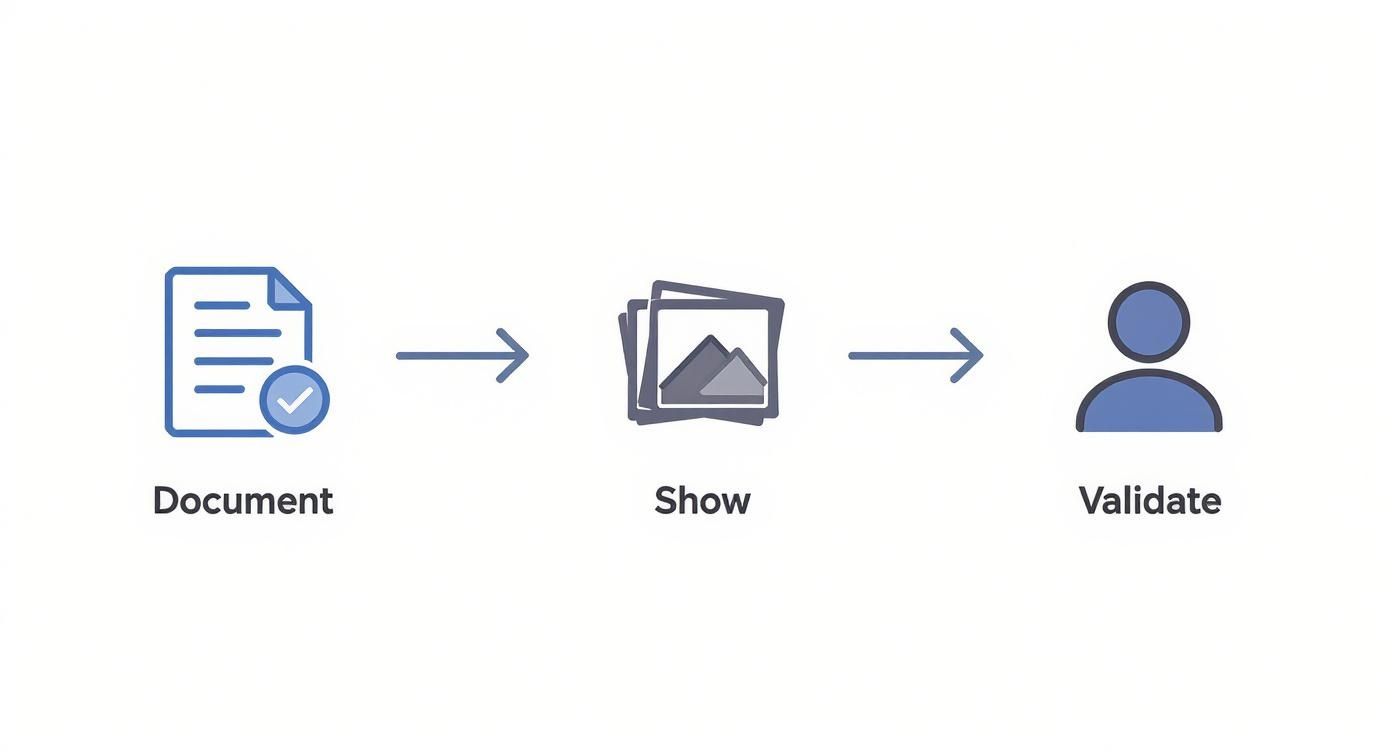
By documenting your involvement, showing it with visuals, and validating it with third-party testimony, you build a powerful and persuasive narrative for the court.
Unique Considerations for Texas Mothers and Fathers
Even though the Texas Family Code is written to be completely gender-neutral, it’s a fact that mothers and fathers can feel like they're starting from different places in a custody case. Old societal expectations can still linger, but the law itself is crystal clear: parental rights are equal, and every single decision must be based on the child’s best interest.
The key is to understand these lingering perceptions and build a case that tackles them head-on with undeniable proof. Your goal, whether you’re a mom or a dad, is exactly the same: prove through your actions that you are a consistent, stable, and deeply loving parent. This isn't about your gender; it's about showing the court your essential role in your child's life.
Practical Advice for Texas Fathers
Many dads walk into a custody case worried they’re facing an uphill battle. The good news is, that's often not true in modern Texas courts. The most powerful thing you can do is proactively dismantle any outdated stereotypes by showing, not just telling, the judge how hands-on you really are.
Your actions and your documentation are your best friends here. To build a rock-solid case, fathers should focus on:
- Being the Point Person: Make sure you're the one scheduling doctor and dentist appointments. Get your name and number listed as a primary contact at your child’s school. Be the parent who emails the teacher.
- Managing the Daily Grind: Show that you handle the real-life logistics. This means everything from knowing your kid's shoe size and favorite after-school snack to helping with homework and shuffling them to soccer practice.
- Creating a True Home: Your house or apartment needs to be your child’s home, not just a place they visit on weekends. This means having their own room, clothes in the drawers, toys on the shelves, and dedicated spaces that communicate, "You belong here."
Fathers aiming for a 50/50 custody schedule in Texas are navigating a complex but changing legal world. While Texas courts often prefer joint legal custody (sharing decision-making), getting equal physical time isn't automatic. Your chances hinge on proving your active involvement, the stability you offer, how close you live to the other parent, and your child's age. To dig deeper, you can learn more about the factors influencing 50/50 custody for fathers at ramosfamilylaw.com.
Effective Strategies for Texas Mothers
Mothers are often the primary caregivers before a separation, but simply stating this isn't enough for a judge. You need to provide evidence of that history while also demonstrating that you're committed to fostering a healthy relationship between your child and their father.
Any hint that you're trying to block the other parent's involvement will be a huge red flag for the court.
Mothers can strengthen their position by:
- Documenting the History of Care: Create a timeline that highlights your consistent role in your child’s life. Note key milestones you managed, from potty training to the first day of school, and the daily responsibilities you've always handled.
- Proving You Support Co-Parenting: Be the one who initiates communication. Send texts or emails to the father about upcoming parent-teacher conferences, doctor’s appointments, and school picture day. Keep a log of these communications to show the judge you're all about teamwork.
- Keeping the Focus on the Child: Frame every argument around your child’s stability and routine. Don't let it become about your past issues with the other parent. The winning argument is always about maintaining the consistency your child needs and relies on.
The parent who wins is the one who can best prove their consistent, hands-on involvement and their unwavering commitment to supporting the child’s relationship with the other parent. It all comes down to showing you're the parent best equipped to provide for your child’s total well-being.
How Finances and Child Support Impact Custody
When you're focused on your child's well-being, talking about money can feel uncomfortable. But the reality is that financial stability is a huge part of creating a safe, predictable home for a child, which makes it a critical factor in any Texas custody decision. Understanding how your finances and child support fit into the bigger picture is key to presenting a strong, responsible case.
A common myth is that a parent can withhold visitation if child support isn't paid, or refuse to pay support if they're not seeing their child. Let’s be clear: in Texas, this is absolutely not the case. Possession schedules and child support are two legally separate issues.
However, a judge will absolutely look at a parent’s willingness and ability to provide consistent financial support. It’s part of the overall picture of their commitment to the child's best interest. Proactively paying for things your child needs—even before a formal court order is in place—sends a powerful message that you put your child first.
Understanding Child Support Calculations
Texas uses specific guidelines to calculate child support, primarily based on the non-primary parent's net monthly resources. It’s a straightforward percentage-based system that adjusts depending on how many children are involved.
As of September 1, 2023, the Texas legislature increased the cap on net monthly resources used in these calculations. The cap jumped from $9,200 to $11,700. This was a significant move, designed to reflect the rising cost of living and make sure support orders more accurately cover what it actually costs to raise a child today. You can read more about how these Texas Family Code changes from thetxattorneys.com might play out in your own situation.
While money doesn't equal love, showing financial responsibility demonstrates your ability to provide a stable future. It's one more piece of evidence that proves your commitment to your child's total well-being.
Ultimately, by addressing financial matters head-on and responsibly, you reinforce your position as a stable, dependable parent. It shows the court you understand that good parenting means meeting all of your child's needs—emotional, physical, and financial.
Common Questions About Texas Child Custody
When you’re in the middle of a custody case, it feels like a thousand questions are running through your mind. Getting clear, straightforward answers is one of the best ways to reduce anxiety and focus on what matters. Let's tackle some of the most common questions we hear from Texas parents.
Can My Child Decide Who to Live With in Texas?
This is a question we hear all the time. In Texas, once a child turns 12, the law requires a judge to interview them in private to hear their preference about which parent they want to live with. Here’s the crucial part, though: the child's preference is not legally binding.
While a judge will give a mature child’s wishes serious consideration, it's just one of many factors in the final decision. The ultimate ruling will always come down to the child's overall best interest, not just what they want in that moment.
What Is a Standard Possession Order?
The Standard Possession Order (SPO) is essentially the default parenting schedule laid out in the Texas Family Code. It’s designed to provide a predictable, consistent routine and is generally presumed to be in a child's best interest.
Under a typical SPO, the non-primary parent has the child on:
- The first, third, and fifth weekends of a month.
- Alternating major holidays like Thanksgiving and Christmas.
- An extended period during the summer, usually around 30 days.
Of course, this is just the standard. Parents are always free to agree on a custom schedule that works better for their family. A judge can also order a different possession schedule if there's solid evidence showing the SPO wouldn't be in the child's best interest.
How Can I Modify an Existing Custody Order?
Life happens, things change, and custody orders can change, too. To modify a Texas custody order, you have to file a formal Petition to Modify with the court. In it, you’ll need to prove two key things:
- There has been a material and substantial change in the circumstances of the child or one of the parents since the last order was signed.
- The modification you're asking for is in the child’s best interest.
What counts as a "material and substantial change"? It could be anything from a parent's relocation to a significant shift in lifestyle, or new concerns about the child's physical or emotional safety in one parent's home. This two-part test promotes stability for the child while still allowing for flexibility when it's genuinely needed.
Next Steps: Taking Control of Your Case
Navigating a child custody case can feel overwhelming, but you don't have to do it alone. The key takeaways are to focus everything on your child's best interests, document your involvement meticulously, and understand the legal process. By taking a proactive, child-focused approach, you empower yourself to achieve the best possible outcome for your family. The most important step you can take is to seek professional guidance tailored to your unique situation.
If you need help with a child custody or visitation case in Texas, our experienced attorneys can guide you every step of the way. Contact The Law Office of Bryan Fagan, PLLC today for a free consultation.