
When your relationship with your child is on the line, understanding your rights is the first step toward protecting what matters most. In Texas, parental alienation happens when one parent intentionally turns a child against the other. While it's not a specific crime you can find in a statute book, Texas family courts see this behavior for what it is: a serious form of emotional harm that goes directly against a child's best interests. This can absolutely be grounds for changing custody orders.
How Texas Law Views Parental Alienation
When you feel like you're being pushed out of your child's life, it's a deeply painful and frustrating experience. You might feel helpless watching a once-loving bond start to crumble under the influence of your ex. It’s critical to understand that Texas law takes these situations very seriously, giving you powerful options to protect your relationship.

You won’t find the exact phrase "parental alienation" defined in the Texas Family Code. Instead, its principles are woven into the very fabric of the state's guiding legal standard: the “best interest of the child.” This is the North Star for judges in every decision they make about custody and visitation, ensuring a child’s well-being is the top priority.
The Best Interest of the Child Standard
According to Texas Family Code Chapter 153, a judge must put a child's emotional and physical well-being above everything else. Parental alienation is seen as a direct assault on that well-being. It’s not about a single argument or disagreement; it's a destructive pattern of manipulation meant to destroy a child’s healthy relationship with a parent. This kind of behavior is emotionally damaging and is a huge factor in custody cases.
When looking at a child's best interests, a judge will weigh several factors, many of which are directly harmed by alienating behaviors. These include:
- The child's emotional and physical needs, both now and in the future.
- The stability of the home environment.
- The parenting abilities of the individuals seeking custody.
- Any actions or failures to act by a parent that point to an improper parent-child relationship.
When one parent actively tries to poison the child's relationship with the other, they are showing the court they are incapable of fostering a stable, emotionally healthy environment.
Alienating Behavior vs. Healthy Co-Parenting
To help you tell the difference between destructive behavior and normal co-parenting hiccups, we've put together this comparison. It can help you spot patterns that might be cause for concern.
| Alienating Behavior | Healthy Co-Parenting Behavior |
|---|---|
| Bad-mouthing the other parent to the child or in front of them. | Speaking about the other parent respectfully, even when disagreeing. |
| Sharing inappropriate details about the divorce or legal matters. | Keeping adult issues between the adults and protecting the child from conflict. |
| Interfering with communication (blocking calls, not passing on messages). | Encouraging regular and open communication between the child and the other parent. |
| Making the child feel guilty for loving or enjoying time with the other parent. | Supporting the child’s relationship with both parents and celebrating their time together. |
| Forcing the child to choose sides or act as a spy. | Presenting a united front on major decisions and respecting boundaries. |
Recognizing these signs is the first step. Healthy co-parenting supports a child’s right to love both parents without fear or guilt, which is exactly what Texas courts want to see.
The Impact on Custody and Visitation
Let's be clear: parental alienation in Texas isn't just a theory; it carries real-world legal consequences. If you can prove a consistent pattern of this behavior, a court can and will take significant action. This might mean modifying the possession schedule (the court-ordered visitation calendar), changing the rules of a Joint Managing Conservatorship (where both parents share rights and responsibilities), or even naming one parent as the sole managing conservator.
Sadly, this is an incredibly common issue. Studies have found that parental alienation affects a staggering 59.1% of divorced parents, who report seeing specific alienating behaviors from their ex-partners. This statistic shows just how often these damaging tactics pop up in Texas custody disputes. You can learn more about the harsh reality of parental alienation statistics and warning signs. In the most severe cases, a judge might even order supervised visitation for the alienating parent to protect the child’s emotional safety.
Your concerns are valid, and the legal system is set up to address them. The key is to remember that you aren't just fighting against hurtful words; you are protecting your child from emotional harm and standing up for their legal right to have a healthy relationship with both parents.
Recognizing the Warning Signs of Alienation
How can you tell if the painful distance growing between you and your child is actually parental alienation? It’s a question that keeps loving parents awake at night, wondering if they did something wrong or if something more sinister is at play. Spotting the patterns is the first, most critical step toward protecting that precious relationship and standing up for your rights. This isn't about one bad argument or a moody teenager; alienation is a consistent, destructive pattern of behavior designed to poison a bond.
These signs usually break down into two categories: the manipulative actions of the alienating parent and the heartbreaking changes you see in your own child's behavior. Understanding both sides of this coin is key to seeing the situation clearly so you can take the right action.
Behaviors from the Alienating Parent
The alienator’s actions often start small, almost invisibly, but they build over time. Their goal, whether they admit it or not, is to systematically dismantle the emotional connection you share with your child.
Keep an eye out for these recurring behaviors:
- Constant Criticism: They’re always badmouthing you to your child. This isn't just venting; it's a campaign to paint you as uncaring, incompetent, or even dangerous by exaggerating flaws or making things up entirely.
- Interfering with Communication: Suddenly, they "forget" to give your child messages. Your calls get blocked, or your child is mysteriously "too busy" every time you try to connect. It creates a communication vacuum that makes you look absent and uninterested.
- Sabotaging Your Time: They’ll schedule conflicting activities during your court-ordered time or tell your child you simply chose not to show up. Making up excuses to deny visitation is a classic move to erase your presence from your child's life.
- Sharing Inappropriate Information: They might drag your child into the messy, adult details of the divorce, blaming you for the family breaking up or for money problems. This forces the child to play referee and casts you as the bad guy.
- Making the Child Choose: They create situations where your child feels forced to pick a side, sometimes offering rewards for loyalty. It puts an impossible weight on a kid who just wants to love both of their parents.
These aren’t isolated incidents; they’re calculated moves to warp your child’s reality. To see how these play out in real-world cases, you can read more about the different examples of parental alienation that Texas courts see all the time.
Changes in Your Child’s Behavior
The truly devastating part of parental alienation in Texas is watching what it does to your child. The loving, affectionate kid you know can start acting in ways that are not just confusing, but deeply hurtful.
A tell-tale sign of alienation is when a child's rejection of a parent is absolute, with no room for mixed feelings. Healthy parent-child relationships have their ups and downs. An alienated child, however, often shows an unwavering, black-and-white negativity that just doesn't line up with their actual experiences with that parent.
Here are some of the most common behavioral shifts to watch for:
- Unjustified Criticism: Your child suddenly starts repeating negative things about you that sound like they came straight from an adult. They might bring up things they couldn't possibly remember or twist minor past hiccups into major betrayals.
- Weak or Absurd Reasons for Anger: When you ask them why they’re upset or don't want to see you, their reasons are often vague, irrational, or just plain bizarre. Think "I don't like your curtains" as a reason to avoid your home for a weekend.
- Lack of Guilt: Your child might treat you with shocking disrespect or coldness, yet show zero remorse. This complete lack of empathy is a huge red flag because it goes against a child’s natural instinct to feel bad for hurting someone they love.
- Unwavering Support for the Alienator: The child automatically sides with the alienating parent in every single disagreement, no questions asked. There's no independent thought—just a parroting of the other parent’s opinions and feelings.
Seeing these signs in your child is not a reflection of your parenting skills. It's evidence of a toxic influence actively poisoning your relationship. Recognizing this pattern for what it is—a manipulative strategy that harms your child—is the first step toward reclaiming your rightful place in their life.
How to Document and Prove Parental Alienation
When you’re fighting to protect your relationship with your child, the emotional toll is immense. Your feelings are completely valid, but inside a Texas family courtroom, it’s evidence—not emotion—that drives decisions. Shifting from seeing the signs of alienation to actually proving them requires a methodical, strategic approach. Building a strong case is all about collecting the proof that shows a clear, consistent pattern of harmful behavior.
A judge needs more than just your word against the other parent's. They need tangible proof that shows how the other parent's actions are actively damaging your child's well-being and trampling on your parental rights. This is where meticulous documentation becomes your most powerful tool.
Start with a Detailed Journal
Your first and most important step is to start a journal. Think of it less like a diary and more like a legal logbook. Record every single incident, no matter how small it seems at the time.
Get specific and stick to the facts. For each entry, make sure you include:
- Date and Time: Pinpoint exactly when the event happened.
- What Happened: Describe the specific behavior. Did the other parent block a scheduled visit? Did they make a nasty comment about you in front of your child? Write down direct quotes if you can remember them.
- Who Was Present: Note any witnesses, like a family member, teacher, or friend.
- Your Child's Reaction: How did your child act afterward? Did they seem withdrawn, angry, or parrot a negative phrase they heard? Document it.
This journal will help create a timeline that turns what might seem like isolated incidents into a clear pattern of parental alienation in Texas that a judge can easily see and understand.
The infographic below shows the direct line between an alienating parent's actions and the changes you might see in your child's behavior.
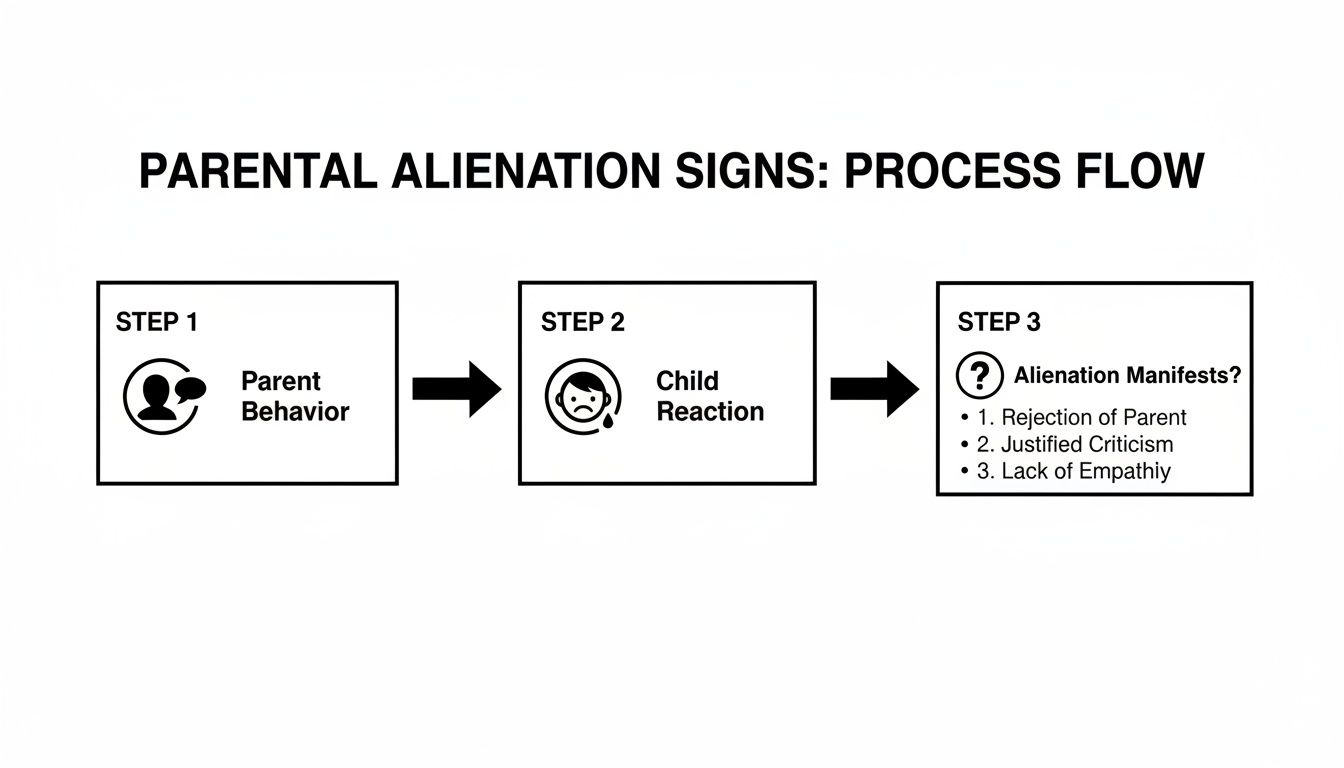
This visual helps connect the dots, showing how consistent negative behaviors directly lead to a child's resistance and emotional withdrawal—a key element to prove in court.
Preserve Digital and Written Evidence
On top of your journal, you need to save every single piece of communication that pulls back the curtain on the other parent's alienating tactics. This digital paper trail can be incredibly persuasive.
Make sure you save:
- Text Messages: Screenshot any hostile, manipulative, or flat-out false statements.
- Emails: Archive any emails where the other parent interferes with your parenting time or makes disparaging remarks.
- Social Media Posts: Take screenshots of public posts or messages that are clearly meant to paint you in a negative light to your child or the community.
- Voicemails: Save any messages that contain threats, manipulation, or clear evidence of gatekeeping.
A critical part of this is knowing how to organize legal case files so that all your evidence is accessible and easy to present. Keeping everything sorted by date and type will make it much easier for your attorney to build a compelling case.
The Power of Third-Party Witnesses
Sometimes, the most powerful testimony comes from someone on the outside looking in. Neutral third parties can offer an unbiased perspective on the changes they’ve seen in your child or the behavior they’ve witnessed from the other parent.
Think about people like these and consider asking if they'd be willing to testify:
- Teachers or school counselors who’ve noticed a sudden shift in your child’s behavior or heard them repeat negative things about you.
- Therapists or pediatricians who can speak to your child's emotional state from a professional standpoint.
- Family friends, neighbors, or coaches who have witnessed the other parent's alienating behavior firsthand.
Their objective observations can add a tremendous amount of credibility to your claims.
Using Court-Appointed Experts
When a judge suspects parental alienation, they have tools to get a clearer picture of the family dynamics. Your attorney can file a motion asking the judge to appoint neutral experts to investigate what's really going on.
These court-appointed professionals act as the eyes and ears of the court. Their job is to provide an objective, in-depth analysis of the family situation, focusing solely on the child's best interests.
Two common appointments are:
- Custody Evaluator: This is a mental health professional who conducts a thorough investigation. They'll interview both parents, the child, teachers, and anyone else relevant, then provide a detailed report with recommendations directly to the judge.
- Amicus Attorney: This is an attorney appointed to represent the child's best interests. They can investigate the claims, speak with everyone involved, and tell the judge what they believe is the best outcome for the child.
These experts are trained to cut through the noise and uncover the truth. Their professional assessment gives the court the confidence it needs to take decisive action. Proving parental alienation is a marathon, not a sprint, but with careful documentation and a solid legal strategy, you can protect your child and your relationship.
Taking Legal Action to Stop Parental Alienation
When you have proof that the other parent is deliberately trying to ruin your relationship with your child, it’s easy to feel powerless. But knowing there are powerful legal tools you can use is often the first step toward taking back control.
Taking decisive legal action is the most effective way to stop the alienating behavior and protect your child’s fundamental right to have a healthy relationship with both parents. In Texas, the family court system gives you several clear pathways to fight back.
This isn’t about winning an argument; it’s about using the law to restore balance and make sure the court's orders are actually being followed. From overhauling the custody arrangement to holding the other parent accountable for their actions, you have options.
Modifying the Parent-Child Relationship
The single most powerful legal tool for tackling parental alienation in Texas is to file a Petition to Modify the Parent-Child Relationship. Think of this as your formal request to a judge, asking them to change the current custody, visitation, or support order because the old one just isn’t working anymore.
To win a modification, you have to prove two critical things:
- There has been a material and substantial change in the family's circumstances since the last order was signed.
- Changing the order is in the best interest of the child.
A documented pattern of parental alienation is a textbook example of a "material and substantial change." It directly attacks the child’s emotional well-being, which is always the court’s number one priority.
In your petition, you can ask for very specific changes to the custody order, such as:
- Altering the Possession Schedule: This might mean asking for more time with your child to give you a fighting chance to repair the damage.
- Changing Decision-Making Rights: You could request the exclusive right to make decisions about your child’s counseling or schooling, especially if the other parent is using those areas to alienate.
- Designating You as the Primary Parent: In the most severe cases, you can ask the court to give you the exclusive right to decide where your child lives.
This legal filing forces the issue out of the shadows. It puts all the evidence you’ve gathered directly in front of a judge, where it can no longer be ignored.
Enforcing Your Right to Visitation
What happens when the other parent just flat-out ignores the court-ordered schedule and refuses to let you see your child? That’s a direct violation of a court order, and you absolutely do not have to put up with it.
In these situations, you can file a Motion for Enforcement. This motion asks a judge to step in and force the other parent to follow the visitation schedule. It's a serious move that can have real teeth, leading to consequences like:
- Ordering make-up visitation time for you.
- Requiring the other parent to pay your attorney’s fees.
- Imposing fines or even jail time for contempt of court.
A Motion for Enforcement sends a powerful message: court orders aren’t just suggestions. They are legally binding directives designed to protect the parent-child relationship, and they will be upheld.
This action is crucial for stopping the immediate harm of being denied access and bringing back the consistency and routine your child desperately needs.
Seeking Court-Ordered Support
Beyond just changing custody or enforcing visitation, the court has other tools to address the emotional damage alienation causes. You can ask a judge to order specific interventions aimed at repairing your relationship with your child and stopping the destructive behavior.
These requests often include:
- Court-Ordered Counseling or Therapy: A judge can order the whole family into counseling to help rebuild communication and get to the root of the problem. This provides a structured, neutral space for healing to begin.
- Restraining Orders: You can ask for an order that specifically prohibits the other parent from bad-mouthing you in front of the child or interfering with your phone calls and messages.
These legal options give you a clear roadmap for taking action. You are not powerless here. By working with a family law attorney who understands the nuances of these cases, you can build the right strategy to protect your parental rights and, most importantly, your child's future.
Understanding Recent Limits on Reunification Therapy
The world of family law is always changing, and a recent update in Texas has a direct impact on how courts can handle severe cases of parental alienation. If you're a parent trying to mend a damaged relationship with your child, it's critical to understand this new law and how it limits certain intensive reunification therapies.
But this change doesn't weaken your case. It just sharpens your focus on the powerful legal tools already available right here in Texas.
The Impact of House Bill 3783
A major shift came with the passage of Texas House Bill 3783. This law now puts specific guardrails on the kind of therapeutic interventions a judge can order in high-conflict custody cases, especially those involving alienation.
At its core, the new rule is designed to protect children from potentially coercive or traumatic therapies that suddenly remove them from their established home and parent. Because of this, courts are now leaning more heavily on solutions found within the Texas legal system instead of ordering intensive, out-of-state programs.
What Texas Courts Can No Longer Order
This law fundamentally changes the landscape of available remedies. With House Bill 3783 signed into law by Governor Greg Abbott, Texas courts are now prohibited from ordering certain extreme measures.
Specifically, judges can no longer issue no-contact orders between a child and their preferred parent, force children to be transported out-of-state for intensive therapy, or allow threats or coercion to be used to make a child participate. In short, some of the more aggressive interventions used in the past are officially off the table.
This legal update reinforces a critical point: the most effective way to fight parental alienation in Texas is through our established court system. It puts an even greater emphasis on using solid evidence to win custody modifications and enforcement actions.
A Strategic Shift Toward In-Court Remedies
Instead of seeing this as a roadblock, think of it as a strategic clarification. The law is now guiding parents toward more durable and legally sound solutions. Your energy is best spent on the powerful, in-court remedies we've already discussed.
These are the proven legal actions that get results:
- Filing a Petition to Modify Custody: This is your primary tool. It allows you to ask a judge to change the possession schedule or even who has the right to decide where the child lives, all based on the evidence of alienation you've gathered.
- Filing a Motion for Enforcement: This holds the other parent accountable for violating court-ordered visitation. It’s about protecting your legally-guaranteed time with your child.
- Requesting Court-Ordered Counseling: Local, structured therapy can be ordered to help repair the parent-child relationship in a stable and familiar environment, without the disruption of out-of-state travel.
While some forms of reunification therapy face new challenges, other options like virtual family therapy can offer an accessible starting point for healing fractured relationships. For a closer look at your options, check out our guide on the available treatments for parental alienation.
Ultimately, this legal shift empowers you to focus on what works: building a strong, evidence-based case within the Texas Family Code. That has always been, and remains, the most powerful way to protect your parental rights and your child's well-being.
Next Steps: Your Action Plan to Protect Your Parental Rights
It’s completely understandable to feel overwhelmed by the weight of this fight. But right now, clear, strategic action is your best defense. When your relationship with your child is under attack, having a solid plan is the most powerful tool you have. Think of this as your roadmap forward—a way to move with confidence and protect your legal rights.
You aren’t in this battle alone. A smart legal strategy is your strongest defense against the painful effects of parental alienation in Texas. The steps you take next are critical. They will safeguard the bond with your child and make sure a Texas court understands what’s really going on in your family.
Key Takeaways
To cut through the chaos, you need to focus your energy on four crucial priorities. Each one builds on the last, creating a solid foundation for your case and helping you get back a sense of control.
Your game plan should include these four steps:
- Document Everything with Precision: As we've talked about, evidence is everything. Keep a detailed, factual journal of every missed visit, manipulative text, and negative comment your child repeats. This log is the backbone of your case.
- Focus on the Quality of Your Time: When you are with your child, make every single moment count. Create positive, loving memories. The one thing you should never do is discuss the legal case or the other parent’s behavior. Your consistency and love are powerful antidotes to the poison of alienation.
- Avoid Direct Confrontation: It’s so tempting to confront the alienating parent, but this almost always backfires. They can easily twist your words and use your frustration against you in court. Let your actions—and your attorney—do the talking.
- Consult an Attorney Immediately: Trying to navigate a parental alienation case on your own is incredibly difficult. An experienced family law attorney knows how to translate your evidence into a compelling legal argument, file the right motions, and fight for you and your child’s best interests.
If you need help with a child custody or visitation case in Texas, our experienced attorneys can guide you every step of the way. Contact The Law Office of Bryan Fagan, PLLC today for a free consultation.
Answers to Your Toughest Alienation Questions
When you're fighting to protect your child from the toxic effects of alienation, questions are inevitable. This is a confusing, painful road, but getting clear answers is the first step toward regaining your peace of mind and building a rock-solid legal strategy. We've compiled some of the most common questions we hear from parents who are in your exact shoes.
Can My Child Really Refuse to See Me in Texas?
It’s a gut punch when your child says they don’t want to see you. But here’s the bottom line: in Texas, a child doesn’t get to call the shots on visitation, even if they are 12 years of age or older. While a judge might listen to their stated preference, the court's final decision will always come down to the "best interest of the child," a standard defined by the Texas Family Code.
If you can show that their refusal is a direct result of parental alienation in Texas, the judge has full authority to enforce your court-ordered time. The courts know that a child's feelings can be manipulated. They will step in to protect the child's right to a healthy relationship with both parents, not just the one they currently favor.
Is Parental Alienation Considered Child Abuse Here?
While you won't find "parental alienation" listed as a crime in the Texas Penal Code, family courts absolutely view it as a severe form of emotional abuse. A judge sees this behavior for what it is: a direct assault on your child's psychological health and a violation of their right to a stable, loving environment with both parents.
This is exactly why proving alienation is such powerful grounds for modifying a custody order. The court’s number one job is to protect the child. If one parent is actively causing emotional harm, the judge can—and will—make changes to the possession schedule or even who gets to decide where the child lives.
How Long Does a Custody Modification Actually Take?
There's no single answer here; the timeline for a custody modification case can vary quite a bit. It really depends on how complex your situation is and how backed up the court's calendar is. Realistically, these cases can take several months, and sometimes longer, to get to a final resolution.
But you don't have to just wait it out. Your attorney can file for Temporary Orders right at the start. This is a crucial move that lets you ask a judge for immediate help, like ordering family counseling or enforcing a temporary possession schedule to protect your child while the bigger case moves forward.
What if the Other Parent Just Ignores the Court Order?
When a parent willfully defies a court-ordered possession schedule, you have a direct and powerful legal tool. You can file a Motion for Enforcement, which is a formal way of telling the judge, "Hey, the other parent is breaking the rules."
This action holds them accountable for denying your time with your child. It can lead to serious consequences, including fines, ordering make-up visitation time for you, and in some cases, even jail time for contempt of court.
If you need help with a child custody or visitation case in Texas, our experienced attorneys can guide you every step of the way. Contact The Law Office of Bryan Fagan, PLLC today for a free consultation.