Skip to content
When your child’s future is on the line, understanding your rights matters most. Many parents hear the term “shared custody in Texas” and picture a perfect 50/50 split of parenting time, but the reality is more nuanced. Texas law is deeply concerned with how parents share the rights and duties of raising their child, not just how they divide the calendar. This guide is here to bring clarity and confidence to your journey.
How Texas Determines Custody: The "Best Interest of the Child"
Navigating a custody arrangement can feel overwhelming, but understanding the core principles is the first step toward building a stable, loving future for your children. In Texas, courts operate from a powerful starting point: keeping both parents deeply involved in a child’s life is almost always in their "best interests." This is the heart of shared custody.
You’ll quickly notice that Texas law doesn't often use the word "custody." Instead, the legal term is conservatorship. Think of this not as ownership, but as a sacred responsibility to be a guardian for your child's well-being. The arrangement that judges strongly prefer is called Joint Managing Conservatorship—the legal framework for what most of us simply call shared custody.
Shared Custody is About Shared Decision-Making
Here is the most important concept to grasp: Joint Managing Conservatorship is less about splitting time and more about ensuring both parents have a voice in the major decisions that shape a child's life. It’s a cooperative model designed to empower you and your co-parent to work as a team for your child.
These shared rights and responsibilities typically include:
- Educational Decisions: Working together on school enrollment, academic support, and extracurriculars.
- Healthcare Choices: Making joint decisions on doctors, dentists, therapists, and significant medical treatments.
- Religious and Moral Upbringing: Agreeing on the core values and principles you wish to instill in your child.
As outlined in the Texas Family Code, the court’s primary duty is to protect the "best interest of the child." A Joint Managing Conservatorship is generally seen as the best way to achieve this because it fosters stability and guarantees a child meaningful access to both loving parents.
While one parent is typically named the "primary" conservator with the right to determine the child’s residence, both parents retain significant, powerful rights. This structure ensures that even if the day-to-day schedule isn’t a perfect 50/50, your fundamental role as a parent remains protected. Understanding this from the start helps you set realistic expectations and focus on what truly matters for your family’s future.
Decoding Joint Managing Conservatorship in Plain English
When parents separate, one of the deepest fears is losing a say in their child’s life. Fortunately, Texas law starts with the presumption that keeping both parents involved is what’s best for kids. The legal structure for this is Joint Managing Conservatorship (JMC), the foundation of shared custody in Texas.
Think of it as being co-leaders of the most important organization you will ever run—your child's future. Under a JMC, you and your co-parent share the authority to make critical decisions together, ensuring both of you remain central figures in your child’s world.
Rights And Duties vs. Possession Schedules
It’s easy to confuse two key parts of a custody order: your rights and duties versus the possession schedule. Joint Managing Conservatorship is about the big-picture decisions.
These shared rights and duties usually include the power to:
- Make joint decisions about your child’s education and healthcare.
- Consent to medical, dental, and psychological treatment.
- Access your child’s school and medical records.
- Attend school activities and consult with teachers.
The possession schedule, on the other hand, is the calendar. It details when your child is physically with each parent. While JMC is the default for decision-making, it does not automatically mean a 50/50 time split. For a deeper look into how this works in practice, you can explore our complete guide to Joint Managing Conservatorship in Texas.
The Primary Conservator Role Explained
Even when parents share decision-making, Texas courts will name one parent as the primary managing conservator. This parent has the exclusive right to decide where the child lives (usually within a specific geographic area). This is a critical designation because it establishes the child’s main home and determines their school district.
The other parent is the non-primary conservator. While they don’t determine the child's residence, they retain all other shared rights and duties. This structure is designed to give the child a stable home base while making sure both parents stay fully engaged and empowered.
At its heart, JMC is about cooperative parenting. It legally empowers both parents to stay in the driver's seat of their child's life—a goal everyone can support.
While Texas courts favor joint arrangements, it’s important to have realistic expectations. For example, some data shows that fathers in Texas, on average, have possession about 33% of the time. You can learn more about how judges approach these calendars and why shared rights don't always mean equal time by reviewing these insights on Texas custody schedules. This highlights why understanding the difference between shared rights and possession time is so crucial.
Navigating the Standard Possession Order
So, what does a shared parenting schedule actually look like? For most Texas families living within 100 miles of each other, the court uses a default template called the Standard Possession Order (SPO). Think of it as a predictable roadmap designed to ensure both parents get consistent, meaningful time with their child without constant negotiation.
This schedule is the most common arrangement in Texas shared custody cases and is legally presumed to be in the child's best interest. It gives the non-primary parent a clear framework, removing much of the guesswork from planning.
What the SPO Typically Includes
While every family's order can be customized, the basic structure of the SPO for the non-primary parent usually includes:
- Possession of the child on the first, third, and fifth weekends of a month.
- Alternating major holidays, ensuring each parent celebrates with their child in even and odd-numbered years. For example, one parent may have Thanksgiving in even years, while the other has it in odd years.
- An extended period of possession during the summer, typically 30 days. This can often be broken up or taken all at once.
The purpose of the SPO is to provide stability and routine for the child while protecting the parent-child relationship on both sides. It is designed to help everyone plan their lives and minimize conflict.
This timeline illustrates the common legal steps from filing a custody case to receiving a final order.
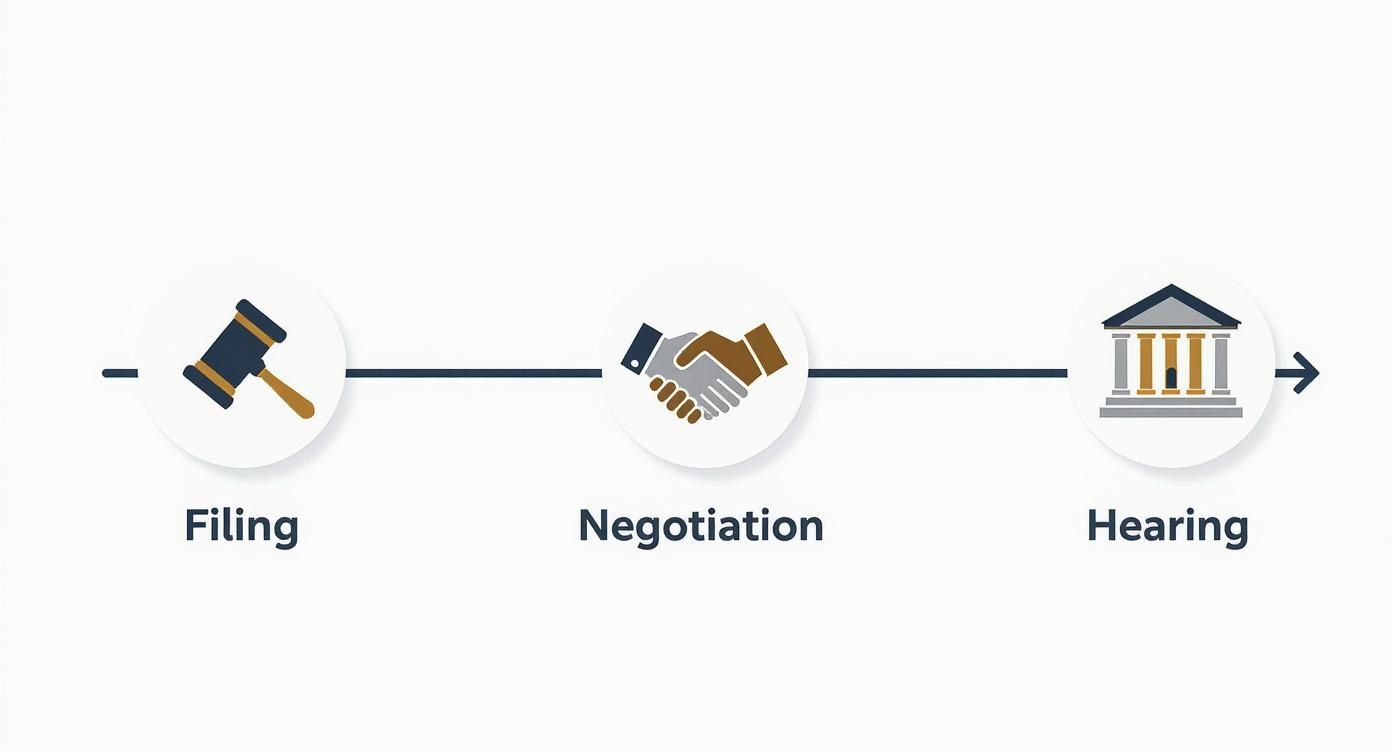
As you can see, while the process involves formal steps like filing petitions and attending hearings, there are many opportunities for parents to reach agreements along the way.
To break it down further, here's a simplified look at the non-primary parent's time under a typical SPO.
Texas Standard Possession Order (SPO) at a Glance
This table offers a simplified overview of the typical parenting schedule for the non-primary parent under the Texas SPO.
| Time Period | Non-Primary Parent's Possession |
|---|---|
| Regular Weekends | The 1st, 3rd, and 5th weekends of a month. |
| Major Holidays | Alternates each year (e.g., Thanksgiving, Christmas/Winter Break). |
| Summer Vacation | 30 days of extended possession, often with notice given by a spring deadline. |
| Child's Birthday | Typically a couple of hours if it falls on a day they don't have possession. |
| Parent's Birthday | Often, possession on their birthday if it falls on a weekend they have the child. |
Specific pickup and drop-off times are also detailed in the final order, adding another layer of predictability for everyone.
"Standard" Doesn't Mean "Mandatory"
It is crucial to remember that the SPO is a default, not a mandate. You and your co-parent have the right to agree on a different possession schedule that better fits your family’s unique needs. A judge will almost always approve a custom schedule if both parents agree it’s in the child’s best interest.
Furthermore, a court can deviate from the SPO if one parent proves the standard schedule is unworkable or not right for the child. For a more detailed breakdown, you can read our detailed guide to Standard Possession Orders in Texas.
Whether you follow the standard order or create your own, the ultimate goal is a stable, loving environment where your child can thrive with both parents actively involved in their life.
Can You Get a 50/50 Custody Schedule in Texas?
When parents discuss custody, one goal often comes up: 50/50. The desire for an equal schedule comes from a place of deep love and a commitment to being equally involved. The good news is that Texas law absolutely allows for 50/50 possession schedules.
However, a true 50/50 arrangement is not the default in Texas. Unlike the Standard Possession Order, which is presumed to be in a child’s best interest, an equal schedule requires more justification. You and your co-parent must either agree to it or prove to the court that this specific plan is the best fit for your family.
Factors a Judge Considers for a 50/50 Schedule
Before a judge approves a 50/50 possession schedule, they must be convinced it will help your child thrive. The decision is less about a calculator and more about real-world stability for your child.
Here’s what a judge will look at closely:
- Geographic Proximity: How close do the parents live to each other? A 50/50 split works best when the commute between homes doesn't disrupt school routines or create stress.
- Co-Parenting Relationship: Can you and your co-parent communicate effectively and cooperatively? An equal schedule demands a high level of teamwork to manage daily logistics.
- The Child's Age and Needs: What works for a teenager is very different from what a toddler needs. The court will consider your child’s maturity and ability to handle frequent transitions between homes.
- Parents' Schedules: Do your work and life schedules realistically support a 50/50 split? If one parent travels constantly for work, an equal schedule might be more disruptive than helpful.
A 50/50 schedule isn't just about dividing time; it's about demonstrating that both homes can provide a consistent, supportive, and stable environment. A judge will always prioritize the child’s emotional and physical well-being over a perfectly balanced calendar.
The Reality of Parenting Time in Texas
While Texas law encourages both parents to be deeply involved, achieving an exact 50/50 physical possession split can be challenging without agreement. Practical factors like the distance between homes, a young child's need for a primary home base, or the desire to keep a child in their current school can make the Standard Possession Order a more stable choice in the court's view.
Wondering what different schedules look like? A parenting time calculator for Texas families can be a valuable tool. It allows you to visualize various possession arrangements and see how they translate into actual days with your children.
Ultimately, whether you are aiming for a 50/50 plan or a modified SPO, the most important thing you can do is demonstrate your commitment to cooperative, child-focused parenting.
How Child Support and Shared Custody Interact
One of the most common myths about shared custody in Texas is that a 50/50 possession schedule automatically eliminates child support. This is a significant misunderstanding that can create conflict and unrealistic expectations for parents.
While your parenting schedule is a factor, Texas law treats child support and possession as two distinct issues. The purpose of child support is to ensure your child’s needs are met consistently across both households. The calculation is based more on the parents’ financial resources than the calendar.

Why Child Support is Still Common in Shared Custody
In Texas, child support calculations follow guidelines in the Texas Family Code. The formula primarily considers the non-primary parent's net monthly income and the number of children they are supporting. The system is designed to ensure the child experiences a similar level of financial support, no matter which parent’s home they are in.
Even with a 50/50 schedule, a judge will almost certainly order child support if there is a significant income gap between you and your co-parent. The goal is to equalize the households to prevent a child's standard of living from dropping when they move between homes. The higher-earning parent will typically be ordered to pay support to the parent who earns less.
The court’s logic is powerful: A child’s needs for food, clothing, shelter, and healthcare do not change based on whose house they are at. Child support ensures both parents contribute to those needs in proportion to their financial ability.
This practical approach recognizes that even when time is shared equally, one parent often bears a different share of the day-to-day costs.
Understanding the Financial Guidelines
Custody arrangements directly impact child support obligations. As of September 1, 2023, the state raised the cap on net monthly resources subject to child support from $9,200 to $11,700. In shared custody cases with a significant earnings difference, the parent with the higher income may still be required to pay child support, as the court considers both parents' complete financial pictures. To see the latest updates, you can review these changes to the Texas Family Code.
Gaining clarity on financial expectations from the start helps you and your co-parent build a more stable and predictable future for your child.
Key Takeaways and Your Next Steps
Navigating shared custody in Texas can feel complex, but you are not alone. This guide was designed to provide you with the essential information you need, from understanding Joint Managing Conservatorship to seeing how possession schedules and child support connect.
The most powerful step you can take now is to focus on what you can control: your unwavering commitment to your child's well-being.
Next Steps to Empower You
Here are the core principles to guide your decisions moving forward:
- Shared Custody Means Shared Decision-Making: At its heart, Texas law empowers both parents to have a voice in the major decisions affecting their child. This is the foundation of a Joint Managing Conservatorship.
- The SPO is a Starting Point, Not a Rule: The Standard Possession Order (SPO) provides a predictable schedule, but it is not set in stone. You and your co-parent can create a custom plan that better fits your family.
- Child Support is Calculated Separately: Remember, even a 50/50 possession schedule does not automatically eliminate child support. A court will evaluate each parent’s financial resources to ensure the child’s needs are met.
The most effective approach is to prioritize cooperative co-parenting, document your active involvement in your child's life, and seek professional legal guidance to create a strategy tailored to your family's unique situation.
As you move forward, remember this process is about building a stable new normal for your child. Focusing on their emotional health can make a significant difference. You might find value in resources like a guide to building your child's confidence as you both adjust.
If you need help with a child custody or visitation case in Texas, our experienced attorneys can guide you every step of the way. Contact The Law Office of Bryan Fagan, PLLC today for a free consultation.
Frequently Asked Questions About Texas Custody
When you are concerned about your child's future, it's natural to have questions. Getting clear, straightforward answers is the first step toward making confident decisions for your family. Here are some of the most common questions we hear from Texas parents.
Can My Child Decide Which Parent to Live With in Texas?
This is a common question from parents of older children. In Texas, once a child turns 12, a judge may interview them in private to hear their preference on where they want to live.
However, a child's wishes are just one factor among many. A judge must always rule based on the child's overall best interest. They will consider the child's maturity, the reasons for their preference, and all other family circumstances. While your child’s voice will be heard, it is not the deciding vote.
What if We Live More Than 100 Miles Apart?
When parents live far from each other, the standard Texas possession schedule is often impractical. In these cases, the Standard Possession Order (SPO) is typically modified for long-distance co-parenting. The goal is to reduce travel stress for the child while ensuring they have meaningful time with both parents.
A non-primary parent in a long-distance plan will usually have fewer but longer visits. For example, instead of every other weekend, they might have the child for every spring break and for a longer period in the summer—such as 42 days instead of the standard 30.
How Do I Modify an Existing Custody Order?
Life changes—jobs are relocated, children’s needs evolve, and family circumstances shift. The good news is that custody orders can be modified to reflect these changes. To modify an existing order in Texas, you must file a formal Petition to Modify with the court.
To be successful, you must prove two things: first, that there has been a “material and substantial change” in the circumstances of a parent or the child, and second, that changing the order is in the child's best interest.
This "change" could be a parent's relocation, a significant shift in a parent's lifestyle, or simply the fact that a growing child has different needs. The court will only approve a modification if it clearly benefits the child.
If you need help with a child custody or visitation case in Texas, our experienced attorneys can guide you every step of the way. Contact The Law Office of Bryan Fagan, PLLC today for a free consultation.