
When your child’s future is on the line, understanding your rights matters most. A visit from Child Protective Services (CPS) can feel like a nightmare, especially during a custody dispute. You’re likely asking, can CPS affect your custody case in Texas? The short answer is an immediate and resounding yes. A CPS investigation, no matter how it ends, can completely change the direction of a child custody battle in family court.
The Call That Changes Everything
It often begins with a knock on the door or a phone call that makes your heart stop: CPS is looking into a report of child abuse or neglect. Even if the allegations are completely false, the investigation itself introduces a powerful and often unpredictable new player into your custody case. Suddenly, you're not just dealing with your co-parent—you're also answering to a state agency.
While CPS (known officially as the Department of Family and Protective Services or DFPS) doesn’t write your final custody orders, their findings carry immense weight with a judge. The Texas Family Code requires judges to make every decision based on the “best interest of the child.” This is a legal standard that looks at a child's physical and emotional well-being. A CPS report that raises safety concerns can heavily sway a judge's opinion on what that best interest truly is, even if the case is eventually closed without a finding of abuse or neglect.
Understanding the Key Players and Their Roles
Navigating this incredibly stressful time gets a little easier once you understand who does what. CPS and the Family Court are separate, but their work is deeply connected.
Think of it like this: CPS acts as the on-the-ground investigator, gathering facts and assessing immediate safety. The family court judge, however, is the ultimate decision-maker who creates the legally binding orders that will govern your life for years to come. The information CPS uncovers becomes critical evidence presented to the judge, who then uses it to create or change a permanent custody order, known as a conservatorship.
To help you see the difference clearly, let's break down their specific functions.
CPS Action vs. Court Order: What's the Difference?
This table clarifies the distinct roles and powers of CPS and the Family Court to help parents understand who controls their custody agreement.
| Action | CPS Role (DFPS) | Family Court Role |
|---|---|---|
| Investigation | Investigates allegations of abuse and neglect. | Reviews CPS findings as evidence but is not bound by them. |
| Child Removal | Can seek an emergency court order to remove a child from a home deemed immediately dangerous. | Issues the legally binding emergency order allowing the removal. |
| Safety Plans | Creates informal, temporary "safety plans" with parents to address immediate concerns. These are not court orders. | Does not create safety plans but may consider them when evaluating a parent’s cooperation. |
| Custody Orders | Does not create or modify permanent custody orders (conservatorship). | Issues legally binding orders defining conservatorship, possession schedules (visitation), and parental rights. |
Understanding these distinctions is the first step toward taking back control. Our goal is to replace your fear with knowledge, empowering you to stand firm and protect your parental rights.
How a CPS Investigation Works in Texas
That first phone call or knock on the door from Child Protective Services (CPS) can make your world spin off its axis. Suddenly, everything feels out of your control. But here’s something we tell all our clients: the investigation isn't random. It follows a specific process, and understanding that playbook is the first step to protecting your family and your rights.
A CPS investigation kicks off when someone files a report alleging abuse or neglect. The agency then assigns a caseworker who must make contact within a certain timeframe—sometimes as quickly as 24 hours, depending on how severe the allegations are. That first meeting can happen anywhere: your home, your child’s school, even your job.
The Initial Stages and Interviews
The investigator's main job is to gather facts. This means they will want to interview you, your children (often alone), and other people who know your family, like teachers or relatives. They will also almost certainly ask to see your home to check for safety hazards.
This is a critical moment. You have rights, and you need to assert them respectfully. You should always ask for the caseworker's name and credentials. While it’s wise to cooperate, you are not required to answer every question on the spot or sign anything without speaking to an attorney first. A calm, firm, and informed approach is your best strategy.
The infographic below shows how these early steps can directly feed into a custody dispute.
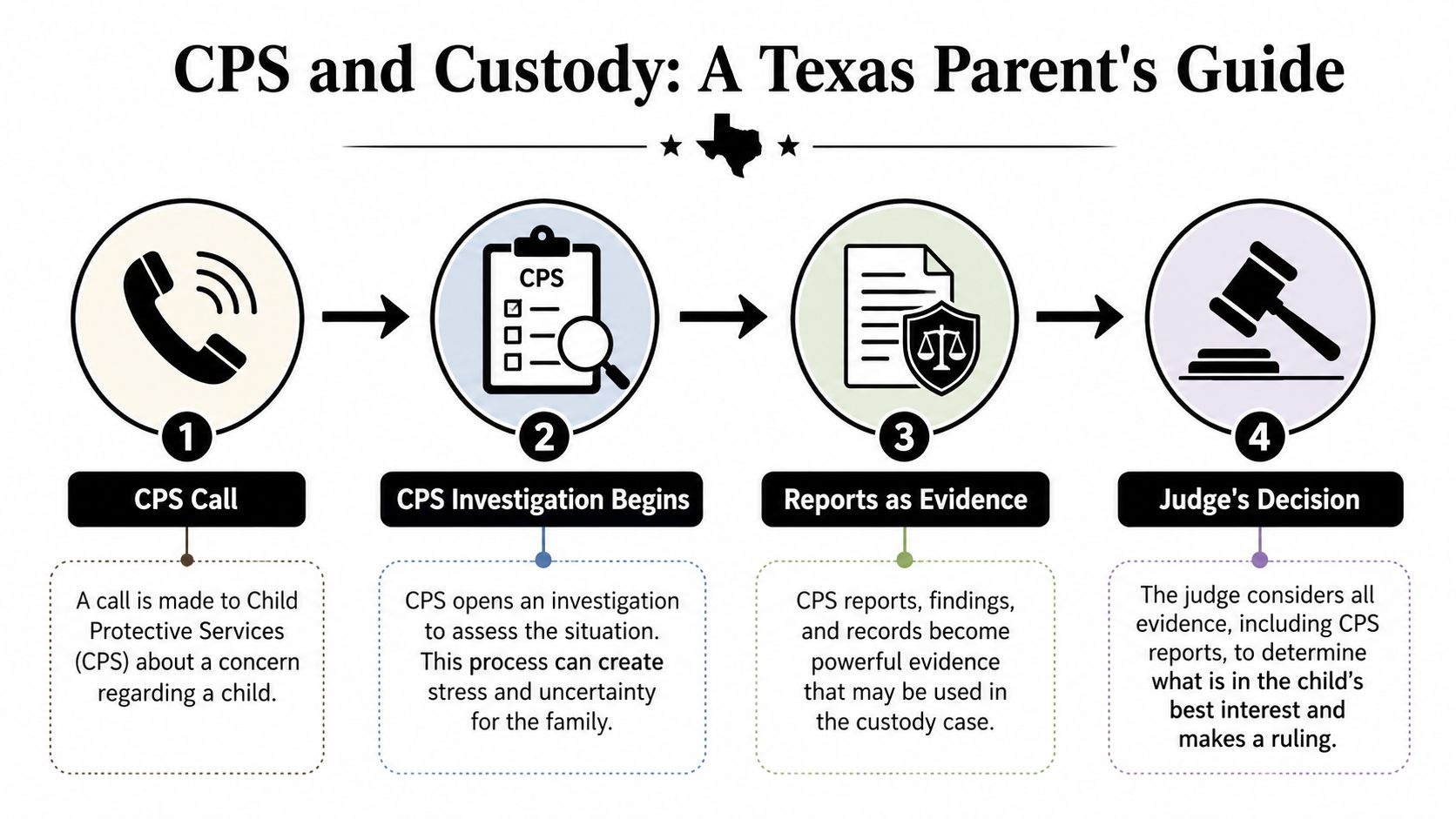
As you can see, even if CPS doesn't remove your child, the information they collect can become powerful evidence in a family court hearing.
Investigation Findings and What They Mean
Once the interviews and home visits are done, the caseworker makes an official finding. In Texas, the outcome will usually fall into one of these categories:
- Reason to Believe (RTB): This is the one to watch out for. It means the investigator decided it was more likely than not that abuse or neglect happened. An RTB finding can be a major problem in a custody case, even if CPS takes no further action.
- Ruled Out: This is the best possible outcome. It means the investigator found no credible evidence to support the report.
- Unable to Determine: This finding means there wasn't enough evidence to prove or disprove the allegations.
It is vital to understand that a “Reason to Believe” finding from CPS is not a court ruling. However, this administrative finding can be presented as compelling evidence to a family court judge, who must then weigh it when deciding on possession schedules (the visitation calendar) and who will have the right to determine the child’s primary residence. The perception of risk, created by the CPS report, can absolutely affect your custody case in Texas.
No matter what happens, document everything. Keep a detailed log of every call, save every email, and write down notes after every single meeting. If the CPS investigation becomes part of your custody battle, this record will be one of your most valuable assets.
How CPS Reports Influence Custody Decisions
When Child Protective Services (CPS) finishes an investigation, their work doesn't just go away. The file they’ve built—packed with interview notes, photos, and their final report—can land right in the middle of your custody case, becoming a pivotal piece of evidence. It's something we see all the time, and you need to understand how a judge will use this information when making decisions that will shape your family’s future.
A judge’s ruling in any Texas custody case comes down to one guiding principle: the “best interest of the child.” This standard, straight from the Texas Family Code, isn't a simple checklist. It’s a holistic view of a child's physical safety and emotional well-being. A CPS report can offer a direct, and often persuasive, window into that world for the judge.
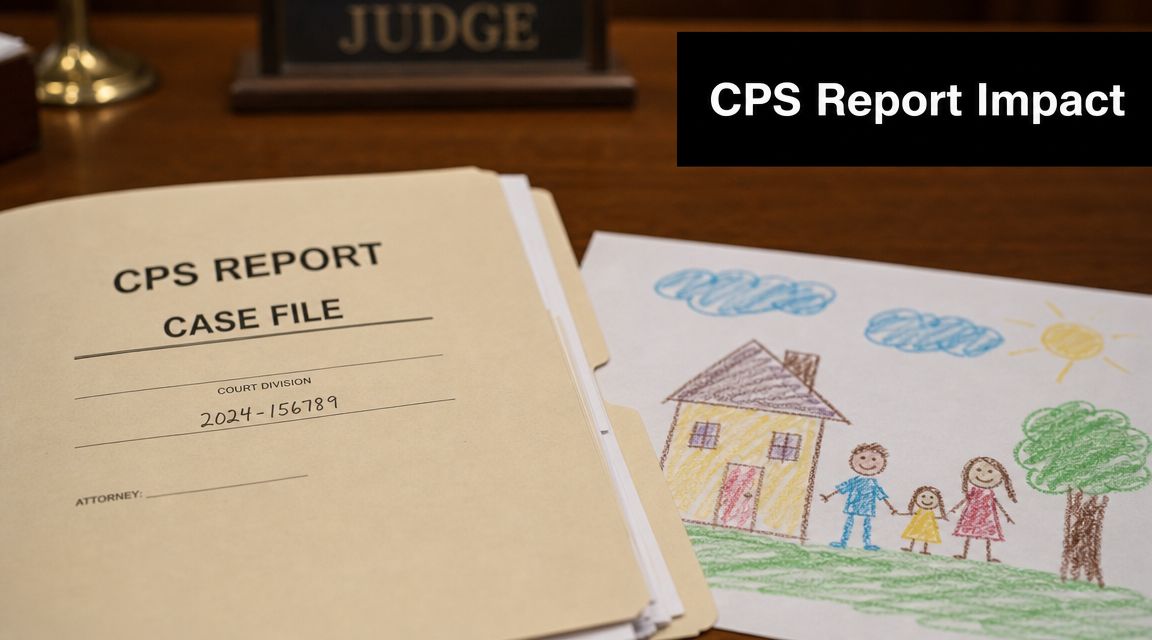
From Investigation File to Courtroom Evidence
Even if CPS closes your case and your children remain with you, that file doesn't get shredded. The other parent in your custody battle can subpoena the entire CPS file and present it as evidence in court. From there, a judge will dig into the caseworker’s findings, paying close attention to any “Reason to Believe” (RTB) determination of abuse or neglect.
This is how CPS can affect a Texas custody case, even without taking direct action. While CPS can't rewrite your custody order on its own, its findings can absolutely give a judge the grounds to add new restrictions. We’ve seen parents ordered to have supervised visitation, take parenting classes, or go to counseling—all based on a CPS case that was officially closed.
When CPS Reports Are Used as a Weapon
In bitter custody fights, it’s a sad reality that one parent might try to weaponize a CPS report to get an upper hand. A single false or exaggerated allegation can kick off a full investigation, causing immense stress and casting doubt on a perfectly good parent.
If you find yourself on the receiving end of false allegations, you have to act quickly and strategically. A judge may see a pattern of malicious and unfounded CPS reports for what it is—a form of parental alienation—which can seriously backfire on the parent making the calls. You can learn more about this by reading about what happens if a parent is accused of abuse in a custody case.
Concerns about substance abuse in a CPS report often lead to court-mandated treatment, which comes with its own set of legal hurdles. If a judge sees these concerns, they might order drug testing, evaluations, or rehab as a prerequisite for custody or visitation. For anyone facing these requirements, getting good legal guidance for addiction treatment in Dallas is critical to understanding your rights and what’s expected of you.
In the end, the judge’s job is to weigh the credibility of the CPS report against all the other evidence and figure out what’s truly best for your child. Your attorney’s role is to add context, fight back against inaccuracies, and make sure the full story gets told.
Navigating Safety Plans and Emergency Orders
When a CPS caseworker shows up at your door, it feels like the world stops. You're under immense pressure to make critical decisions in a matter of minutes, and those choices can have lasting consequences for your family. The caseworker will likely present you with two possibilities: a safety plan or a court-ordered emergency removal.
Knowing the difference between these two paths isn’t just legal trivia—it’s essential for protecting your parental rights from the very first interaction.
A Parent-Child Safety Placement, more commonly known as a Safety Plan, is a tool caseworkers frequently use. They often present it as a “voluntary” way to keep your child at home or with a trusted relative while the investigation unfolds. The plan will spell out temporary rules, which might mean you have to leave your own home or have your contact with your child restricted.
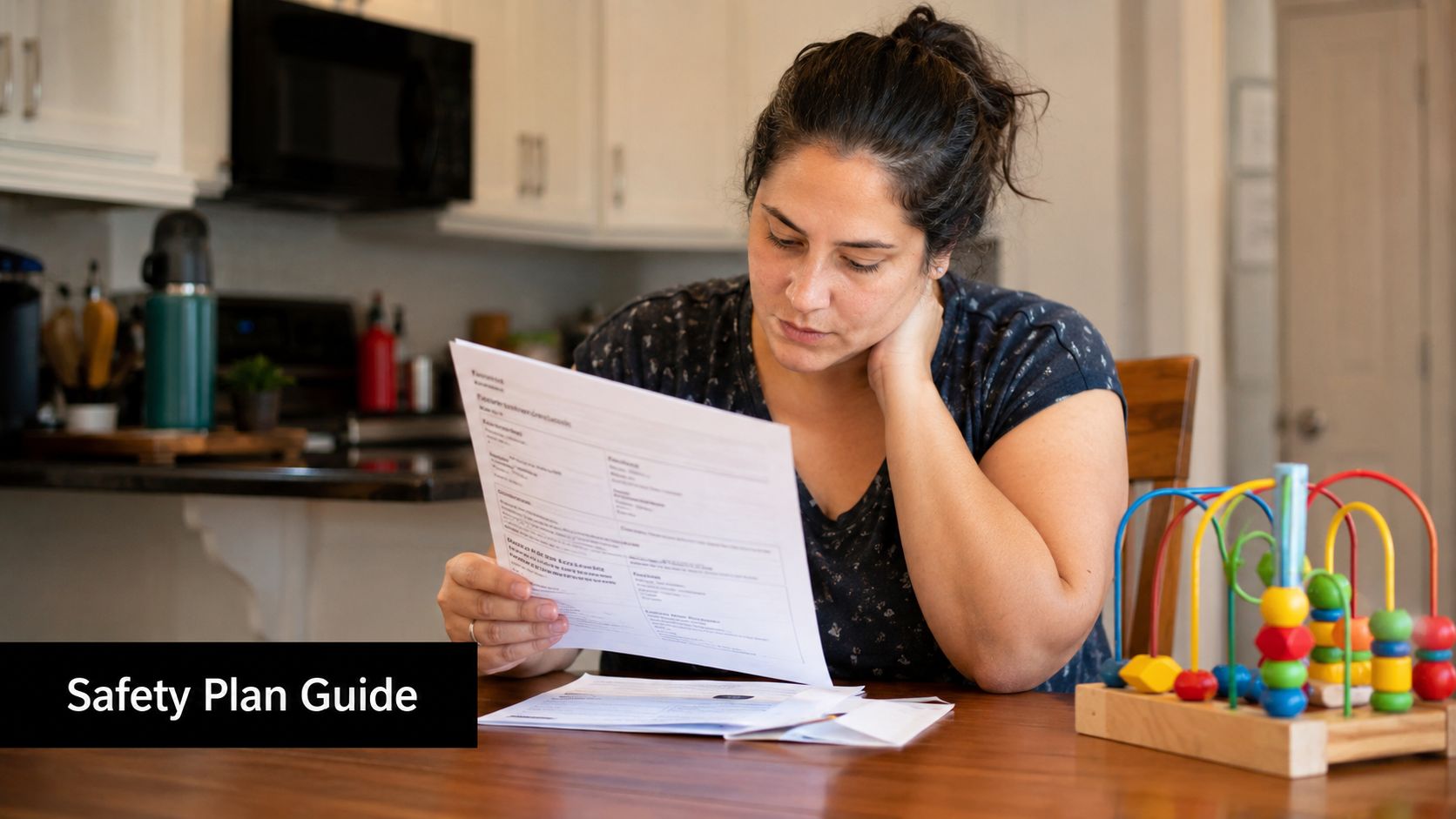
Understanding the Stakes of a Safety Plan
Here's the critical part: a safety plan is not a court order. But signing one can have serious legal fallout. It often feels like the only option to stop CPS from taking your child, but by signing, you are agreeing to major restrictions on your rights without any judicial oversight.
Anything you agree to in that document can absolutely be used against you later in family court. The other parent’s attorney could point to the plan as "proof" that you accepted the need for supervision or restrictions, making it harder to argue for a standard possession order.
Even if a CPS case closes without a formal removal, how you navigate these early moments is crucial. To give you an idea of the stakes, Texas DFPS filed nearly 5,000 parental-rights termination cases in Fiscal Year 2022 alone. That's how quickly these situations can escalate. Data from Texas-focused legal discussions confirms that agreeing to a safety plan can directly influence temporary custody decisions, even if the plan itself isn't a permanent order.
When CPS Seeks an Emergency Order
If the caseworker believes your child is in immediate danger, they won’t be asking you to sign anything. They will go straight to a judge to get an emergency order to remove your child. For any parent, this is the most terrifying scenario imaginable.
To take this drastic step, CPS has to convince a judge that leaving the child in the home creates a real and present danger of physical or emotional harm.
An emergency order, often called a Temporary Restraining Order (TRO) in this context, is a formal court action that immediately suspends your rights to have possession of your child. The law requires that you get a court hearing, usually within 14 days, to fight the removal and tell your side of the story.
This hearing is a full-blown legal battle where having an experienced attorney isn't just a good idea—it's a necessity. We've created a detailed resource you can use to explore our guide on emergency ex parte custody orders in Texas. Your lawyer's job is to protect your rights, challenge the state’s evidence, and start the fight to get your family back together as quickly as possible.
Steps to Proactively Protect Your Parental Rights
When Child Protective Services (CPS) gets involved in your life, it’s easy to feel overwhelmed and powerless. But I want to be clear: feeling helpless is not your only option. The key is to be proactive. This is your action plan—a straightforward guide for both mothers and fathers to protect their families when CPS can affect your custody case in Texas.
The very first move you should make is critical: contact an experienced family law attorney who understands both custody battles and the unique pressures of a CPS case. A good lawyer acts as a buffer between you and the investigator, making sure your rights are protected from day one. They can guide you on how to cooperate respectfully without saying something or signing a document that could torpedo your case down the road.
Document Everything and Build Your Case
From the moment CPS first contacts you, your job is to become your own best advocate by keeping meticulous records. Trust me, every single interaction matters.
- Create a Log: Start a detailed journal of every phone call, meeting, text, and email with your caseworker. Jot down the date, time, who was there, and a summary of what you discussed. This log can be a lifesaver for correcting inaccuracies later.
- Request Everything in Writing: If a caseworker asks you to do something or sets a new rule, politely ask them to confirm it in an email. This creates a paper trail and eliminates any "he said, she said" confusion about what's expected of you.
- Gather Positive Evidence: While CPS is trained to look for problems, you need to be gathering proof of your parenting strengths. Collect letters of support from teachers, doctors, neighbors, and friends—anyone who can speak to your great parenting and the loving home you provide for your child.
It's a heartbreaking reality that some people will use false, malicious reports to try and get a leg up in a custody fight. To learn how to fight back against this tactic, you should read our guide on how to respond to false allegations.
Take Charge of Your Well-Being
Sometimes, proving you're a fit parent means tackling personal challenges head-on. If the CPS investigation brings up concerns about issues like mental health or substance use, taking real, concrete steps to get help is a powerful way to show the court you're committed to your child's well-being.
For example, recognizing and addressing issues like depression and substance abuse through integrated treatment is a critical step in protecting your parental rights, as these are often factors in CPS cases. A helpful guide to DFW dual diagnosis care can offer more insight into the resources available.
By taking this proactive approach—getting a lawyer, documenting everything, and building your own case—you shift from a defensive posture to one of empowerment. You show both CPS and the court that you are a capable, responsible parent who is dedicated to what’s best for your child.
Common Questions About CPS and Custody in Texas
When Child Protective Services (CPS) gets involved in your custody case, your mind can spin with a thousand questions and worst-case scenarios. We get it. We've guided countless Texas parents through this exact storm, and we know you need straight answers, not legal jargon. Here are the most common concerns we hear and the practical advice you need right now.
Can My Ex Use a False CPS Report Against Me?
This is a gut-wrenching question we hear far too often. The unfortunate truth is, yes, a co-parent might try to weaponize the system by making a false or exaggerated report, hoping to gain an edge in a custody fight. But judges have seen this tactic before.
If a judge spots a pattern of unfounded, malicious reports, it can absolutely backfire on the parent making the calls. Texas courts often see this behavior for what it is—a form of parental alienation, which is directly against the “best interest of the child” standard that guides every custody decision. While you must treat every CPS contact with seriousness, a good lawyer can help expose these manipulative tactics for the judge to see.
What if CPS Closes My Case? Can It Still Be Used in Court?
Yes, and this is a point that catches many parents by surprise. Even if CPS closes the case and determines the allegations are "ruled out," the other parent’s attorney can still subpoena the entire investigation file and bring it into your custody hearing. This is one of the most significant ways CPS can affect your custody case in Texas, even long after the agency is out of the picture.
The other side might comb through caseworker notes or initial interviews, looking for anything they can twist into a negative narrative. Your attorney’s job is to be ready for this—to provide context, challenge misinterpretations, and make sure the judge understands the full story behind that closed file.
Do I Have to Let a CPS Worker into My Home Without a Warrant?
This is one of your most important rights. You are not legally required to let a CPS caseworker into your home unless they have a court order, a warrant, or a true emergency is happening right then and there. You can—and should—politely step outside to talk, ask for their credentials, and tell them you are happy to cooperate but will need to speak with your attorney before scheduling a home visit.
The key is to be cooperative without waiving your rights. You can be professional and respectful while still protecting your family's privacy and getting legal advice before any formal interviews or inspections.
Do Fathers and Grandparents Have the Same Rights?
Absolutely. In Texas family law, rights and duties are tied to your legal standing as a parent or conservator, not your gender or relationship. Fathers have the exact same constitutional rights to parent their children as mothers do. Likewise, if you are a grandparent who has been granted conservatorship rights by a court, you have the same rights as a parent and must take the same proactive steps to protect your role in the child's life when CPS gets involved.
Your Next Steps: Taking Back Control
Facing a CPS investigation is one of the toughest, most frightening challenges a parent can endure. But it is not a final verdict, and it’s certainly not insurmountable. Remember this: CPS provides information and makes recommendations, but the family court judge—guided by the Texas Family Code—is the one who makes the final decision about your child's future. The best thing you can do right now is take focused, intentional action.
It's completely normal to feel a mix of fear, anger, and confusion when you find out that CPS can affect your custody case in Texas. The most important thing you can do is take that raw emotion and channel it into a strategic plan. Your goal is simple: prove to the court that you are the loving, responsible parent your child needs for a safe and stable life. That process starts with your very first interaction with CPS.
The path forward requires a clear strategy, not just wishful thinking. Document every conversation. Cooperate respectfully, but never surrender your rights. And most importantly, never agree to or sign anything without fully understanding how it could impact your custody arrangement down the road. Taking back control starts with getting professional legal advice from an advocate who is on your side.
If you need help with a child custody or visitation case in Texas, our experienced attorneys can guide you every step of the way. Contact The Law Office of Bryan Fagan, PLLC today for a free consultation.