Skip to content
When you believe your child is in danger, every second counts. The fear and helplessness can be overwhelming, and knowing what to do feels impossible. In a Texas custody battle, raising an allegation of child endangerment isn't just a legal maneuver—it fundamentally changes the entire case. The court’s focus immediately shifts to one thing: protecting your child.
Understanding your rights and what the court considers endangerment is your first and most critical step in taking the right action. This guide will walk you through the process, empowering you with the clarity you need during this difficult time.
How Texas Determines Custody: The "Best Interest of the Child"

When a judge hears that a parent's actions or living situation might be putting a child at risk, they take it incredibly seriously. In Texas, child endangerment isn't just about physical violence. It's a broad term that includes any environment or behavior that threatens a child's physical or emotional well-being.
This is where the legal standard known as the “best interest of the child” becomes the single most important rule. Every decision a Texas family court makes—from custody and visitation to parental rights—is guided by this principle. An environment that endangers a child is, by its very nature, never in their best interest.
What Texas Courts Consider Child Endangerment
So, what does a judge actually look for? Endangerment isn't always obvious. It can come from a parent's direct actions, their inaction, or even the people they allow around their child. A judge will look for a pattern of behavior or a specific situation that exposes the child to potential harm.
The table below summarizes some common scenarios that courts consider endangerment.
| Category of Endangerment | Specific Examples for a Texas Court |
|---|---|
| Exposure to Violence or Abuse | A child witnessing domestic abuse, being physically harmed, or being subjected to constant yelling and emotional outbursts. |
| Parental Substance Abuse | A parent's illegal drug use or alcohol dependency that impairs their judgment and ability to safely supervise the child. |
| Serious Neglect | Failing to provide adequate food, clean housing, necessary medical care, or proper supervision for the child's age. |
| Creating Dangerous Situations | Driving while intoxicated with the child, leaving them with an unsafe caregiver, or allowing them around people with violent or criminal histories. |
| Emotional or Psychological Harm | A parent engaging in severe parental alienation, making threats, or causing extreme emotional distress that harms the child's well-being. |
It's important to understand that the court focuses on the risk of harm, not just harm that has already occurred. For example, a parent who frequently passes out from drinking puts their child in danger, even if the child hasn't been physically injured… yet.
A finding of a history of family violence creates a legal presumption that it is not in the child’s best interest for the parents to be named Joint Managing Conservators—the standard arrangement where parents share decision-making.
The Immediate Impact on Your Custody Case
An endangerment allegation forces the court to act fast. A judge can immediately issue a Temporary Restraining Order (TRO) that severely limits or even prohibits a parent's contact with their child. They might also order supervised visitation, where the parent can only see their child in the presence of a neutral third party.
Whether you are the one raising these serious concerns or the one defending against them, the court needs credible evidence—not just angry accusations. This is where documenting everything becomes crucial. Texts, emails, photos, police reports, and witness testimony are all vital pieces of the puzzle that help a judge understand what’s really happening.
How Texas Law Defines and Acts on Endangerment
When your child’s safety is on the line, understanding the court's perspective is everything. The legal system has its own language, and knowing the key terms can give you a major advantage. For starters, you'll rarely hear a Texas judge use the word "custody." The official term here is conservatorship.
Think of conservatorship as the bundle of rights and duties a parent holds. It covers the big decisions: where your child goes to school, what medical care they receive, and their general upbringing. When endangerment is alleged, the court’s sole focus shifts to one question: who is best suited to protect this child?
What Endangerment Means to a Judge
Under Texas Family Code Chapter 153, every decision a judge makes must be based on the child's physical and emotional well-being. The legal definition of endangerment isn't a short, neat checklist; it's intentionally broad to cover any situation that puts a child's well-being at risk.
A judge will look for any action or environment that compromises a child's safety. This often includes:
- Physical or Emotional Harm: This is the most obvious form of endangerment, from a parent's violent outbursts to severe emotional manipulation that makes a child feel unsafe in their own home.
- Parental Substance Abuse: A parent's struggle with drugs or alcohol becomes a legal issue when it impairs their ability to be a safe, responsible caregiver.
- Exposure to Criminal Activity: Allowing a child to be around illegal activities or people with violent criminal records is a massive red flag for any court.
- Severe Instability: This can look like a chaotic and neglectful home environment or a parent's untreated mental health crisis that prevents them from meeting a child's basic needs.
In any child endangerment custody Texas case, the court sees its role as building a protective wall around the child. Any credible claim of endangerment is treated as a serious breach in that wall, demanding immediate court intervention.
Key Legal Concept: A history or pattern of family violence creates a rebuttable presumption that naming the parents as Joint Managing Conservators is not in the child’s best interest. Joint Managing Conservatorship is the standard setup where parents share rights. This presumption means the court will automatically lean toward giving one parent sole decision-making power unless the accused parent can prove they are no longer a threat.
How Courts Act on Endangerment Claims
When a credible endangerment claim is made, a Texas court isn't going to sit back and wait for a final trial months down the road. A judge has the power to take swift, decisive action to protect a child.
The most common first step is issuing a Temporary Restraining Order (TRO). A TRO acts as an immediate set of rules, often prohibiting the accused parent from coming near the child, their home, or their school.
The court can also drastically change the visitation schedule, legally known as possession and access. Instead of a standard schedule, a judge might order that all visits must be supervised by a professional agency or a neutral third party. This ensures the child can maintain contact with the parent, but only in a completely safe setting. In extreme cases, a judge can suspend all contact until the facts are sorted out. For urgent situations, understanding when Texas can exercise emergency custody jurisdiction is a critical next step.
The Real-World Impact of Abuse and Neglect on Custody
When a judge hears allegations of child endangerment, they aren't just weighing legal arguments. They’re picturing the real, tangible harm a child suffers. For parents in a Texas custody dispute, this is the most critical truth: a credible endangerment claim isn't just another factor in your case—it's a seismic event that can permanently alter your family's future.
The entire concept of "endangerment" in family law is built on a foundation of protecting children from devastating outcomes. The court’s swift reactions are a direct response to what can happen when a child is left in a dangerous environment. This isn't about parenting disagreements; it's about a child's fundamental right to be safe.
The Stark Reality Behind the Law
The stakes are incredibly high, a fact driven home by heartbreaking data. Between fiscal years 2018 and 2023, more than 1,200 children in Texas tragically lost their lives due to abuse and neglect. Many of these deaths occurred inside the very homes that should have been their sanctuary. This information is a stark reminder of why courts act so decisively to protect children.
For any parent, that number is horrifying. For a judge, it's a mandate. It reinforces their duty under Texas Family Code Section 153.002 to make the child's best interest their primary mission, with safety as the absolute top priority.
In family court, a credible allegation of endangerment is like pulling a fire alarm. Everything stops. Everyone's attention immediately turns to containing the threat, and the normal rules of custody and visitation don't apply until the child’s safety is guaranteed.
How Endangerment Immediately Changes a Custody Case
When a court believes a child is at risk, it will not hesitate to use its power to intervene. The real-world impact can stem from many sources, including complex situations involving child abusing friends and medication misuse, which can torpedo a custody case. A judge's immediate goal is to create a safe space for the child while the facts are investigated.
Here are the most common and immediate consequences of an endangerment finding:
- Emergency Orders: A judge can issue a Temporary Restraining Order (TRO) to immediately remove a child from a dangerous situation. This can happen fast, and it can prohibit a parent from having any contact with their child until a full hearing can be held.
- Mandated Supervised Visitation: The court may rule that a parent can only see their child in the presence of a neutral third party or at a designated professional agency. This allows the parent-child relationship to continue, but only under strict conditions that ensure the child's safety.
- Loss of Conservatorship Rights: Standard custody arrangements, like Joint Managing Conservatorship, are often taken completely off the table. A finding of family violence creates a legal presumption that giving parents shared rights is not in the child’s best interest, dramatically shifting the legal landscape in favor of the protective parent.
In the most severe cases, continued endangerment can lead to the termination of parental rights—a permanent, life-altering outcome. This is why you must approach any endangerment claim with the absolute seriousness it demands. Whether you're fighting to protect your child or defending yourself against false accusations, a strategic, evidence-based legal approach isn't just an option—it's a necessity.
Navigating a CPS Investigation During Your Custody Battle
That phone call from the Texas Department of Family and Protective Services (DFPS)—what most of us call Child Protective Services or CPS—can make your heart drop. Suddenly, your life is under a microscope, and the pressure is even more intense when you’re already in the middle of a custody battle.
It’s easy to think of a CPS investigation and a family court case as the same thing, but they are two separate legal processes. However, the outcome of one can absolutely impact the other. If CPS makes a formal finding that endangerment occurred, it becomes powerful evidence against you in your custody dispute. Knowing how to handle a CPS investigation isn’t just about following rules; it’s about protecting your rights as a parent.
The Stages of a CPS Investigation
When CPS gets a report of possible child endangerment, they are required by law to investigate. While every case is different, the investigation usually follows a set path. Your job is to stay calm, be strategic, and cooperate without giving up your rights.
The process typically unfolds in these steps:
- The Initial Report: Someone calls the CPS hotline—often anonymously—and alleges that a child is being abused or neglected.
- The First Contact: A caseworker will reach out, often with an unannounced visit to your home or a phone call. They will need to speak with you, the other parent, and the children.
- The Investigation Phase: The caseworker starts digging deeper. This means more interviews, inspecting your home, and talking to people like teachers, doctors, or relatives who know your child.
- The Finding: Once the investigation is complete, CPS will issue a formal finding. They might determine there is "Reason to Believe" abuse or neglect happened, or they may close the case as "Ruled Out."
This infographic shows just how quickly an allegation can escalate, pulling you directly into the court system and leading to major changes in your custody arrangement.
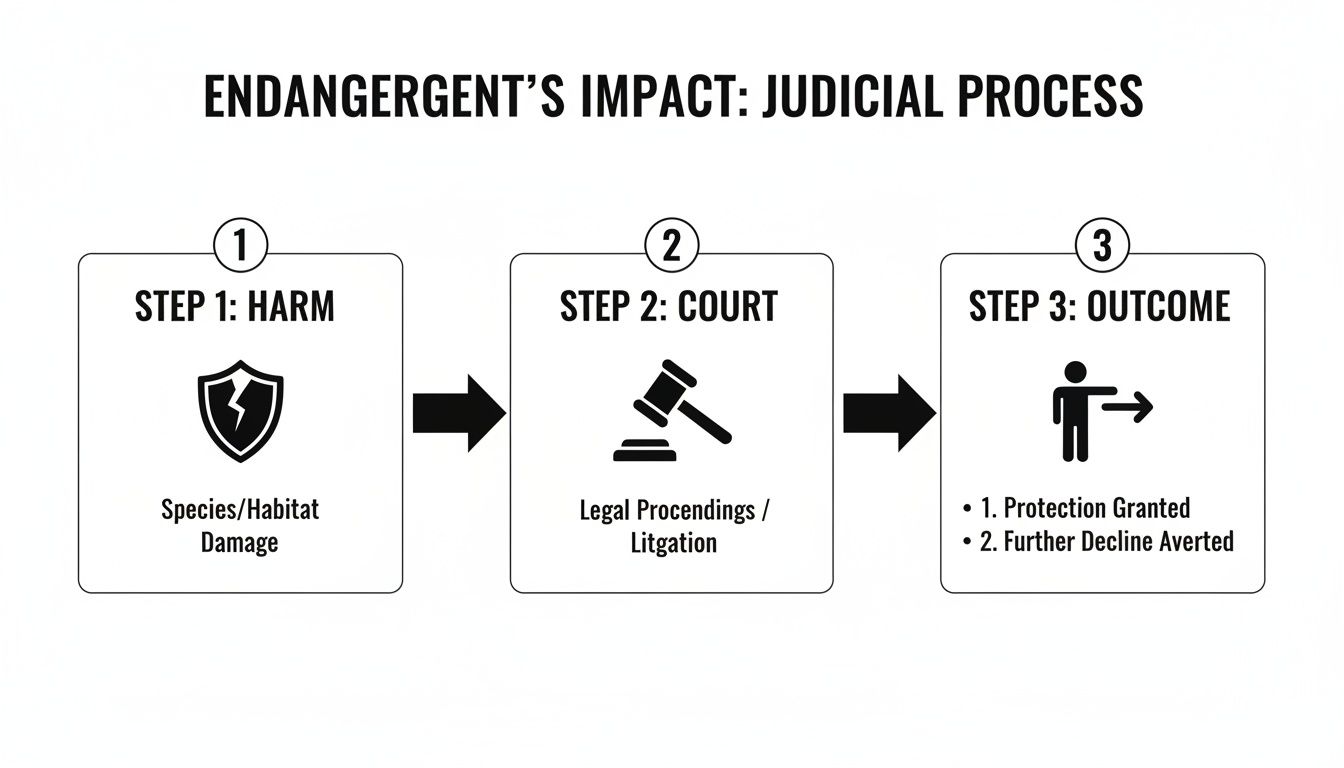
As you can see, a simple report can trigger a chain of events that could end in supervised visitation or even the loss of your conservatorship rights.
Dos and Don'ts When Dealing with CPS
Your reaction during a CPS investigation can change everything. It's completely natural to feel defensive when you're accused of something so serious, but a calm, respectful approach is always your best bet.
- DO be polite and cooperative, but DON'T sign any documents without talking to a lawyer first. You are not required to agree to a "Safety Plan" or anything else on the spot.
- DO document everything. Keep a detailed log of every phone call, visit, and conversation you have with your caseworker, including dates, times, and what was said.
- DON'T let your anger at the other parent boil over in front of the caseworker. The focus needs to be on your child's safety and your ability to parent effectively.
- DO call an experienced family law attorney right away. An attorney can explain your rights, manage communication with CPS, and protect you from missteps.
Remember, you have the right to legal representation. You are not required to face a CPS caseworker alone. Having an attorney guide you ensures your rights are protected every step of the way.
CPS cases often require sharing sensitive medical or psychological records. For legal teams, understanding Protected Health Information (PHI) is essential to make sure all evidence is gathered and used ethically. If you believe you’re the target of a malicious report, it’s critical to know how to respond to false allegations both inside and outside the courtroom.
Proving Endangerment to Protect Your Child in Court

In a Texas family courtroom, your gut feeling as a parent, no matter how strong, isn’t enough. While your intuition is invaluable, a judge must make life-altering decisions based on clear proof.
When you allege child endangerment, you’re asking the court to take a serious step. This means the burden falls on you to build a case that is so well-documented that a judge has no choice but to act. The key is to swap emotional pleas for an organized collection of facts.
The Power of Documentation
Think of documentation as the foundation of your case. In any child endangerment custody Texas case, judges depend on a clear timeline of events. The best way to create this is to start a detailed log of every incident that concerns you.
For every event, write down:
- The exact date and time it happened.
- A factual, objective description of what you saw and heard.
- Who else was there and could potentially be a witness.
- Any physical or emotional harm the child experienced.
- Any photos, videos, or other digital proof you were able to save.
This log does more than just organize your thoughts; it transforms your fears into a concrete pattern of behavior that an attorney can use to show a judge why your child is unsafe.
Compelling Evidence a Texas Judge Will Consider
Your own testimony is vital, but it becomes much more powerful when backed by other evidence. Focus on gathering different types of proof to paint a full picture for the court:
- Electronic Communications: Text messages, emails, and social media posts can be powerful evidence. A text from the other parent admitting to dangerous behavior or making threats is direct proof a judge can use.
- Photos and Videos: A picture is worth a thousand words, and in court, it can be priceless. Photos of a filthy living space, unexplained bruises on your child, or a video of a parent's unstable behavior can be impossible to deny.
- Official Records: Police reports and medical records are incredibly persuasive. If you had to call law enforcement or take your child to the doctor because of the other parent's actions or neglect, those records provide unbiased, professional documentation.
- Witness Testimony: Statements from neutral third parties—like teachers, counselors, or neighbors who have witnessed concerning behavior—add a layer of credibility. They can confirm your account and show the judge it’s not just one parent’s word against the other.
It's absolutely essential to understand how to prove a parent is unfit by using these specific kinds of evidence. An experienced family law attorney will be your partner in collecting this proof legally and presenting it in a way that resonates with a judge.
What if You're Facing False Allegations?
Unfortunately, in some high-conflict custody battles, claims of endangerment are used as a weapon. If you find yourself on the receiving end of false or exaggerated allegations, the most important thing to do is stay calm. The person making the accusation has to prove it.
Your best defense is a counter-offense of evidence. This could be your own text messages that provide context, character witnesses who can speak to your responsible parenting, or a "Ruled Out" finding from a CPS investigation. Reacting calmly and methodically is key, as lashing out can make you look unstable in court.
When a history of family violence is proven, Texas law creates a legal presumption that giving both parents shared decision-making power (Joint Managing Conservatorship) is not in the child’s best interest. This can lead a court to order supervised visitation to protect the child.
Key Takeaway: Your Next Steps When You Suspect Endangerment
Discovering that your child might be in danger is terrifying. It's a moment where panic can take over, but what you do next is critical. This isn't the time for fear—it's the time for a focused, deliberate plan to protect your child while also safeguarding your parental rights.
Here’s a straightforward action plan to guide you:
- 1. Prioritize Immediate Safety: If you believe your child is in immediate physical danger, do not wait. Your only job in that moment is to remove them from the situation and call 911 or local police for help. Everything else can wait.
- 2. Document Everything: Start a log right away. Note every incident, conversation, or concerning behavior with dates, times, and specific, factual details. Take screenshots of text messages, save emails, and gather any other evidence that shows what’s been happening.
- 3. Stay Calm and Factual: Starting arguments or making threats will only hurt your case. Let your documented evidence speak for you in court. Keep communication with the other parent calm and focused on facts, and never put your child in the middle.
- 4. Contact an Experienced Family Law Attorney Immediately: This is not a battle to face alone. A skilled attorney can help you file for a Temporary Restraining Order, guide you through a potential CPS investigation, and ensure your evidence is presented effectively to a judge.
A finding of family violence is a game-changer in a Texas custody case. It creates a legal presumption that Joint Managing Conservatorship (where parents share decision-making) is not in the child's best interest. This can lead directly to court-ordered supervised visitation to protect the child.
Acting quickly and strategically is your best defense. By following these steps, you are not only protecting your child but also taking control of the legal process.
If you need help with a child custody or visitation case in Texas, our experienced attorneys can guide you every step of the way. Contact The Law Office of Bryan Fagan, PLLC today for a free consultation.
Your Urgent Questions About Endangerment and Custody Answered
When you’re worried about your child’s safety, you don’t have time for vague legal jargon. You need straight answers, and you need them now. We hear these urgent questions from parents every day, and we know the fear and uncertainty you're facing. Here are the direct answers you need to make smart, protective decisions.
Can I Immediately Stop Visitation if I Suspect Endangerment?
This is one of the most common—and gut-wrenching—questions we get. Your protective instincts are screaming to keep your child away from potential harm, but you generally cannot just stop court-ordered visitation on your own. Doing so, even with the best intentions, can land you in contempt of court.
The right way to handle this is to act fast, but legally. You need to file an emergency motion, like a request for a Temporary Restraining Order (TRO). This asks a judge to step in immediately and either suspend the other parent’s access or order that all visits must be supervised. You’ll need credible evidence to back up your fears. If you believe your child is in immediate physical danger, your first call must be to 911.
What if Someone Makes a False Endangerment Claim Against Me?
There’s almost nothing more terrifying than being falsely accused of endangering your own child. It’s a dishonest tactic some people use to try and gain an upper hand in a bitter custody fight. The absolute most important thing you can do is stay calm and get strategic.
Don’t fire back with your own angry accusations—that only makes you look unstable. Instead, focus on methodically and calmly disproving the lies. Cooperate with any CPS investigation, document every interaction, and start gathering evidence that proves your good character and responsible parenting. An experienced attorney is crucial here to help you build a rock-solid defense and expose the truth in court.
How Long Does a Texas CPS Investigation Usually Take?
There's no single answer for this, and the uncertainty can be grueling. While CPS (also known as DFPS) has guidelines, there’s no rigid deadline for an investigation. Some cases wrap up in a few weeks, while more complex ones can drag on for months.
Several things can affect the timeline:
- The seriousness of the allegations.
- The number of witnesses that need to be interviewed.
- How cooperative both parents are with the investigator.
- The time it takes to collect records from schools, doctors, or therapists.
Having a lawyer in your corner during this process is vital. They can protect your rights and help you navigate the system as efficiently as possible while CPS does its work.
Will a Parent's Past Criminal Record Affect Our Custody Case?
Yes, absolutely. A parent’s criminal history can and will have a major impact on a custody case, particularly if the offenses involve violence, drugs, or any crimes against a child. The Texas Family Code requires a judge to consider any history of family violence when deciding what’s in the best interest of the child.
In fact, a finding of family violence creates a legal assumption that it's not in the child’s best interest for that parent to be a Joint Managing Conservator. This means the court will likely limit their rights and possession time unless that parent can prove they are no longer a risk. Even old, non-violent convictions can be used to argue a pattern of bad judgment that might put a child in a dangerous situation.
In Texas family law, the safety of the child is paramount. A history of criminal behavior or family violence will always be scrutinized by the court, as its primary duty is to protect the child from any potential physical or emotional harm. This can lead to strict limitations on access, including supervised visitation, to ensure the child’s well-being.
If you need help with a child custody or visitation case in Texas, our experienced attorneys can guide you every step of the way. Contact The Law Office of Bryan Fagan, PLLC today for a free consultation.