
When your child’s future is on the line, understanding your rights matters most. The thought of losing contact with your child is a nightmare for any parent. It’s a gut-wrenching fear that can make it feel like your whole world is crumbling. We understand. When your relationship with your child is at stake, the anxiety and uncertainty can be overwhelming. This guide is here to provide the clarity you need during a difficult time.
The quickest way a father can lose his visitation rights in Texas is when a court is convinced his actions endanger the physical or emotional well-being of his child. While Texas courts champion a father's role in a child's life, they will always put a child’s safety first and will not hesitate to restrict or even terminate visitation—what the law calls possession and access—if there's a real risk of harm.
How Texas Determines Custody and Visitation

The fundamental mission of a Texas family court isn’t to punish parents—it's to protect children. Every single decision a judge makes comes back to one guiding principle: the “best interest of the child.” This isn't just a phrase; it's the legal standard found in Chapter 153 of the Texas Family Code, and it dictates how a safe, stable, and nurturing environment is created for a child.
How Texas Law Views Parental Rights
Texas law starts from a place of common sense: it presumes that it’s in a child’s best interest to have a meaningful relationship with both parents. This is why most custody orders create a Joint Managing Conservatorship, a plain-English term for an arrangement where both parents share the rights and duties of raising their child, even if they live apart.
But that presumption isn’t set in stone. A court will step in and limit or take away a father’s possession and access if there's solid evidence that his behavior puts the child in jeopardy. This is a high bar to clear. We’re not talking about small disagreements over parenting styles or bedtime rules. We're talking about serious issues that create a genuinely unstable or dangerous environment.
The Importance of Protecting Your Relationship
Losing visitation isn't a random decision a judge makes on a whim. It’s the outcome of a formal legal process where the other parent must prove you pose a real risk. The first step in defending your rights is understanding exactly what factors a court examines. A father's rights in Texas are significant, but they come with the non-negotiable responsibility to always act in your child's best interest.
This guide will walk you through the essentials of Texas family law, breaking down what "best interest of the child" actually means, pinpointing the specific actions that can put your rights at risk, and offering practical guidance to protect your bond with your child. Our goal is to empower you with the knowledge to face this challenge with confidence.
What Does "Best Interest of the Child" Really Mean?
In every Texas custody case, a judge’s decision is guided by one powerful principle: the best interest of the child. This isn’t just a vague legal catchphrase; it’s a detailed framework laid out in the Texas Family Code that forces the court to see the world entirely through your child’s eyes.
The law doesn't automatically favor mothers or fathers. Instead, it favors the parent who can provide the safest, most stable, and most nurturing home. The starting point is almost always the belief that having both parents actively involved is best for a child. Any decision to limit or take away a father’s time with his child, known legally as a possession schedule, demands strong, convincing proof that it's necessary to protect the child from harm.
Unpacking the Holley Factors
To give judges a clear roadmap for this tough decision, Texas courts use a set of guidelines known as the "Holley Factors." These are a series of critical questions a judge must consider to figure out what truly serves a child's best interests, looking past the conflict between the parents to focus squarely on the child.
Some of the key Holley Factors include:
- The child's emotional and physical needs, both right now and down the road.
- Any emotional or physical danger the child might face, now or in the future.
- The parenting skills and abilities of each person fighting for custody.
- The stability of the homes being offered.
- Any actions or failures to act by a parent that suggest the current parent-child relationship isn't a healthy one.
A judge can look at any factor they believe is relevant when setting a possession schedule. For a deeper dive into these considerations, you can learn more about determining the best interest of the child in Texas custody cases in our detailed article.
The Child's Well-being Is Everything
Ultimately, the court is trying to answer one question: Where will this child thrive? This means looking at everything from a parent’s ability to handle daily care to their willingness to support the child’s relationship with the other parent. A stable home, consistent routines, and emotional security are crucial. The quality of the parent-child bond is so important that you can delve deeper into understanding attachment theory to see how science views these critical connections.
A judge’s primary job is to create a court order that shields the child from conflict and gives them the best possible shot at a healthy, happy life. Any behavior that puts this at risk—from neglect to abuse—will be put under a microscope.
Sadly, these issues aren't unique to Texas. All over the world, things like systemic failures and violence push millions of children into situations where fathers lose their parental rights. One global report found that over 40% of surveyed professionals pointed to physical child abuse as a primary reason for placing kids in alternative care, where a father's visitation is often drastically limited or cut off completely. Protecting a child’s physical and emotional safety is a universal standard, and Texas law makes it a top priority.
Actions That Put Your Visitation Rights at Risk
When a Texas court steps in to limit a father's time with his child, it's not because of small disagreements over bedtimes or screen time. The court is looking for a clear and present danger to the child's well-being. To protect your rights, you need to understand what specific, serious behaviors judges see as direct threats to a child's physical or emotional health.
Every decision a judge makes is guided by the best interest of the child. Any behavior that introduces fear, instability, or outright danger is a red flag that can lead to serious consequences for your possession schedule.
Child Endangerment, Abuse, and Neglect
The fastest way to lose or limit your time with your child is to do something that endangers them. This isn't about making a mistake; it's about actions that involve abuse, neglect, or exposing a child to violence. These are the kinds of behaviors that can cause real, lasting harm, and courts take them incredibly seriously.
A judge will move quickly if there's solid proof of:
- Physical or Emotional Abuse: Any intentional act that injures a child or damages their emotional state. This includes obvious things like hitting, but also severe verbal attacks that tear down a child’s self-worth.
- Neglect: A failure to provide for a child's fundamental needs, such as adequate food, safe shelter, appropriate clothing, or necessary medical care. It also covers situations like leaving a young child unsupervised in a risky environment.
- Exposure to Family Violence: A judge won’t hesitate to restrict a parent's access if a child is exposed to violence at home. Just witnessing domestic abuse is considered deeply damaging.
In these cases, accusations aren't enough—evidence is everything. The court needs to see police reports, medical records, findings from a CPS investigation, or credible testimony. It takes concrete proof to show a pattern of endangerment.
Substance Abuse That Impairs Parenting
Another major issue that can put a father’s visitation rights on the line is substance abuse. The court's focus is on whether the use of alcohol or drugs impairs your judgment and makes you unable to safely care for your child.
A judge will consider restricting your time if there's evidence your substance use creates dangerous situations, such as driving with your child while under the influence or being too intoxicated to supervise them properly. Proof can come from failed drug tests, DUI convictions, or witness testimony.
A court can—and often will—order a parent to undergo random drug and alcohol testing as a condition of seeing their child. A single failed test can lead to an immediate suspension of your visitation or a new requirement that all your visits must be supervised.
Criminal Activity and an Unstable Lifestyle
Your life outside of parenting time matters. If you're involved in criminal activity, a court will see that as creating an unstable and potentially dangerous environment for a child.
Judges get particularly concerned about convictions for violent crimes, drug offenses, or any crime involving children. Your home needs to be a safe place. If it's associated with criminal behavior, the court will step in to shield the child from that environment. This is a huge part of what it takes to prove a parent is unfit in the court's view.
Parental Alienation
Finally, there's a behavior that’s less obvious but just as damaging: parental alienation. This is when one parent intentionally tries to turn their child against the other parent. It's a deliberate campaign to poison and destroy the child's relationship with their other parent.
Examples of parental alienation include:
- Constantly badmouthing the other parent in front of the child.
- Making up false stories of abuse or neglect to scare the child.
- Blocking communication between the child and the other parent.
- Telling a child that their other parent doesn't love or want them.
Proving parental alienation can be challenging, but Texas courts view it as a form of emotional abuse. Evidence might come from emails, text messages, or testimony from a child counselor or custody evaluator. A judge who finds a parent is alienating a child may restrict that parent's rights to protect the child's emotional health and their right to love both parents.
Grounds for Modifying or Terminating Possession Orders
| Action/Behavior | Potential Outcome: Supervised Visitation | Potential Outcome: Termination of Rights |
|---|---|---|
| Documented Substance Abuse | A judge may order supervised visits to ensure the child's safety until the parent can prove sobriety through testing and treatment programs. | A long-term, untreated addiction that repeatedly endangers the child could be grounds for termination, especially if paired with neglect. |
| Single instance of neglect (e.g., leaving a child unattended) | The court might require supervision and co-parenting classes to rebuild trust and ensure the parent learns from the mistake. | Unlikely to lead to termination on its own, unless it resulted in severe harm or is part of a larger pattern of endangerment. |
| Conviction for a non-violent felony (e.g., financial fraud) | May not impact visitation unless the home environment is deemed unstable or harmful due to the criminal activity. | Rarely leads to termination unless the crime directly impacts the ability to parent safely (e.g., long-term incarceration). |
| Severe Physical or Emotional Abuse | Supervised visitation is a common first step, but courts will lean toward more severe restrictions if the abuse is ongoing or extreme. | A proven history of severe, intentional abuse is one of the most direct paths to having parental rights completely terminated. |
| Exposure to Family Violence | A court will likely order supervised visitation immediately to remove the child from the violent environment and ensure their safety during exchanges. | If the parent is the perpetrator of ongoing, severe domestic violence, the court may terminate rights to protect the child from further trauma. |
| Severe Parental Alienation | The judge may order therapeutic intervention, restrict the alienating parent's time, or even temporarily switch primary custody to the targeted parent. | In extreme, unrelenting cases where the emotional damage to the child is severe, a court may consider termination as a last resort. |
Understanding these potential outcomes is key. The court’s goal is always to protect the child, and it will use the tools it has—from supervision to termination—to create the safest possible environment.
Steps to Modify a Custody Order
When your relationship with your child is on the line, the thought of a court battle can be paralyzing. However, understanding the process is the first step toward regaining control. If the other parent is trying to limit your time with your child, they must follow a specific legal path laid out in the Texas Family Code.
That journey kicks off when one parent files a "Petition to Modify the Parent-Child Relationship." This is the official legal document that asks a judge to change your existing custody order. It sets a formal process in motion and gives you the right to defend your relationship with your child.
Initial Court Filings and Orders
Once that petition is filed, things can move fast—especially if there are claims of immediate danger to your child. The other parent might ask the court for a Temporary Restraining Order (TRO). A TRO is an emergency measure that prevents a bad situation from getting worse while the case gets sorted out. For instance, it could stop a parent from taking a child out of state or drinking alcohol during their possession time.
A TRO typically only lasts for about 14 days, just long enough for the court to schedule a hearing where both parents can present evidence. From there, the judge will decide what temporary orders are needed to keep the child safe until a final decision is made. This is a critical moment where your response can make all the difference.
The Standard of Proof in Modification Cases
Changing a custody order is a significant step. The parent asking for the change must prove two things to the judge:
- There has been a material and substantial change in circumstances since the last court order was signed. This means something major has happened that fundamentally alters the family's situation.
- Changing the order is in the best interest of the child. This is, and always will be, the court's number one priority.
A simple disagreement won't cut it. The "change" has to be significant—like a parent developing a substance abuse problem, a child being exposed to family violence, or one parent actively trying to alienate the child.
This visual shows the kind of serious issues that often lead a parent to ask a court to step in and restrict visitation.
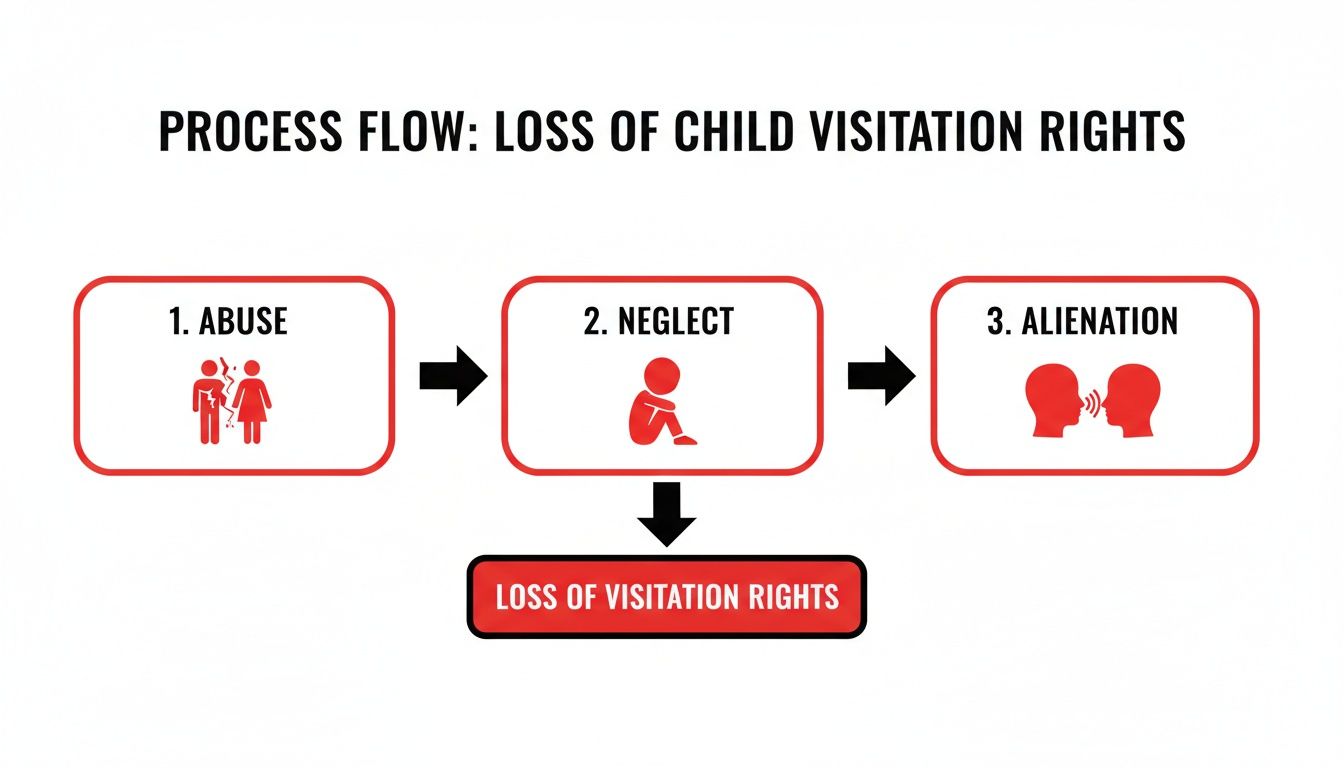
As you can see, actions like abuse, neglect, and parental alienation aren't just poor parenting choices—they are legally recognized reasons that can justify a court's intervention to protect a child.
Key Figures in a Custody Modification Case
In high-conflict cases, a judge might appoint neutral professionals to help get to the truth. Their opinions often carry significant weight with the court.
You might work with:
- An Amicus Attorney: A lawyer the court appoints to represent the child's best interests. They act as the court’s eyes and ears, interviewing the child, parents, and others to give the judge an independent recommendation.
- A Custody Evaluator: A licensed mental health professional who conducts a thorough investigation into the family. They may perform psychological testing, visit each parent's home, and write a detailed report advising the court on the best custody arrangement for the child.
These professionals bring an objective perspective that helps a judge make a fully informed decision. Facing their questions can be stressful, but their goal is to find the truth and ensure the child’s needs come first.
How to Proactively Protect Your Parental Rights

The strongest position you can be in is a proactive one. Instead of just reacting to problems, you can build a solid, positive track record as a father that becomes your best defense. This is your game plan for protecting the most important relationship in your life.
The foundation is simple: be the consistent, stable, and loving father your child deserves. Every positive step you take doesn’t just benefit your child; it also creates a clear, undeniable picture for the court of your commitment to their well-being.
Follow Your Court Order Religiously
Your current possession order isn’t a list of suggestions—it’s a direct command from a judge. Following it to the letter is the single most important thing you can do to protect your rights. This means showing up on time, every time. It means returning your child at the designated time and respecting every single term of the order.
Deviating from the order, even with a casual verbal agreement, can be used against you. Consistency proves to the court that you are reliable and respect the legal process designed to give your child stability.
Document Everything Professionally
Communication with your child's other parent can be a minefield, but it's also an opportunity to build a positive record. Keep all your communications—texts, emails, and messaging apps—strictly focused on the child. Be polite and business-like. Always sidestep arguments or accusations.
Think of every message as potential evidence. A clean, documented history of cooperative and child-focused communication is a powerful tool to shut down claims that you are difficult or uncooperative.
Keeping a simple log of visitation times, important conversations, and expenses you've covered can also be a game-changer. This creates a factual record of your involvement and responsibility that’s hard to dispute.
Stay Deeply Involved in Your Child’s Life
Your role as a father goes way beyond your scheduled possession time. When you’re actively involved in every facet of your child’s life, you send a clear message: you are an indispensable parent. This includes things like:
- Attending Medical Appointments: Know your child’s doctor. Be there for check-ups and know what’s going on with their health.
- Engaging with Their School: Go to parent-teacher conferences, email the teachers, and help with homework. Show you’re a partner in their education.
- Supporting Extracurriculars: Show up for the games, the recitals, and the practices. Your presence matters.
These actions build a network of teachers, coaches, and doctors who can vouch for your consistent and positive involvement. This isn't just about showing up; it's about being an active, engaged partner in raising a healthy, happy child.
Sadly, societal factors can sometimes make this challenging. Statistics show that nearly 1 in 4 U.S. children live without a father in the home, a sobering reality that highlights how critical it is to stay actively engaged. You can learn more about the national statistics on father absence and its impact by exploring the data on fatherhood.org. By being proactive and present, you build the strongest possible foundation to protect your parental rights.
Key Takeaways and Next Steps
Navigating a threat to your visitation rights is one of the most stressful experiences a parent can face. But understanding how Texas family law works empowers you to protect that precious relationship with your child. The system is designed to keep you involved, but it will always put your child’s safety first.
Here are the most important takeaways:
- The “Best Interest” Standard Is Everything: Every decision a judge makes is seen through one lens: what is the safest, most stable, and most nurturing environment for your child?
- Serious Actions Bring Serious Consequences: A father can lose visitation rights for actions that directly endanger a child’s physical or emotional well-being, like abuse, neglect, substance abuse that impairs parenting, or serious criminal activity.
- Being Proactive Is Your Best Shield: Consistently showing up is your strongest defense. Follow your court order, document communication, and stay deeply involved in your child’s life. This builds a powerful, undeniable record of your commitment.
Every family’s situation is unique, and this guide is a starting point. The single most important next step you can take is to get legal advice tailored to your circumstances. Protecting your bond with your child isn't something you should have to do alone. With the right information and professional guidance, you can face this challenge with confidence, knowing you’re taking the right steps to secure your child’s future—and your place in it.
If you need help with a child custody or visitation case in Texas, our experienced attorneys can guide you every step of the way. Contact The Law Office of Bryan Fagan, PLLC today for a free consultation.
Answering Your Questions About a Father's Visitation Rights
When you're fighting for your relationship with your child, the questions can feel overwhelming. You deserve clear answers, not legal jargon. Here, we tackle some of the most common concerns we hear from fathers across Texas.
Can My Ex Stop My Visitation If I’m Behind On Child Support?
No. This is one of the biggest myths in Texas family law. Your right to see your child (possession and access) and your duty to pay child support are two separate court orders. The other parent cannot legally withhold your child as punishment for missed or late payments.
That said, failing to pay child support has its own serious consequences, including wage garnishment, license suspension, and even jail time. It’s critical to address any child support issues through the court system to show a judge you are acting in good faith.
What Is Parental Alienation and How Do I Prove It?
Parental alienation is a destructive pattern where one parent systematically tries to poison a child’s relationship with the other parent. It is a campaign of manipulation that forces a child into an emotional tug-of-war.
Proving it is challenging but possible. To build a case, you need to show a consistent pattern of this behavior with evidence like:
- Texts and Emails: Save every message where the other parent blocks your calls or talks badly about you to the child. This creates a paper trail.
- Witness Testimony: Observations from teachers, family friends, or counselors about a sudden change in your child's attitude can be very powerful.
- Professional Input: A court-appointed custody evaluator or a child’s therapist is trained to spot the signs of alienation. Their expert opinion can provide an unbiased perspective.
Texas courts take parental alienation very seriously and view it as emotional abuse. A judge with clear evidence of alienation may order therapy or change the custody arrangement to protect the child.
What Happens If The Other Parent Makes False Accusations Against Me?
Facing false accusations of abuse or neglect is terrifying. Your first instinct might be to get angry, but your reaction is critical. Stay calm and do not engage in arguments or counter-accusations. Your focus must be on methodically proving your innocence.
A parent who knowingly files a false report with Child Protective Services (CPS) is weaponizing the system. This action can destroy their credibility with the judge and backfire on their own custody case.
Your defense must be built on facts. Start gathering evidence that contradicts their story:
- Text messages or emails that provide an alibi or contradict their claims.
- Receipts or phone location data showing where you were at the time.
- Statements from credible witnesses—like teachers or neighbors—who can speak to your character and parenting.
Always cooperate with any investigation from CPS or law enforcement, and contact an experienced family law attorney immediately. A strong, evidence-based defense is the only way to cut through the lies and protect your relationship with your child.
If you need help with a child custody or visitation case in Texas, our experienced attorneys can guide you every step of the way. Contact The Law Office of Bryan Fagan, PLLC today for a free consultation at https://texascustodylawyer.net.