
When your child's future is on the line, understanding your rights isn't just important—it's everything. Facing the possibility of losing your parental rights is one of the most gut-wrenching experiences a parent can go through. The termination of parental rights in Texas is a permanent legal action, not a temporary setback. In family law, it’s sometimes called the "death penalty" because it completely and forever severs the legal bond between you and your child. Our goal here is to explain this complex process with the compassion and clarity your family deserves.
What It Means to Terminate Parental Rights

Terminating parental rights is a legal process that permanently ends all legal rights, privileges, duties, and powers between a parent and child. This is far more serious than losing custody (also known as "conservatorship" in Texas). It’s a complete, irreversible severing of the legal parent-child relationship.
Think of it as the legal equivalent of removing a branch from the family tree. Once that branch is cut, the parent no longer has the right to see the child, make decisions about their life, or inherit from them. Likewise, the child loses their legal connection to that parent, including any right to inheritance or future support.
The Two Foundational Requirements in Texas
Before a Texas court can take such a drastic step, two critical things must be proven. This isn't a decision any judge takes lightly. The law sets an incredibly high bar to protect families.
- Grounds for Termination: First, the person seeking termination has to prove the parent committed at least one specific act prohibited by the Texas Family Code. These acts, known as legal grounds, include things like endangerment, abandonment, or severe neglect.
- Best Interest of the Child: Second, the court must also find that ending the parent’s rights is in the “best interest of the child.” This is the single most important factor in any Texas family law case involving kids.
The "best interest of the child" is the guiding principle for Texas judges. It requires them to look at the whole picture of a child's life—their emotional and physical well-being, their stability, safety, and future needs—before making a ruling that will affect them forever.
Understanding the Gravity of the Situation
The legal system recognizes that the bond between a parent and child is fundamental. Because of this, the standard of proof in these cases is exceptionally high. The party asking for termination must provide “clear and convincing evidence,” a much tougher burden than the "preponderance of the evidence" standard used in most other civil cases. This means the evidence must be strong enough to create a firm belief or conviction that the allegations are true.
This process can look different for every family. For fathers who haven't legally established their relationship with their child yet, understanding how to go about establishing paternity in Texas is a critical first step toward protecting their rights. Whether you are a mother, father, or caregiver, knowing these foundational legal requirements is the first step in navigating this challenge and fighting for your family's future.
The Legal Grounds for Involuntary Termination

Being accused of something that could lead to the termination of your parental rights is a deeply personal and frightening experience. It’s critical to understand that a Texas court can’t sever your relationship with your child just because of a disagreement or a gut feeling. The law is very specific.
Before a judge can even consider taking such a permanent step, the person or agency suing you must prove a specific, legally recognized reason, known as a “ground.” These aren’t vague suggestions; they are laid out clearly in the Texas Family Code.
On top of that, they have to prove at least one of these grounds with clear and convincing evidence. This is an incredibly high legal bar—much higher than in most civil cases. It means the proof must produce a firm belief or conviction that the allegation is true. A simple accusation or suspicion will never be enough.
Knowing exactly which ground is being used against you is the first, most important step in building your defense. Let's break down some of the most common ones in plain English.
Endangerment of the Child
This is one of the most common grounds you’ll see in termination cases. “Endangerment” is a broad term, and it means much more than just causing direct physical harm. Under Texas law, it refers to knowingly placing a child in conditions or surroundings that endanger their physical or emotional well-being.
This could look like:
- Exposing a child to illegal drug use or ongoing criminal activity in the home.
- Allowing a child to witness severe domestic violence.
- Engaging in abusive or neglectful behavior yourself, or failing to protect the child from someone else who is.
The key here is connecting the parent’s conduct—whether it was something they did or something they failed to do—to a dangerous environment for the child. It's a serious claim, and the evidence has to show that clear link.
Abandonment and Failure to Support
Abandonment is another major ground. This involves a parent essentially walking away from their responsibilities, either by physically leaving the child or by failing to provide for them. The court looks for a consistent pattern of behavior over time.
For instance, a judge might find grounds for termination if a parent has:
- Voluntarily left the child with someone else (who isn't the other parent), stayed away for at least six months, and didn't provide adequate support during that time.
- Failed to support the child according to their ability for a one-year period that ends within six months of the date the lawsuit was filed.
We're not talking about missing one child support payment when money was tight. This is about a sustained failure to provide for a child's fundamental needs, both financially and emotionally.
Other Significant Grounds for Termination
While endangerment and abandonment are frequent in these cases, the law lists many other specific reasons a court can terminate parental rights. The complete list is found in Texas Family Code § 161.001, which acts as the legal roadmap for judges.
The table below summarizes a few of the other significant grounds you might encounter.
Common Grounds for Involuntary Termination in Texas
| Statutory Ground | What It Means for a Parent |
|---|---|
| Failure to Comply with a Court Order | This often comes up in CPS cases. A parent is given a service plan (e.g., parenting classes, drug treatment) to fix the problems that put their child at risk, but they fail to complete it. |
| Parental Misconduct | This includes actions that result in the parent's conviction for a serious felony, especially one that lands them in prison for a long time and affects their ability to parent. |
| Causing Serious Injury or Death | If a parent's actions or inaction led to the death or serious injury of a child, this is a clear and severe ground for termination. |
| Use of a Controlled Substance | This involves the parent's use of a controlled substance in a way that endangers the child's health or safety, often shown through a pattern of continued drug use despite intervention. |
Each of these grounds requires specific proof, and a parent has the right to challenge the evidence brought against them. Facing these allegations can feel like a personal attack, making it all the more important to learn how to prove an unfit parent claim is false with solid evidence and a sound legal strategy.
How Voluntary Termination Works
Not every termination of parental rights is a contested court battle. Sometimes, a parent makes the incredibly difficult and personal decision to give up their legal rights to a child. This is called a voluntary termination, and it follows a completely different path than an involuntary, court-ordered one.
Making this choice is profound. Understanding exactly how it works can bring some much-needed clarity during what is almost always a very emotional time.
The Most Common Reason: Stepparent Adoption
Far and away, the most common reason a parent voluntarily ends their rights is to clear the path for an adoption—usually by a stepparent who has stepped up to become a primary caregiver.
Imagine a situation where a child’s biological father has been absent for years. The child’s stepfather has filled that role completely, providing love, support, and day-to-day stability. In a case like that, the family might decide that a stepparent adoption is truly in the child’s best interest to make that family bond legal and permanent.
The Affidavit of Relinquishment
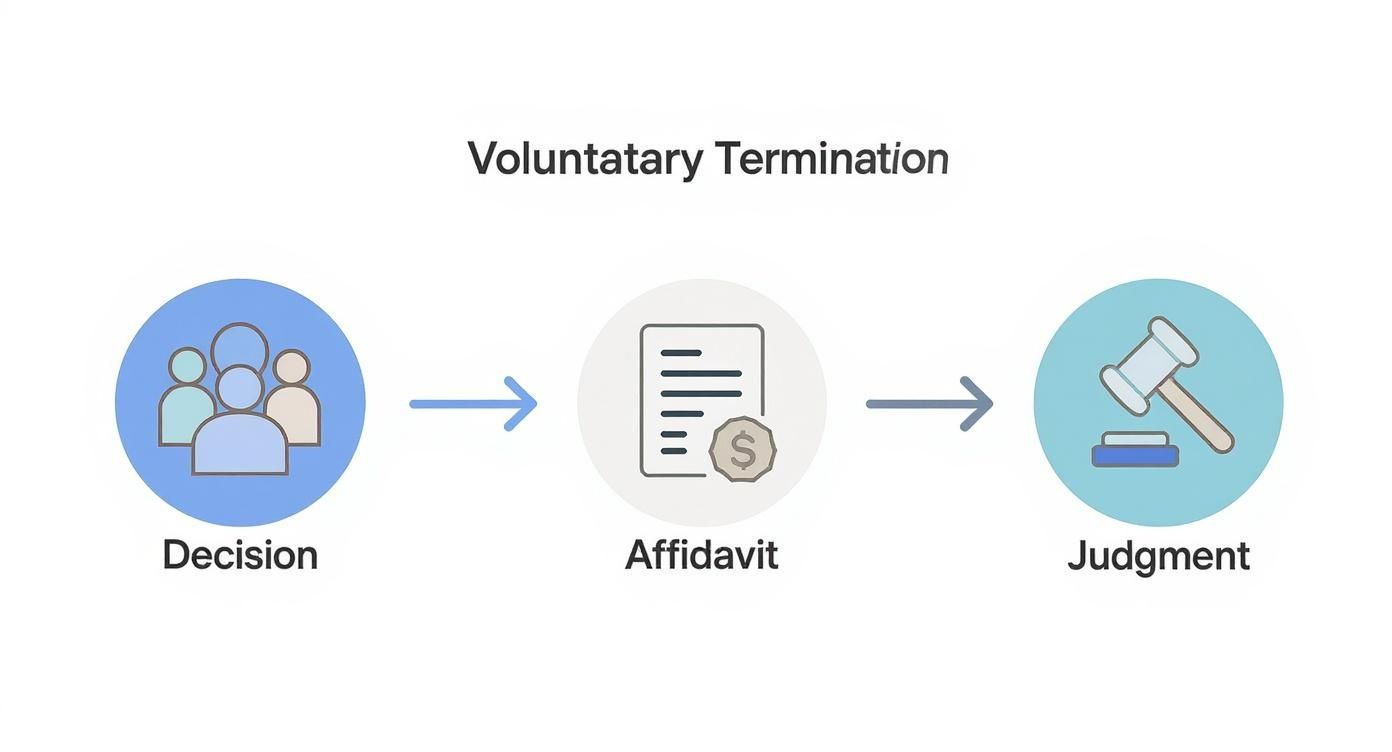
Before a stepparent adoption can happen, the absent biological parent's rights have to be legally terminated first. This is where the formal process begins. The parent who is agreeing to end their rights must sign a critical legal document called an Affidavit of Relinquishment of Parental Rights.
This isn't a simple form you just sign and mail in. The affidavit is a sworn, legally binding statement that has to be signed in front of a notary public. Critically, it cannot be signed until at least 48 hours after the child's birth. This rule is in place to protect parents, ensuring the decision is made with a clear head and not under the immediate stress and pressure of childbirth.
Signing this document is a monumental step. It formally declares that the parent is knowingly and voluntarily giving up all legal ties to their child. But the signature alone doesn't seal the deal.
The Court's Final Say
Even when a parent voluntarily signs an affidavit, a Texas judge always has the final say. The affidavit is filed with the court as part of a formal lawsuit seeking the termination. A judge will then review the entire situation to confirm two things:
- The relinquishment was truly voluntary. The court needs to be absolutely sure the parent wasn't coerced, threatened, or tricked into signing away their rights.
- Termination is in the child's best interest. This is, and always will be, the most important factor. The judge has to agree that severing the legal tie with the biological parent and allowing the adoption to move forward is what’s best for the child’s long-term emotional and physical well-being.
The judge’s approval is the final, essential step. A signed affidavit is powerful evidence, but the court’s ultimate duty is to protect the child, ensuring the decision serves their future stability and happiness above all else. This process is both sensitive and legally precise. For a more detailed look at the legal steps and requirements, you can find helpful information in our complete guide to voluntarily terminating parental rights in Texas.
Navigating the Court Process Step by Step
When you’re served with legal papers involving your child, it can feel like the ground has fallen out from under you. The legal system, with its complex language and rigid procedures, can feel overwhelming. But understanding the road ahead can give you a sense of control and allow you to focus on what really matters—your child's future and your place in it.
A lawsuit for the termination of parental rights in Texas isn’t random; it follows a clear, structured path. Knowing what to expect at each turn can demystify the process and empower you to fight for your family.
The Lawsuit Begins: The Petition and Service
It all kicks off when someone files a "Petition in Suit Affecting the Parent-Child Relationship" with the court. This person might be the other parent, a concerned family member, or, very often, the Department of Family and Protective Services (DFPS). This document lays out the legal reasons they believe your rights should be terminated.
Next, you'll be formally "served" with these papers by a sheriff, constable, or private process server. This is your official notice that a lawsuit is underway. It is absolutely critical not to ignore these papers—strict deadlines for responding start ticking the moment they’re in your hands.
Key Players: The Ad Litem Attorney
Soon after the case begins, the judge will appoint a special lawyer known as an attorney ad litem. This attorney has only one client and one job: to represent the best interests of the child. They aren't on your side, and they aren't on the other party's side. They are the child's independent voice in the courtroom.
The ad litem will investigate the case by talking to everyone involved—you, the other parent, the child (if they're old enough), teachers, and counselors. Their investigation and recommendations carry a lot of weight with the judge, so it's vital to cooperate with them respectfully.
Gathering the Facts: The Discovery Phase
The next stage is called “discovery,” and it’s exactly what it sounds like. This is the evidence-gathering phase for both sides. Lawyers use a set of legal tools to request information from each other to get all the facts out on the table.
This process usually includes:
- Written Questions (Interrogatories): You may have to answer a list of formal questions in writing, under oath.
- Requests for Documents: Both sides will ask for relevant paperwork, like financial statements, emails, or medical records.
- Depositions: This is out-of-court testimony where you answer questions from the opposing attorney under oath, with a court reporter typing up every word.
Discovery ensures everyone is working with the same set of facts before trial. It helps prevent surprises in the courtroom and often clarifies the real issues at the heart of the case. The infographic below shows the simple path for a voluntary termination, which stands in stark contrast to the complex, contested process of an involuntary case.
Seeking Resolution: Mediation and Trial
Before a case goes to a full-blown trial, Texas courts almost always require both sides to try mediation. This is a confidential negotiation session where a neutral third-party mediator helps everyone try to find common ground and reach a settlement. It’s a chance to have a say in the outcome, rather than leaving the final decision entirely in a judge's hands.
If mediation doesn’t work, the case moves on to a final trial. This is where both sides present their evidence and call witnesses to testify before the judge. The judge will then make a final ruling based on the very high "clear and convincing evidence" standard. The party asking for termination has to prove their case with a high degree of certainty.
The state of Texas takes these cases incredibly seriously. In 2018 alone, Texas courts finalized over 5,500 terminations of parental rights. To see how these trends and timelines play out, you can read the full analysis of Texas parental rights statistics.
How to Defend Your Parental Rights

Getting served with a lawsuit seeking the termination of parental rights in Texas is a gut punch. It's easy to feel overwhelmed and like the fight is already lost. But a petition is just an accusation—it is not the final verdict.
This is the moment to shift from shock to strategy. You absolutely have the right to fight back, to tell your side of the story, and to prove why keeping your family together is in your child's best interest. A proactive, well-planned defense isn't just a good idea—it's everything.
Demonstrating Positive Changes and Compliance
In many termination cases, especially those with DFPS involvement, the judge wants to know if you can provide a safe, stable home for your child. The most powerful tool you have is showing them, not just telling them, that you are actively fixing the problems that led to the lawsuit.
Words won't cut it. You need to build a mountain of proof. Here’s what that looks like in action:
- Completing Court-Ordered Services: If a judge orders parenting classes, therapy, or substance abuse treatment, treat it like your full-time job. Don't just check the box—finish early, participate fully, and get a certificate of completion.
- Maintaining Stable Housing and Employment: Show the court you can provide for your child. Paystubs, a lease agreement, and photos of a clean and safe home are tangible proof of your stability.
- Building a Strong Support System: Get letters from family, friends, or mentors who can vouch for your progress and who are a positive influence in your and your child's life.
Every positive step you take—every class completed, every clean drug test—becomes powerful evidence in your favor.
Challenging the Evidence
The person or agency trying to terminate your rights has a massive hill to climb. They must prove their case with "clear and convincing evidence," which is one of the highest legal standards in civil law. A huge part of your defense is poking holes in their case.
Your attorney will be your shield here, questioning everything:
- Cross-examining their witnesses to expose bias, inconsistencies, or false statements.
- Objecting to unreliable or irrelevant evidence.
- Bringing in your own witnesses—counselors, employers, family—who can testify about the person you are today, not the person they claim you were.
An accusation is just one side of the story. Your lawyer’s job is to make sure the judge hears your side, too, and to hold the other party accountable for every claim they make.
Exploring Alternatives to Termination
Sometimes, the best defense is to offer a better solution. Permanent termination is the most extreme measure. Texas law requires courts to consider less drastic options if they still protect the child.
Your attorney can propose these alternatives, showing the court you’re focused on what's best for your child. A common and powerful alternative is appointing a relative as the permanent managing conservator. This could be a grandparent, aunt, or uncle who steps in to care for the child legally. The key difference? Your parental rights remain intact. This protects the child in a safe, loving home while leaving the door open for you to continue your progress and one day repair your relationship.
After the Final Order: What Happens Next
When a Texas judge signs a final order terminating your parental rights, the impact is profound and permanent. This isn't a temporary measure; it's an irreversible severing of the legal bond between you and your child.
Once that order is in place, all legal ties are gone. Forever. This means you lose the right to see your child, make decisions about their school or medical care, and any right to inheritance. In the eyes of the law, the parent-child relationship simply ceases to exist. The finality of this outcome is precisely why the legal bar is set so high and why fighting back from day one is absolutely critical.
What Happens to the Child? The Path to Adoption
For a child, a termination order often clears the way for a new beginning. In many cases, this is the entire point—whether it was a voluntary relinquishment to allow a stepparent to adopt or a case brought by DFPS. Termination is the necessary legal step that must happen before an adoption can be finalized, giving the child a chance at permanency and stability in a new family.
Once the adoption goes through, a brand-new, legally binding parent-child relationship is created. The adoptive parents step in and gain all the rights and responsibilities the biological parent lost.
Is It Ever Possible to Get Parental Rights Back?
For a very long time, the answer to that question was a hard "no." Recently, Texas law changed, but only by a sliver. A very narrow, limited path to reinstating parental rights now exists, but it's only for the rarest of circumstances and involves an incredibly complex legal battle. Reinstatement is only a remote possibility if the child has not been adopted and the parent can prove a massive and sustained positive change in the circumstances that originally led to the termination.
The near-impossibility of getting your rights back underscores one vital message: the time to fight is now. Protecting your family requires immediate, decisive action with the guidance of an experienced lawyer from the very start.
Common Questions About Parental Rights Termination
When you're facing the possibility of losing your parental rights, it's normal to have a flood of questions. With emotions running high, you need straightforward answers to figure out what to do next. Here are some of the most common concerns we hear from Texas parents.
Can I Get My Rights Back After Termination?
For the most part, a termination order is permanent and final. A very recent and extremely narrow Texas law has opened a tiny window for reinstatement in rare situations. This isn't a realistic path for most people and is only a remote possibility if the child has not been adopted and the parent can prove they've made a complete and sustained turnaround from the very issues that led to the termination in the first place.
Does Terminating My Rights End Child Support?
Yes, a final order for the termination of parental rights in Texas does end your legal duty for all future child support payments. However, you are still legally on the hook for any child support arrears (past-due payments) that piled up before the termination date. Termination cuts off future financial obligations, but it doesn't erase past debts to your child.
How Long Does a Termination Case Take?
The timeline for a termination case can vary dramatically. A simple, voluntary termination that’s part of a stepparent adoption might wrap up in just a few months. On the other hand, a contested case, especially one with Child Protective Services (CPS) involvement, can easily drag on for a year or even longer. The final timeline depends on the complexity of the evidence, the court's schedule, and whether the parents can find common ground in mediation.
Key Takeaway and Next Steps
The termination of parental rights is the most serious action a Texas family court can take. Whether you are facing an involuntary petition or considering a voluntary relinquishment for an adoption, the stakes could not be higher. Remember these key points:
- The law requires both a specific legal ground and proof that termination is in the child’s best interest.
- The standard of proof is "clear and convincing evidence," an extremely high bar to meet.
- You have the right to defend your family by demonstrating positive changes, challenging the evidence, and proposing alternatives.
- The outcome is permanent, which is why immediate action and experienced legal guidance are so critical.
If you need help with a child custody or visitation case in Texas, our experienced attorneys can guide you every step of the way. Contact The Law Office of Bryan Fagan, PLLC today for a free consultation.