
When your child’s future is on the line, understanding your rights matters most. For unmarried parents in Texas, navigating child custody can feel confusing and intimidating because the rules are distinct from those for married couples. The simple truth is this: an unmarried mother automatically has sole legal and physical custody of her child at birth, and a father has no enforceable rights until he legally establishes paternity.
This guide will walk you through Texas child custody laws for unmarried parents, explaining your rights and the steps you can take to protect your relationship with your child.
Your Initial Rights as an Unmarried Parent in Texas

Navigating parenthood without a marriage certificate often starts with a fundamental question: who has the right to make decisions for our child? The Texas Family Code provides a clear, default starting point. Understanding this initial legal status is the first step for both mothers and fathers toward creating a stable and predictable future for their child.
This automatic grant of sole custody to the mother is designed to ensure the child has a designated legal decision-maker from day one. It means the mother alone holds the authority to make critical choices about the child's life.
Default Custody Rights for Unmarried Texas Parents at Birth
Before any court orders are in place, Texas law sets a very clear baseline for parental rights. This table breaks down exactly where each parent stands the moment their child is born.
| Parent | Automatic Legal Rights | Required Action to Gain/Share Rights |
|---|---|---|
| Unmarried Mother | Sole legal and physical custody. Has the exclusive right to make all decisions (residence, medical, education). | None. These rights are automatic at birth. |
| Unmarried Father | No legal or physical custody rights. Cannot enforce visitation or make decisions, even if named on the birth certificate. | Must legally establish paternity through an Acknowledgment of Paternity (AOP) or a court order. |
As you can see, the initial legal landscape is not balanced. The law requires a father to take specific steps to gain legal recognition and the rights that come with it.
What Sole Custody Means for Mothers
For mothers, this initial status provides immediate and total legal authority. From the moment your child is born, you have the right to:
- Determine the child's primary residence: You decide where the child lives.
- Make all medical decisions: This includes choosing doctors, consenting to treatments, and accessing medical records.
- Make all educational decisions: You have the authority to enroll the child in school and make other educational choices.
- Consent to psychological or psychiatric treatment: You can authorize mental healthcare for your child.
This default rule is powerful. Unless the father takes proactive legal steps—like filing a paternity suit or signing an Acknowledgment of Paternity (AOP) form at the hospital—the mother holds sole decision-making authority. You can discover more insights about your rights as a Texas mother and how to protect them.
What This Means for Fathers
For fathers, this starting point can feel disempowering, but it is not a permanent barrier. Think of it as a legal status that exists until you take action. Merely being named on the birth certificate is not enough to grant you any custody or visitation rights in Texas.
The law requires a father to legally establish his parentage before a court can grant him the rights and responsibilities of being a parent. This is the crucial first step toward shared parenting.
This initial imbalance isn't meant to be punitive; it simply reflects the legal reality before paternity is formally established. The good news is that Texas law provides clear pathways for fathers to secure their parental rights and become a legally recognized, active part of their child's life.
This journey begins with establishing paternity and then seeking a court order that defines your relationship with your child. This order, known as a Suit Affecting the Parent-Child Relationship (SAPCR), is the legal tool used to establish conservatorship (custody), possession and access (visitation), and child support. It replaces the default rule with a formal, enforceable parenting plan designed around your child's best interests.
Establishing Paternity to Secure a Father's Rights

For an unmarried father, being biologically related to a child and being legally recognized as a parent are two different things. That legal recognition doesn’t happen automatically. It all starts with one crucial step: establishing paternity.
Think of it this way: until paternity is established, an unmarried dad has no legal rights to custody or visitation. It doesn't matter if your name is on the birth certificate or if you’ve been there since day one. Without legal paternity, you're on the outside looking in, with no enforceable way to see your child.
For a mother, establishing paternity is just as important. It’s the only way to get a formal child support order in place, ensuring the child has the financial backing of both parents. This single legal step builds the bridge connecting a father to both his rights and his responsibilities.
The Two Pathways to Legal Fatherhood
In Texas, you generally have two options to make paternity official. The right one for you usually depends on whether you and the child’s mother are on the same page.
- Voluntary Acknowledgment of Paternity (AOP): This is a legal form, usually signed at the hospital right after birth, where both parents agree and swear that a man is the biological father.
- Suit to Adjudicate Parentage: This is a court case filed to get a judge to legally declare who the father is. You would go this route if there’s a disagreement or one parent won’t sign the AOP.
The AOP is by far the most common path. In fact, when it comes to Texas child custody laws for unmarried parents, roughly 70% of cases are handled with a hospital Acknowledgment of Paternity form. It’s a straightforward way for fathers to lock in their rights from the very beginning.
The Acknowledgment of Paternity (AOP)
Signing an AOP seems simple, but it carries the full weight of the law. Once it’s signed by both parents and filed with the Texas Vital Statistics Unit, it’s just as powerful as a court order. It makes you the legal father for all purposes—that includes the right to ask for custody and the obligation to pay child support.
Here’s the critical part: both parents must be 100% certain of paternity before signing. Trying to undo an AOP later is incredibly difficult and expensive.
The Suit to Adjudicate Parentage
If there’s any doubt about who the father is, or if you just can't get on the same page, filing a lawsuit is the next move. This court action, often called a paternity suit, is designed to get a clear, final answer.
A judge will hear the case and can order a DNA test to confirm the biological father. Once the results are in, the judge issues an order that officially establishes paternity. That court order becomes the foundation for everything else—custody, visitation, and child support. If you need a deep dive into this process, check out our guide on how to establish paternity in Texas.
Taking action to establish paternity is not an aggressive move; it is a responsible one. It demonstrates your commitment to your child and is the only way to transform your desire to be a parent into a legally protected right.
For fathers, this step is empowering. For mothers, it brings clarity. But most importantly, for the child, it’s stabilizing. It gives them the emotional and financial benefit of having two legally recognized parents fighting for their future. It's the first and most important step in creating a clear, court-ordered parenting plan.
Understanding Conservatorship and Possession Orders

Once paternity is established, the next step is getting a court order that clearly defines each parent's role. Texas family law uses specific terms for this that can sound intimidating at first, but they’re just tools to build a stable, predictable plan for your child.
Let’s translate the legal jargon. In Texas, what most people call "custody" is actually broken down into two core concepts: conservatorship and possession and access.
Think of it like this: Conservatorship is the "parental job description." It lists the legal rights and responsibilities each parent has for making the big-picture decisions—things like your child’s healthcare, education, and general upbringing.
Possession and access, on the other hand, is the "parenting schedule." It's the practical, real-world calendar that details where the child will be and when, including weekends, holidays, and summer vacation.
Your Parental Job Description: Conservatorship
Conservatorship spells out who gets to make the crucial decisions for your child. It answers the important questions: Who picks the doctor? Who decides which school the child attends? Who has the authority to consent to a medical procedure or counseling?
In almost every case involving unmarried parents, Texas courts start with the presumption that a Joint Managing Conservatorship (JMC) is in the child's best interest. This is the standard arrangement, and it’s a far cry from the "one winner, one loser" scenario many parents worry about.
A Joint Managing Conservatorship means both parents share the rights and duties of raising their child. It is a legal framework built on the core belief that children do best when both parents are actively and meaningfully involved in their lives.
Under a JMC, both parents have a legal say in major decisions. To avoid gridlock, however, the court will usually grant one parent the exclusive right to make certain key decisions, like determining the child's primary residence. This parent is often referred to as the "primary" parent or "custodial parent."
Sole Managing Conservatorship: When It Applies
While JMC is the default, a Sole Managing Conservatorship (SMC) is an option in specific, and usually serious, situations. In an SMC, only one parent is given the exclusive right to make most, if not all, of the major decisions for the child.
This isn't granted lightly. A court will only order an SMC if there is clear evidence that giving the other parent decision-making power would harm the child or otherwise not be in their best interest. This usually involves a history of:
- Family violence or domestic abuse
- Child neglect or endangerment
- Serious, ongoing substance or alcohol abuse
- Extreme conflict that makes joint decision-making impossible
For a deeper dive into these roles, you can learn more about conservatorship in Texas and how the different types could impact your family.
The Parenting Calendar: The Possession Order
Once conservatorship rights are defined, the court creates a possession order, which is simply the detailed visitation schedule. While parents are always free to agree on a custom schedule that works for them, Texas has a default plan called the Standard Possession Order (SPO). The SPO is designed to give both parents regular, predictable time with their child and minimize potential conflicts.
For a non-primary parent living within 100 miles of the child, a typical SPO often includes:
- Weekends: Possession on the first, third, and fifth weekends of a month.
- Holidays: Alternating major holidays like Thanksgiving and Christmas each year.
- Summer Vacation: Typically 30 days of extended time during the summer break.
This standardized schedule provides stability and sets clear expectations for everyone. But even though it's called "standard," a judge can always customize the possession order to better fit a family's unique circumstances and, most importantly, the child's specific needs.
Understanding these legal frameworks transforms confusing concepts into a practical roadmap for co-parenting. It’s all about creating a predictable, stable, and loving environment where your child can thrive with the support of both parents.
How Texas Courts Define the Best Interest of the Child
In every single case involving Texas child custody laws for unmarried parents, judges are guided by one powerful principle: the best interest of the child.
This isn't just a vague, feel-good idea; it's the legal standard that shapes every order a judge signs. It means the court's primary goal isn't to reward one parent or punish the other. It’s to create a safe, stable, and nurturing environment for your child. Understanding how a judge sees this "best interest" is the key to presenting your case effectively.
The Holcomb Factors: A Judge’s Guide
So how does a judge figure out what's truly best for a child? Texas judges rely on a specific set of guidelines known as the "Holcomb factors." These factors come from a landmark Texas Supreme Court case and give the court a framework for looking at each family's unique situation.
There’s no magic formula here—one factor doesn't automatically outweigh the others. Instead, a judge looks at the complete picture of your child's life and each parent's ability to meet their needs. Think of it as a comprehensive checklist the court uses to figure out what kind of parenting arrangement will allow your child to thrive—emotionally, physically, and mentally.
Key Factors a Court Will Consider
A judge will carefully weigh evidence related to several key areas of your child’s life and your own parenting capabilities.
Here are some of the most critical Holcomb factors they’ll be looking at:
- The Child’s Needs: This covers everything from the child's emotional and physical health to their developmental needs, both now and in the future. The court will want to know who has historically been the primary caregiver and is most in tune with the child's daily routines and emotional state.
- Parental Abilities: The judge will evaluate each parent's ability to provide a stable, loving home. This isn't just about love; it's about practical parenting skills, emotional stability, and the capacity to put the child’s needs ahead of their own.
- Stability of the Home: A stable home environment is crucial for a child's well-being. The court will examine the stability of each proposed home, including things like a parent's work schedule, their support system (like nearby family), and the overall living situation.
- Any Danger to the Child: The court will look for any evidence of physical or emotional danger to the child, both now and in the future. This includes any history of domestic violence, neglect, substance abuse, or criminal activity by a parent or anyone living in their home.
- The Child’s Wishes: For children aged 12 or older, a judge may interview them privately to hear their preference about which parent they want to live with most of the time. While the child’s wishes are considered, they are not the final deciding factor.
Understanding these factors empowers you to show the court not just that you love your child, but that you are the parent best equipped to provide a safe, consistent, and supportive home where they can flourish.
Although the law is written to be gender-neutral, statistics tell a slightly different story. For instance, despite the Family Code's focus on the child's best interests, unmarried fathers in Texas secure only about 33% of parenting time on average. This highlights how important it is to build a strong case based on these Holcomb factors. You can read more about these custody statistics and what courts look at. At the end of the day, a judge will craft an order based on who can best meet the child’s needs, regardless of gender.
The Legal Process for Custody and Child Support Orders
When you and your child's other parent cannot agree on a parenting plan, the court system offers a structured path to get one in place. This formal legal journey is called a Suit Affecting the Parent-Child Relationship, or SAPCR for short. It’s the official process for getting enforceable orders for conservatorship, possession, and child support.
Starting a SAPCR is the first real step toward turning confusion and conflict into clarity. While the name sounds intimidating, breaking down the process can give you the confidence you need to move forward and protect your child's future.
Kicking Off the Case: Filing the Petition
The process starts when one parent files an Original Petition in a Suit Affecting the Parent-Child Relationship with the court. This legal document tells the court what you're asking for—such as establishing paternity, naming conservators, creating a possession schedule, and ordering child support.
Once the petition is filed, the other parent must be formally notified. This critical step is called service. It ensures they know a lawsuit has been started and have a fair chance to respond, protecting their right to be heard. Without proper service, the case can't legally move forward.
The Stages of a Custody Case
After that initial filing, your case will move through several key phases. Each stage is designed to either help you and the other parent reach an agreement or to gather all the information a judge needs to make a decision for you.
- Temporary Orders Hearing: Early in the case, a judge can issue temporary orders. These are rules that everyone must follow while the case is ongoing. They can set up a temporary visitation schedule, order temporary child support, and even decide who gets to stay in the family home.
- Mediation: Before you ever see a trial, most Texas courts will require you to try mediation. This is a confidential meeting where a neutral third-party mediator helps you and the other parent try to work out a settlement. Many cases are resolved here, saving time, money, and stress.
- Discovery: This is the information-gathering phase. It’s a formal process where both sides can request documents and information from each other, such as financial records, emails, and text messages relevant to the case.
- Final Trial: If mediation and negotiations don't lead to an agreement, your case will be set for a final trial. Both parents will present evidence and testimony to a judge, who will then make a final ruling based on what they believe is in the child's best interest.
How Child Support Fits In
Child support isn't a separate issue; it's a core part of any custody case. In Texas, both parents have a legal duty to financially support their child. The amount is calculated using a formula in the Texas Family Code, which mainly looks at the non-primary parent’s net monthly income and the number of children involved.
This visual helps illustrate the core factors a court looks at when making decisions for your child. It’s about more than just money; it's about meeting their total needs.
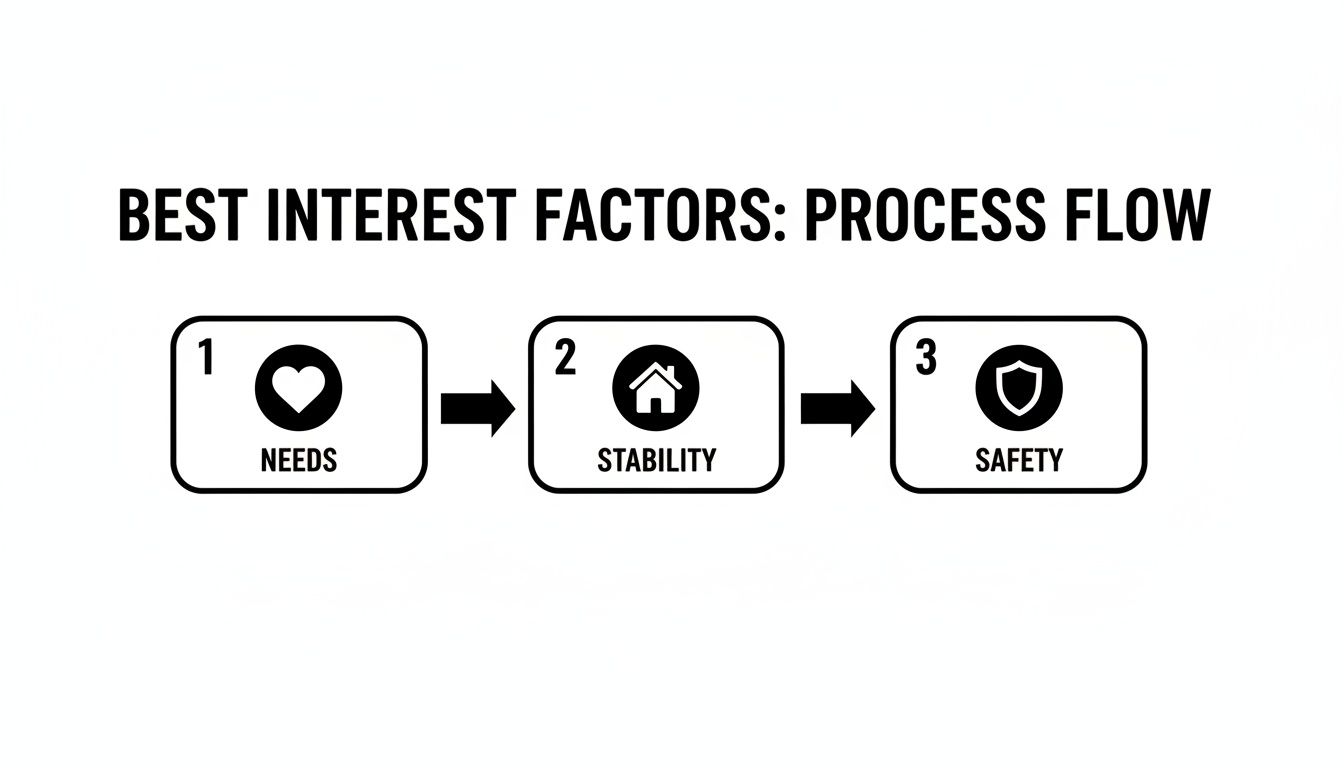
The infographic drives home the point that a judge’s decision is a big-picture evaluation. The goal is to create a secure, stable future for the child, which includes both consistent time with parents and the financial resources to thrive.
Here’s a critical legal point every parent needs to understand: visitation rights and child support obligations are completely separate. A parent cannot legally withhold visitation because the other hasn't paid support. Likewise, a parent can't stop paying child support because they aren't getting their court-ordered visits. Both are independent orders from the court and must be followed. For law firms specializing in family law, effective client acquisition is key to supporting individuals through the complexities of the legal process. Learn more about effective lawyer lead generation strategies.
Navigating the court system for Texas child custody laws for unmarried parents takes careful preparation. As you get started, focus on gathering documents that back up your case—things like financial statements, your child's school and medical records, and any relevant communication with the other parent. An experienced attorney can be your guide through every step, making sure your rights are protected and helping you build the strongest possible case for your child's best interests.
Modifying Custody Orders and Handling Relocation
Life is unpredictable, and a parenting plan that was perfect a year ago might feel unworkable today. A job loss, a new marriage, or a child's changing needs can all be powerful reasons to revisit your existing custody order. Thankfully, you don't have to be stuck. The legal system gives you a clear path to adapt your order through a process called a modification. But you can't just change things on a whim; Texas law requires you to prove two key things to a judge.
The Standard for Changing Your Order
To successfully modify your custody, visitation, or child support order, you have to show that there has been a “material and substantial change” in the circumstances of the child or one of the parents. This is the legal bar you must clear.
This change needs to be a significant life event that directly impacts your child's well-being, making the current order impractical or no longer in their best interest.
At its core, the question a judge asks is simple: “Have things changed so much that the old order just doesn’t work for this child anymore?” How you answer that question—with clear, compelling evidence—is what separates a successful modification from a failed one.
Common Reasons for a Custody Modification
So, what actually counts as a "material and substantial change"? While every family's story is different, modifications are often triggered by events like these:
- A Parent’s Relocation: One parent is planning a move far enough away to make the current possession schedule impossible.
- A Change in Living Conditions: A parent’s home environment has become unstable or unsafe due to issues like substance abuse, criminal activity, or domestic violence.
- A Child's Evolving Needs: As kids get older, their needs change. A new school schedule, a medical diagnosis, or different emotional needs can require a new parenting plan.
- A Parent’s Remarriage: Bringing a new stepparent and possibly stepsiblings into the picture can dramatically shift the family dynamic.
- The Child's Preference: Once a child is 12 or older, they have the right to speak with the judge in private about who they want to live with. While not the only factor, their preference can carry significant weight.
Winning a modification isn't just about telling the court what happened. You have to show the judge how these changes have affected your child. For a more detailed look at the evidence you'll need, you can learn more about how to win a custody modification case on our blog.
Navigating Relocation and Geographic Restrictions
Relocation is easily one of the most common—and contentious—reasons parents end up back in court. Many Texas custody orders include a geographic restriction, which requires the primary parent to establish the child's home within a specific area, like a county or a particular school district.
If you're the primary parent and want to move with your child outside that restricted zone, you can't just pack up. You have two options: get the other parent’s written permission or file a modification suit and get a judge’s approval. A judge will only sign off on the move if you can prove it's in your child’s best interest, which can be a very high bar to clear.
Common Questions About Unmarried Parent Rights
Navigating custody outside of marriage can bring up many questions and myths. Let's clear the air and provide straight answers to some of the most common concerns we hear from unmarried parents in Texas.
Does Being on the Birth Certificate Make Me the Legal Father?
No, not by itself. This is one of the biggest misconceptions. In Texas, an unmarried father’s name on the birth certificate does not automatically grant legal custody or visitation rights.
To get those rights, you need a signed Acknowledgment of Paternity (AOP) or a court order that officially establishes you as the legal father. Until that happens, the mother legally has sole custody.
Can I Get Child Support if We Were Never Married?
Absolutely. It doesn't matter if you were married—both parents have a legal duty to financially support their child.
Once paternity is legally established, a court can issue a child support order based on the Texas Family Code guidelines. Child support is a right that belongs to the child, not the parent.
Key Insight: Many parents think visitation and child support are tied together. They aren't. A parent cannot legally stop paying support because they're being denied visitation, and the other parent cannot legally withhold visitation because support is unpaid. Both are violations of a court order and can lead to serious legal consequences.
What Is Joint Managing Conservatorship?
This is the default and most common custody arrangement for parents in Texas, whether married or not. Joint Managing Conservatorship means both parents share the rights and responsibilities to make major decisions for the child—things like medical care, education, and religious upbringing.
Even in a joint arrangement, the court will usually name one parent as the "primary" conservator. This is the parent who has the exclusive right to decide where the child lives.
Next Steps: Protecting Your Child's Future
Navigating Texas child custody laws can feel overwhelming, but you don't have to do it alone. The most important step you can take is to understand your rights and create a clear, legally enforceable plan that puts your child’s well-being first.
Whether you are a mother seeking to formalize child support or a father looking to secure your parental rights, taking proactive legal steps is essential for creating stability and security for your family. An experienced family law attorney can help you understand your options and advocate for your child’s best interests every step of the way.
If you need help with a child custody or visitation case in Texas, our experienced attorneys can guide you every step of the way. Contact The Law Office of Bryan Fagan, PLLC today for a free consultation.