
When your child’s future is on the line, understanding your rights matters most. The bond you’ve worked so hard to build feels like it’s being deliberately torn apart, and the feeling of helplessness can be gut-wrenching. In Texas, parental alienation isn’t just a phrase for hurt feelings—it’s a recognized pattern of manipulative behavior. It happens when one parent systematically poisons a child's relationship with the other, causing serious emotional damage. This behavior goes directly against the bedrock principle of Texas family law: protecting the best interests of the child.
How Texas Law Defines Parental Alienation
Parental alienation is a painful and complex dynamic that runs much deeper than the usual co-parenting disagreements. It’s a calculated, and often sneaky, campaign by one parent to turn a child against the other parent—someone they once loved and relied on.
In the eyes of a Texas court, this isn't just a family argument. It's a form of emotional abuse that can inflict devastating, long-term harm on a child's mental health. The Texas Family Code is clear: judges must base custody decisions on what is in the “best interests of the child.” This is a legal standard that prioritizes a child's emotional, physical, and developmental well-being above all else. A parent who actively destroys their child’s relationship with the other parent is failing to live up to that standard.
This problem is more widespread than you might think. Research indicates that roughly one in four children caught in divorce or separation cases will experience some degree of parental alienation. These kids are at a much higher risk of developing anxiety, depression, and serious relationship issues down the road. You can learn more about the tough realities of parental alienation syndrome and its effects.
Normal Conflict Versus Alienation
It’s absolutely critical to tell the difference between the normal bumps in the co-parenting road and the destructive pattern of parental alienation. After a split, it's normal for kids to feel caught in the middle or for parents to have arguments. Alienation, however, is a consistent, intentional effort to completely push one parent out of a child’s life.
At its core, parental alienation is a campaign of denigration. One parent’s goal is to sever the child’s bond with the other parent, not for the child's well-being, but to satisfy their own emotional needs.
Figuring out which one you're dealing with is the first real step toward protecting your relationship with your child. While occasional frustrations are just part of life, a sustained pattern of harmful behavior demands a smart, strategic response.
How Parental Alienation Affects Custody Orders
In Texas, the vast majority of custody orders create a joint managing conservatorship. This is a legal setup where both parents share the rights and duties of raising their child. It’s designed to keep both parents actively involved in their child’s life. A huge piece of this is the possession schedule, which spells out exactly when the child is with each parent.
Parental alienation cuts right to the heart of what a joint managing conservatorship is all about. A parent who blocks phone calls, sabotages visitation, or constantly badmouths the other parent isn't acting in a way that supports a healthy parent-child relationship.
If a judge determines that a parent's alienating behavior is not in the child’s best interest, they have broad power to shake up the custody order. This could mean changing the possession schedule to give the alienated parent more time, ordering counseling, or even switching which parent has the right to decide where the child lives.
To help you see the difference more clearly, we’ve put together a table comparing typical post-divorce challenges with the more serious behaviors linked to parental alienation.
Alienation vs Normal Conflict
This table helps parents distinguish between typical post-divorce challenges and the deliberate patterns of parental alienation.
| Behavior | Normal Conflict or Estrangement | Potential Parental Alienation |
|---|---|---|
| Child's Criticism | The child expresses specific, age-appropriate complaints ("Dad makes me do chores I don't like."). | The child's reasons for rejecting a parent are vague, frivolous, or sound like they were scripted by an adult. |
| Communication | Communication between parents is sometimes tense but generally functional for co-parenting. | One parent consistently blocks calls, texts, and emails, or tells the child the other parent doesn't want to talk to them. |
| Family Events | The child still feels connected to the targeted parent's extended family (grandparents, cousins). | The child suddenly rejects the targeted parent's entire family with little or no logical reason. |
| Parental Attitude | Parents may disagree but encourage the child to have a good relationship with the other parent. | One parent frequently makes negative or false statements about the other parent in front of the child. |
Recognizing these patterns is crucial. While every family situation is different, understanding these signs can help you identify when you need to take action to protect your child and your parental rights.
Recognizing the Warning Signs of Alienation

It’s a gut-wrenching feeling. You sense your child pulling away, and a sinking suspicion tells you the other parent is the reason. Spotting Texas parental alienation isn't about one bad day or a single argument; it’s about recognizing a consistent, destructive pattern of behavior designed to poison your relationship.
Knowing what these signs look like is the first, most critical step toward protecting the bond you have with your child. The key is to look for behaviors that are clearly meant to undermine you. These actions typically fall into two buckets: the manipulative tactics used by the alienating parent and the painful changes you see in your own child’s attitude. Both sides of this coin are crucial for seeing the full picture.
Behaviors of the Alienating Parent
An alienating parent is often on a mission to paint themselves as the “good” parent and you as the “bad”—or even dangerous—one. Their goal is to take control of the child's perception of you, slowly and deliberately rewriting your entire history together. This isn't just a co-parenting spat; it’s emotional manipulation, plain and simple.
You might notice the other parent is:
- Constantly Criticizing You: They badmouth you, your choices, your lifestyle, or your family right in front of your child. Minor disagreements get twisted into major character flaws.
- Interfering with Communication: Suddenly, they "forget" to pass on messages, your calls get blocked, or your child is always "too busy" to talk. It's a wall, and it's being built on purpose.
- Sabotaging Visitation: They schedule conflicting activities during your possession schedule (your court-ordered time) or, worse, tell the child you canceled plans when you absolutely did not.
- Sharing Inappropriate Information: They might drag the child into adult issues like divorce details or child support, framing you as the one to blame for any financial strain or emotional hardship.
A common tactic in severe cases of parental alienation is making false accusations of neglect or abuse. This is a serious form of manipulation designed to trigger legal intervention and permanently damage your reputation and custody rights.
These actions create a loyalty conflict, forcing your child into an impossible position where they have to choose a side. Over time, this constant pressure can wear down even the strongest parent-child bond, leaving you feeling isolated and helpless. If you're facing false accusations, it's vital to understand how a parent can lose custody for making false claims to protect your rights.
Behavioral Changes in Your Child
The most painful part of this whole ordeal is seeing how it affects your child. The changes can be subtle at first, but they often become more obvious and heartbreaking over time. A child who is a victim of alienation doesn't just feel distant; they often become an active participant in the rejection, armed with flimsy justifications they've learned from the other parent.
Keep an eye out for these concerning changes in your child’s behavior:
- Parroting Adult Phrases: Your child might offer criticisms of you that sound rehearsed or use language an adult would, suggesting the ideas aren't their own. For example, they might suddenly say, "You're just trying to manipulate me," or, "You have a personality disorder."
- Unwavering Support for One Parent: They show an extreme lack of ambivalence—one parent is perfect, and the other is entirely flawed. They simply cannot see any good in you or any fault in the other parent.
- Weak or Frivolous Justifications: When you ask why they're angry, their reasons are often vague, nonsensical, or blown completely out of proportion. They might bring up a minor incident from years ago as "proof" that you're a bad parent.
- Rejection of Your Extended Family: The alienation rarely stops with you. A child who once loved spending time with their grandparents, aunts, and uncles on your side of the family suddenly wants nothing to do with them.
These are not just signs of a child "acting out." They are symptoms of a deeply confusing and emotionally damaging situation. This behavior flies in the face of the best interests of the child—the absolute bedrock of Texas custody law.
How Texas Law Looks at Parental Alienation
When you realize that your co-parent is intentionally trying to destroy your relationship with your child, it’s easy to feel completely powerless. But you’re not helpless, and you need to know that Texas law offers a real framework to protect your family from this kind of destructive behavior. The legal system doesn’t just see this as a nasty disagreement; it defines Texas parental alienation as what it is—a serious form of emotional abuse that directly harms a child’s well-being.
Texas courts are legally required to make every custody decision based on one single principle: the best interest of the child. A parent who is actively working to tear down their child's bond with the other parent is, by definition, failing to act in their child’s best interest. This isn't just a moral problem; it's a legal one, and judges take it very seriously.
The "Best Interest of the Child" Standard
The Texas Family Code gives judges a list of factors to consider when figuring out what’s truly best for a child. A couple of the most important are the child's emotional and developmental needs, the stability of the home, and the parenting skills of each person involved. Parental alienation is a direct assault on these critical factors.
A judge will look closely at each parent's willingness and ability to encourage a positive, loving relationship between the child and the other parent. So, when one parent gets caught sabotaging that relationship, it sends a loud and clear message to the court. It shows they are putting their own bitter feelings ahead of their child's emotional health and stability. This can have huge consequences for their parental rights. For a deeper dive into this foundational concept, you can learn more about how to prove the best interest of the child in a Texas courtroom.
Legal Tools to Fight Back Against Alienation
When parental alienation is proven in court, Texas judges have several powerful tools they can use to protect the child and start repairing the damage. These aren't just slaps on the wrist; they are significant legal actions designed to correct the harm that’s been done.
The court has the authority to:
- Modify the Possession Schedule: A judge can change the current visitation schedule, often giving the targeted parent more time with the child to help rebuild their bond. In really severe cases, the court might even order that the alienating parent’s time with the child be supervised.
- Order Therapeutic Intervention: The court can order professional help, like counseling or reunification therapy, for the child and the targeted parent. This is always done in a safe, supportive setting with a qualified mental health expert leading the way.
- Appoint a Legal Representative for the Child: A judge might appoint an amicus attorney or a guardian ad litem. This is a neutral, third-party attorney whose only job is to represent the child's best interests. They investigate the family dynamics and report their findings back to the court, giving the judge an objective point of view.
The Texas legal system has become much more aware of the severe damage parental alienation causes. When this behavior is proven in court, judges can modify custody orders, cut back the alienating parent's visitation rights, or even transfer the right to decide where the child lives to the targeted parent.
At the end of the day, the law is on the side of the child’s well-being. Understanding the tools available within the Texas Family Code is the first step toward taking decisive action and fighting for your family’s future.
Steps to Take If You Suspect Alienation
Feeling like your hands are tied when you suspect parental alienation is completely normal. It’s a gut-wrenching experience. The good news? You're not powerless. By taking calm, strategic, and immediate action, you can protect your rights and—most importantly—your relationship with your child. Think of this as your roadmap for taking back control.
Your first move, and your most powerful tool in court, is documentation. Texas courts run on evidence, not just accusations. Start a detailed log or journal right now, noting every single incident that points to alienation.
This log should include things like:
- Saved Communications: Screenshot every text, email, or social media post where the other parent undermines you or interferes with your time.
- Missed Visitations: Log every single time your scheduled visit is denied or cut short. Write down the date, time, and whatever excuse you were given.
- Witnessed Behaviors: Document the specific things your child says that sound rehearsed or out of character. Also, note any manipulative actions you see from the other parent.
This isn't just about venting; this kind of meticulous record-keeping turns your gut feelings into a clear pattern of behavior a judge can actually see and understand.
This infographic lays out the typical legal journey for getting a parental alienation claim heard in court.
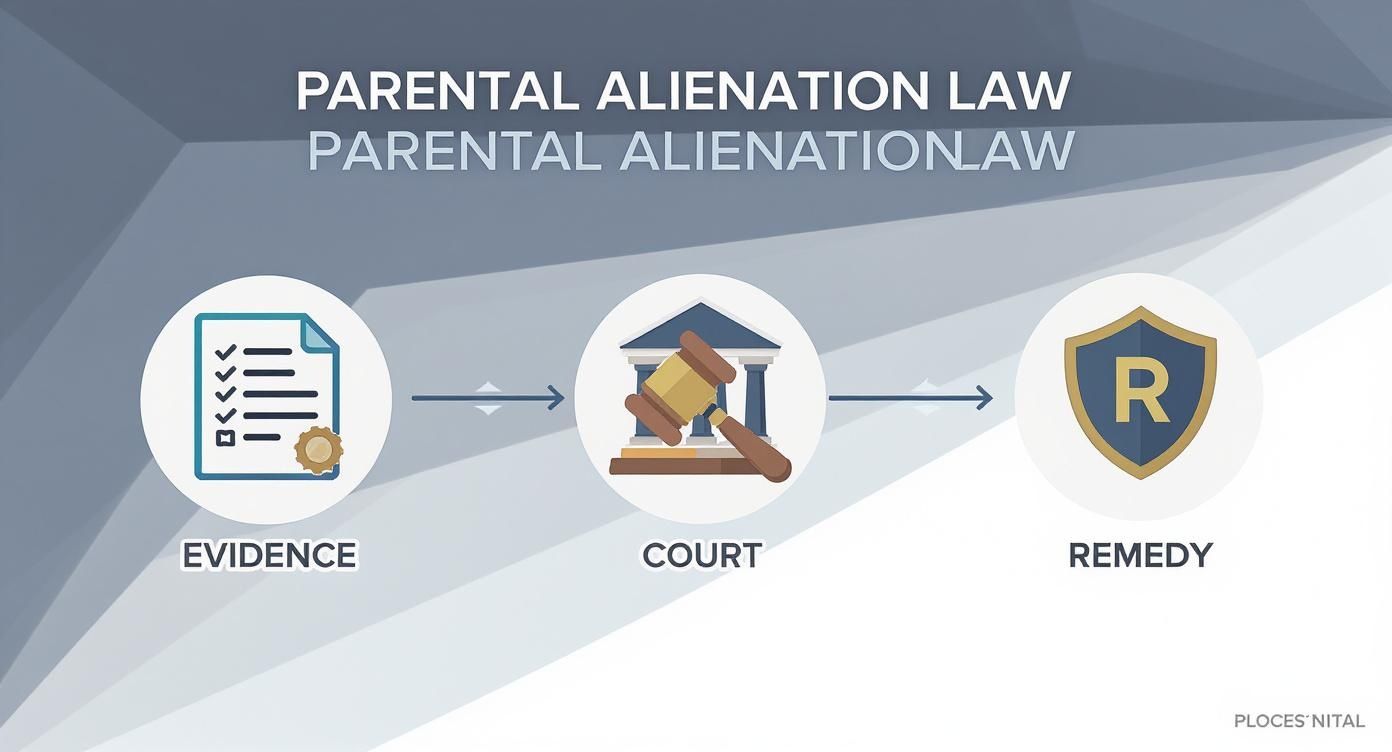
From gathering your proof to getting a real legal solution, this flow shows just how crucial a structured, well-documented approach really is.
Maintain Your Composure
It is vital to stay calm, even when you’re being provoked. An alienating parent often wants you to blow up. They’re waiting to record that angry voicemail or screenshot that heated text to use as "proof" that you’re unstable. Don’t hand them the ammunition.
Losing your temper can be used against you in court, hurting your credibility. Instead, focus on being the consistent, stable, and loving parent your child desperately needs. Your calm in the face of their storm shows a judge where your priorities really are—with your child’s well-being.
Focus on Positive Parenting
When you finally get time with your child, make it count. Resist the urge to grill them about what the other parent is saying or to defend yourself against accusations. That just drags your child deeper into the conflict.
Your goal is to create positive, pressure-free memories. Remind your child of the strong, loving bond you share through your actions, not your words. A child caught in the middle needs a safe harbor, not another battleground.
By making your time together genuinely fun and supportive, you create a powerful contrast to the negativity they might be hearing elsewhere. This reinforces your role as a source of love and stability in their life.
Seek Professional Guidance
Navigating the murky waters of Texas parental alienation isn’t a solo mission; it requires both emotional and legal backup. As part of your game plan, finding a child psychologist can be a huge step in getting your child the right kind of support. A good therapist gives your child a neutral space to sort through their confusing and often conflicting emotions.
Just as crucial is getting expert legal advice early on. An experienced family law attorney can walk you through your rights under the Texas Family Code, look at the evidence you've gathered, and help you figure out if you have a strong case for modifying custody. In severe cases where a child's well-being is at immediate risk, an attorney can help you seek an emergency custody order in Texas. Acting fast with the right legal strategy is often the key to stopping long-term damage. Don't wait until the situation feels hopeless—get proactive now.
Understanding Reunification Therapy and New Laws
When parental alienation has shattered your family, picturing a path back to healing can feel almost impossible. One of the tools Texas courts sometimes turn to is reunification therapy, a process designed to mend those broken bonds. But it's critical to understand what this therapy really is—and how recent changes in Texas law have finally put some much-needed guardrails in place to protect your child.
The whole point of reunification therapy is to safely and slowly rebuild a damaged parent-child relationship within a controlled, therapeutic setting. This isn't about dragging a child into a room and forcing them to interact with a parent they've been manipulated into fearing. It's a guided process, led by a qualified mental health professional, who works with both the child and the targeted parent to untangle the mess, correct false narratives, and build a foundation for positive communication again.
The Goal of Healthy Reunification
Think of a good therapist as a bridge-builder. Their job is to construct a safe, sturdy path for your child and you to find your way back to one another. The child’s emotional well-being and readiness to engage are always the top priority.
This process isn't a one-size-fits-all solution. It often includes:
- Individual sessions for both the child and the parent to work through their feelings and experiences separately.
- Joint therapy sessions that start small and build up over time as trust and comfort grow.
- A carefully structured plan that moves at the child’s pace, making sure they never feel pressured or overwhelmed.
The ultimate aim is to restore a healthy, loving relationship that genuinely serves the best interests of the child—one that’s free from the toxic influence of the alienating parent.
New Texas Laws Protecting Children
For too long, parents have voiced legitimate fears about court-ordered programs that felt more like coercion than therapy. In a huge step forward for child safety, Texas lawmakers finally listened.
A landmark bill, House Bill 3783, was passed in June 2023 and put an immediate stop to some of the most aggressive tactics used under the guise of "therapy." This new law now bans courts from issuing no-contact orders against the parent a child feels bonded to, transporting a child out of state for intensive programs against their will, or using threats to force counseling. Crucially, it also forbids courts from making victims of abuse participate in therapy with their alleged abuser. You can get the full story on this important new Texas law protecting families.
This new law is a game-changer. It ensures that any therapeutic intervention ordered by a court must prioritize the child's physical and emotional safety above all else, marking a major shift toward a more child-centered approach in these difficult cases.
What does this mean for you? It means that while reunification therapy is still a valuable option, it can no longer be twisted into a weapon. The process must be genuinely therapeutic, not punitive. These protections give you the power to advocate for safe, effective solutions for your child, with the full backing of the law to prevent any approach that could cause even more trauma.
If you are dealing with Texas parental alienation, knowing about these new legal safeguards is absolutely essential. It confirms that while the road to healing can be long, it must be paved with respect for your child’s emotional well-being. The legal system finally has clear boundaries to make sure any court-ordered therapy is truly there to help your child, not harm them.
Your Next Steps to Protect Your Family
When the bond with your child is being systematically dismantled, it’s easy to feel lost, angry, and completely alone. But you aren’t. You have real, powerful legal options to fight back. The most important thing to remember right now is that taking proactive steps makes all the difference. Your feelings of hurt and frustration are not just valid; they are the fuel you need to start reclaiming your family’s future.
Key Takeaway
Fighting Texas parental alienation takes courage, but it also demands a smart, clear-headed strategy. Remember these key points:
- Parental alienation is a recognizable and destructive pattern of behavior, not just a co-parenting disagreement.
- Meticulous, organized documentation is your most powerful weapon in a courtroom.
- The Texas Family Code gives judges clear tools to protect your child when alienation is proven.
What to Do Next
The single most critical move you can make is to get experienced legal guidance on your side. Building a case for parental alienation requires more than just feeling like something is wrong; it requires presenting evidence in a way that a judge will not only understand but also act on. This is where a compassionate and skilled family law attorney becomes your most important ally. A good lawyer will help you organize your documentation, understand your rights, and build a personalized game plan to protect and restore that precious parent-child bond.
Your child's well-being is everything. By taking decisive action now, you're not just fighting for your rights as a parent—you're fighting for your child's fundamental right to have a healthy, loving relationship with both of their parents.
If you need help with a child custody or visitation case in Texas, our experienced attorneys can guide you every step of the way. Contact The Law Office of Bryan Fagan, PLLC today for a free consultation.
Frequently Asked Questions About Parental Alienation
When you’re staring down the possibility of parental alienation, your mind is probably racing with questions. It’s a painful, confusing reality, and when your connection with your child is on the line, you need answers you can trust. Below, we’ve tackled some of the most common concerns we hear from parents navigating this tough situation in Texas.
Can I lose custody due to parental alienation?
This is a common fear for targeted parents, but it’s important to see this from a judge’s point of view. The parent who actually risks losing custody or possession time is the one doing the alienating.
In Texas, a judge’s primary duty is to protect the best interests of the child. Intentionally poisoning a child’s relationship with a good, loving parent is seen for what it is: a direct form of emotional harm. If a court finds that one parent is manipulating the child, it has the power to modify custody. That could mean reducing the alienating parent’s time, ordering supervised visits, or even making the targeted parent the primary caregiver with the right to determine the child's residence.
How do you prove parental alienation in court?
Proving parental alienation isn’t as simple as saying, "They're turning my child against me." A Texas judge needs to see a clear, consistent pattern of alienating behavior backed by solid evidence. Your word alone isn’t enough.
The most effective tools for building a strong case include:
- Consistent Documentation: Keep a detailed journal. Log every single missed visit, blocked phone call, and manipulative comment you overhear. Dates, times, and specifics are your best friend here.
- Witness Testimony: Statements from neutral third parties—think teachers, coaches, or family therapists who have seen the behavior firsthand—can be incredibly powerful.
- Expert Findings: In more complex cases, a court might appoint a custody evaluator or an amicus attorney (an attorney for the child) to dig into the family dynamics. The report and recommendations from these professionals carry a lot of weight with the judge.
What is the difference between alienation and estrangement?
This is a critical distinction, and one the courts take seriously. Estrangement is what happens when a child naturally pulls away from a parent because of their own negative experiences—things like neglect, abuse, or chronic inconsistency. The child’s feelings, while heartbreaking, are based on their own lived reality with that parent.
Parental alienation, on the other hand, is driven by the influence of the other parent. The child’s rejection isn’t a result of their own experiences but comes from a systematic campaign of manipulation by the alienating parent. They've been taught to fear, resent, or reject a parent they once loved.
Will a Texas court listen to my child's wishes?
Yes, a Texas judge will listen, but they won't stop there. Their job is to figure out if the child’s stated wishes are genuine or if they’re just echoing what an alienating parent has drilled into them.
If a judge suspects a child’s preferences are the product of manipulation, those wishes will carry far less weight. The court’s ultimate goal is to shield the child from emotional harm, and that absolutely includes protecting them from being used as a pawn in a custody dispute.