Skip to content
When your child’s future is on the line and that precious relationship feels like it's slipping away, the pain can be unbearable. If you're in this fight, know that addressing what's happening isn't about just one thing. True treatment for parental alienation is a two-pronged strategy, combining specialized therapeutic interventions to mend the parent-child bond with decisive legal action under Texas law to protect your rights and, most importantly, your child's well-being. This dual approach is absolutely essential for putting your family back together.
How Texas Law Views Parental Alienation

It’s a uniquely painful experience to feel the bond with your child being intentionally and unfairly severed. What you might be facing has a name: parental alienation. In plain English, it’s a pattern of manipulative behaviors used by one parent to systematically poison and destroy a child’s relationship with the other parent.
This goes far beyond a child naturally growing more independent or having a simple disagreement. This is a targeted campaign of psychological manipulation, and it can cause profound, lasting harm to a child’s emotional health and development.
The "Best Interest of the Child" Standard
In Texas, every single custody decision hinges on one guiding principle straight from the Texas Family Code: the “best interest of the child.” This is the legal yardstick judges use to measure everything, from who is named a joint managing conservator to who creates the possession schedule. Texas courts view parental alienation as a direct assault on a child's best interest because it robs them of a healthy, loving relationship with a parent they need.
When one parent actively works to undermine the other, they are not acting in the child’s best interest. Texas courts see this for the harm it is and have legal tools to stop it, making the child's emotional and psychological health the number one priority.
How Alienation Impacts Texas Families
The damage from parental alienation sends shockwaves through the entire family. A child caught in this toxic dynamic can suffer from severe anxiety, depression, and crushing loyalty conflicts. For you, the targeted parent, the feeling of loss and injustice is often overwhelming. Truly getting the full picture means navigating complex family dynamics, grief, and working to heal rifts and build bridges.
A Two-Pronged Approach to Healing
To effectively fight parental alienation, you need a coordinated strategy that pairs therapeutic support with firm legal intervention. These two paths aren't separate options; they work in tandem to create a complete solution.
- Therapeutic Solutions: Specialized approaches like reunification counseling are designed to repair the emotional damage. The goal is to rebuild trust and get you and your child communicating in a healthy way again.
- Legal Remedies: The Texas Family Code gives you legal tools to protect your rights. This could mean modifying custody orders or enforcing visitation to put a stop to the alienating behaviors for good.
This guide will walk you through both the therapeutic and legal paths available. We want to arm you with the knowledge you need to fight for your child and start the healing process. Your concerns are valid, and there are clear, concrete steps you can take to protect your family.
Recognizing the Warning Signs of Parental Alienation

When the connection you share with your child starts to feel strained or distant, it’s easy to second-guess yourself. Is this just a phase? Did I do something wrong? But sometimes, it’s not about normal developmental bumps in the road—it’s about something far more damaging taking root.
Identifying parental alienation means looking past hurt feelings and focusing on specific, observable behaviors that form a consistent pattern. We're not talking about a child being temporarily mad after a disagreement. This is a deliberate, systematic campaign by one parent to poison, erode, and ultimately sever the child’s relationship with the other. Recognizing these patterns early is the first, most critical step toward finding a treatment for parental alienation and shielding your child from further harm.
Unjustified Criticism and Flimsy Excuses
One of the most jarring signs is when your child suddenly begins to criticize you relentlessly, often for reasons that make no sense. Their complaints might seem bizarre, trivial, or sound like they’re parroting lines fed to them by an adult.
For example, your child might declare they never want to see you again because you once served them broccoli. The “reason” is flimsy and completely out of proportion to the level of rejection you’re facing. This is a massive red flag that these ideas aren't their own—they’ve been planted.
Another tell-tale behavior is the child’s complete lack of ambivalence. In their mind, one parent is all good, and the other is all bad. Healthy relationships have nuance, good days and bad. But in alienation cases, the child often expresses only hatred and fear toward the targeted parent, showing no memory of the love that was once there. This black-and-white thinking is a hallmark of manipulation.
Active Interference and Blocked Communication
Parental alienation isn’t just about words; it’s about actions. The alienating parent will often actively sabotage your time and communication with your child. This goes way beyond the occasional scheduling conflict. It’s a calculated pattern of obstruction.
Does any of this sound familiar to you?
- Constant "Unavailability": Your scheduled calls and texts to your child go unanswered. Later, the other parent offers a vague excuse like, "they were busy" or "they were asleep," even during your court-ordered time.
- Last-Minute Cancellations: Your visitation is frequently canceled for weak reasons, like a child who is suddenly "too sick" to see you but shows up in a friend's social media post looking perfectly healthy a few hours later.
- Poisoning the Well: The other parent shares inappropriate details about the divorce or finances with the child, painting you as the villain who is ruining the family.
These aren't just frustrating inconveniences. They are strategic moves designed to push you out of your child's life, both physically and emotionally. The impact is devastating. Research shows that by age 17, as many as 12% of adolescents report having no contact with one of their parents, usually their father, with parental interference being a major cause.
In Texas, a Possession Order is not a suggestion—it's a legally binding court order that outlines your possession schedule. When one parent consistently and willfully violates that order by denying you access to your child, they are not only harming your child but also breaking the law.
A Quick Comparison: Is It Alienation or Just Co-Parenting Bumps?
Sometimes it's hard to tell the difference between malicious behavior and typical post-divorce friction. This table breaks down some key distinctions to help you see the patterns more clearly.
Common Signs of Parental Alienation vs. Healthy Co-Parenting
| Alienating Behavior | Healthy Co-Parenting Behavior |
|---|---|
| Bad-mouthing the other parent in front of the child. | Speaking respectfully about the other parent or not at all. |
| Sharing inappropriate adult details about the case. | Shielding the child from legal and financial stress. |
| Actively interfering with calls and visitation. | Facilitating and encouraging contact with the other parent. |
| Blaming the other parent for all problems. | Taking shared responsibility for co-parenting challenges. |
| Asking the child to "choose" sides or spy. | Encouraging the child to love both parents freely. |
| Making the child feel guilty for loving the other parent. | Reassuring the child that it's okay to love both parents. |
Seeing a consistent pattern from the left-hand column is a strong indicator that you need to take action.
How to Document Alienating Behaviors
If you decide to seek legal or therapeutic help, your personal experience needs to become solid evidence. A Texas court won't act on a few isolated incidents; they need to see a clear, consistent pattern of harmful behavior.
Start a detailed log or journal immediately. For every single incident, write down:
- Date and Time: Be precise.
- What Happened: Stick to the facts. (e.g., "Called at 6:00 PM for scheduled video call. Ex answered, said child didn't want to talk, and hung up.")
- Direct Quotes: Document exactly what was said by your child or the other parent, especially if it sounds rehearsed or age-inappropriate.
- Your Response: Note how you reacted calmly and reasonably.
- Evidence: Save everything. Screenshot text messages, save emails, and keep voicemails.
This journal is more than just a diary—it's your most powerful tool. It transforms your personal pain into a factual record that gives your attorney, a therapist, and ultimately a judge the clear picture they need to act in the best interest of the child. You can discover more about how Texas courts approach these complex issues by reading about Parental Alienation Syndrome.
Exploring Therapeutic Treatments for Alienation
When the bond with your child has been intentionally damaged, healing rarely happens on its own. It almost always requires professional guidance. A treatment for parental alienation isn’t a quick fix; it’s a structured, careful process designed to rebuild trust, reopen communication, and give your child the emotional permission to love both parents again.
Think of it as carefully rebuilding a collapsed bridge, piece by piece. For most Texas families, that work begins in a therapist's office. Understanding what types of therapy are available will help you advocate for the right approach—one that fits your family's unique situation and aligns with the court’s focus on the best interest of the child.
Reunification Therapy: The Primary Approach
This is the main therapeutic tool used in these cases. Reunification therapy is a specialized, highly structured form of family therapy created specifically for cases where a child is resisting or refusing contact with a parent. It’s not your typical counseling session where everyone just talks about their feelings. It's a goal-oriented process focused squarely on mending that fractured relationship.
A skilled reunification therapist acts as a neutral facilitator, not a judge. Their job isn’t to take sides but to focus entirely on the health of the family system. They create a safe, controlled environment where you and your child can start to have positive interactions again, however small they might seem at first.
The process usually unfolds in stages:
- Individual Sessions: The therapist first meets with everyone separately—you, the other parent, and the child—to get a handle on each person's perspective and the underlying family dynamics.
- Joint Sessions: Slowly and carefully, the therapist brings you and your child together. These meetings start short and structured, gradually building up as trust and comfort grow.
- Skill Building: A key part of the process is learning new ways to communicate. The therapist will teach you and your child skills to navigate tough conversations and express feelings without falling back into old, destructive patterns.
This therapy is often court-ordered in high-conflict joint managing conservatorship cases, where both parents share decision-making rights. Judges often see it as a necessary step to restore a healthy parent-child bond.
Other Key Therapeutic Interventions
While reunification therapy is often the main event, a solid therapeutic plan usually includes other layers of support. Every family member has been affected, and addressing those individual needs makes the whole family stronger.
Family Therapy
Sometimes, the issue is bigger than just one relationship. Broader family therapy that includes both parents and the child can be incredibly helpful. The focus here is on improving overall communication, setting healthy boundaries, and helping the whole family learn to function better together, which starves the conflict that fuels alienation in the first place.
Individual Counseling
The emotional weight of being an alienated parent is staggering. Individual counseling gives you a critical space to process your own grief, anger, and frustration. Just as importantly, it gives you coping strategies to stay resilient and be the stable parent your child desperately needs.
Your child also needs a safe outlet. Individual therapy offers them a confidential space to work through their confusion and loyalty binds without fear of disappointing either parent. For younger kids caught in the middle, A Parent's Guide to Counseling for Kids provides great advice for recognizing the signs of distress and getting them the right kind of age-appropriate support.
Parenting Coordination and Coaching
A parenting coordinator is a neutral third party, often appointed by the court, who helps high-conflict parents settle disputes without running back to the judge for every little thing. They can help you implement possession schedules (the specific days and times for visitation) and coach you toward healthier co-parenting. Specific coaching for the targeted parent can also be a game-changer, providing you with real-world strategies for responding to alienating behaviors.
CRITICAL: Finding a mental health professional with specific, documented experience in high-conflict custody and parental alienation is non-negotiable. An inexperienced therapist can easily make things worse. This choice is one of the most important decisions you'll make in this entire process.
A Note on Intensive Programs
In recent years, you may have heard about intensive, multi-day reunification programs. These are sometimes called therapeutic "camps" or "workshops." These programs often involve temporarily removing the child from the alienating parent's home for a few days of concentrated therapeutic work with the targeted parent.
While some experts see them as a last-ditch effort for severe cases, they are highly controversial. These programs have become more popular in courtrooms, even without widespread acceptance from the mainstream medical community. They can cost families $15,000 or more for just a four-day intervention. Critics worry about the potential for further traumatizing a child with such a drastic approach, yet courts continue to order them, believing it's in the child's best interest.
At the end of the day, the goal of any therapy is to protect your child's well-being and their fundamental right to a healthy relationship with both parents. Working hand-in-hand with an experienced family law attorney will ensure the therapeutic path you choose is backed by the right legal strategy in court.
Steps to Modify or Enforce a Custody Order
When therapeutic approaches hit a wall and the alienation continues, it’s time to shift your focus from healing to enforcement. The Texas legal system offers powerful tools to intervene, not just to be adversarial, but to create the safe, stable environment your child needs to heal. It’s about holding the other parent accountable for their destructive actions.
Understanding your legal options is empowering. It allows you to take decisive action to protect your parental rights and, more importantly, your child's future. The Texas Family Code is built on the principle that a child deserves a healthy relationship with both parents, and it gives judges the authority to step in when one parent actively tries to destroy that right.
Modifying Your Custody Order
The strongest legal tool in your arsenal is a Motion to Modify the Parent-Child Relationship. In Texas, you can’t just change a custody order on a whim. You have to prove two things: that there has been a “material and substantial change in circumstances” since the last order was signed, and that the change you’re asking for is in the “best interest of the child.”
A documented, severe pattern of parental alienation is a textbook example of a material and substantial change. This isn't just a minor squabble over parenting styles; it's a fundamental shift that poisons the family dynamic and directly harms your child's emotional well-being. By filing for a modification, you're asking the court to formally recognize this harm and rewrite the rules of your custody arrangement.
This could lead to a few different outcomes:
- Changing the Primary Conservator: In the most extreme cases, a judge might decide to change which parent has the exclusive right to designate the child’s primary residence.
- Altering the Possession Schedule: The court could give you more time with your child to help repair the relationship and counteract the alienation.
- Ordering Reunification Therapy: A judge can legally mandate that the family participate in reunification therapy as a condition of the new order.
Enforcing Your Current Possession Order
What if the other parent is just flat-out ignoring the rules already in place? If your court-ordered possession schedule is being consistently violated—they’re blocking phone calls, making up excuses to cancel visits—you can file a Motion for Enforcement.
This move asks the judge to force the other parent to follow the existing order. Think of it as holding them in contempt of court. An enforcement action isn't about changing the rules; it’s about making sure the current rules are actually followed. If you're successful, the court can order make-up visitation time, issue fines, and in serious cases, even sentence the non-compliant parent to jail time.
A Texas custody order is not a friendly suggestion—it is a legally binding directive from a judge. Willfully violating that order by interfering with a parent-child relationship is a serious matter that courts can and will address with significant consequences.
When to Seek Emergency Orders
In severe situations where a child is at risk of immediate and significant emotional or psychological harm, you might need to seek a Temporary Restraining Order (TRO) or other emergency relief. This is a drastic step, reserved for truly urgent circumstances, but it can be essential to stop the damaging behavior in its tracks.
An emergency order can put an immediate halt to the alienating parent’s actions, giving everyone—and the court—time to figure out the next steps. It sends a clear signal to the judge about the seriousness of the situation.
Courts around the world are increasingly waking up to the harm caused by alienation. Brazil, for instance, passed a national law that explicitly prohibits parental alienation and gives courts the power to intervene directly. While the U.S. doesn't have a federal statute, courts frequently mandate reunification therapy and have even suspended child support payments when a parent's alienation is proven. You can discover more about these international and domestic legal approaches by reading the full research on judicial interventions in alienation cases.
Ultimately, whether you are trying to modify an order, enforce one, or seek emergency help, your argument must always circle back to that core principle of Texas family law: the best interest of the child. When you work with a skilled attorney, you can frame your legal actions to show the court that protecting your relationship with your child isn't just about your rights—it's essential for their long-term health and stability.
How to Build a Strong Case for a Texas Court
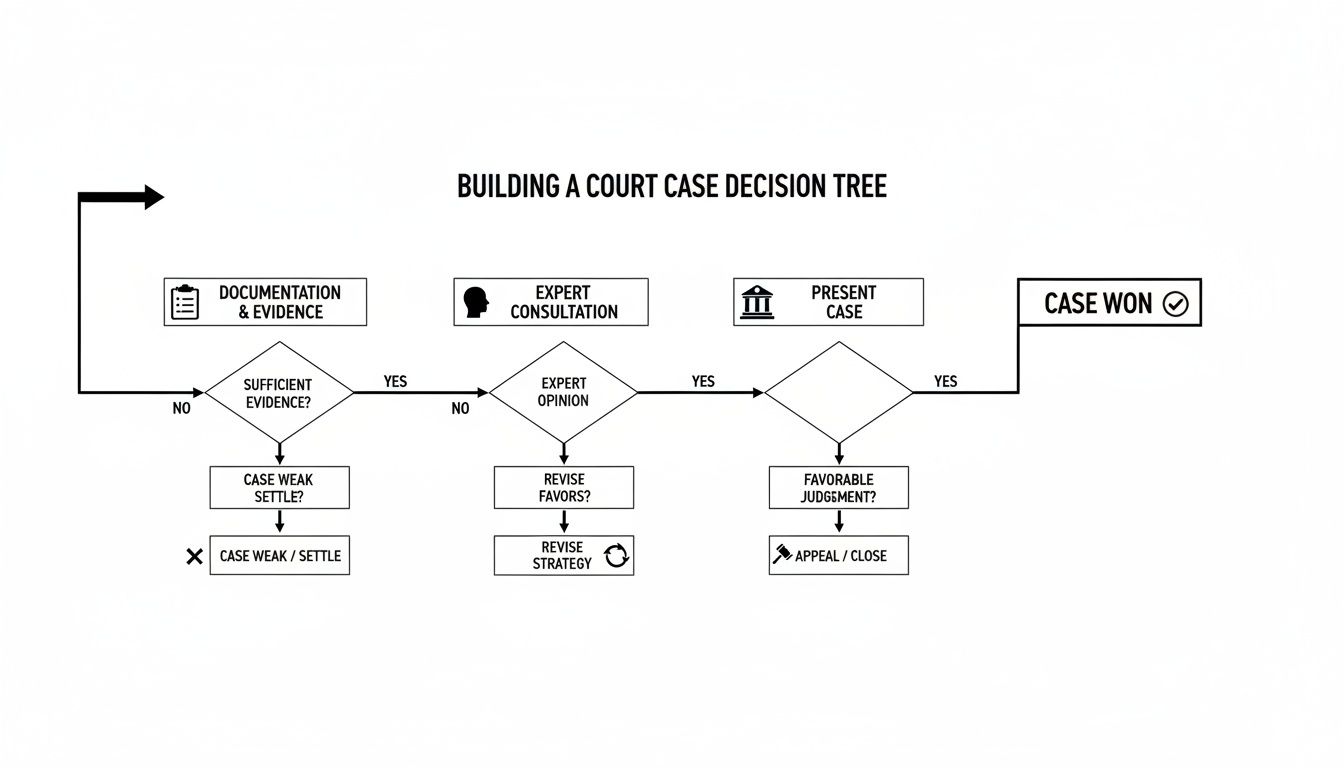
Walking into a Texas courtroom when your relationship with your child is on the line is one of the most intimidating things a parent can do. A gut feeling that something is wrong won’t be enough; a judge needs clear, compelling evidence before they will step in. To get a favorable outcome, your entire focus has to be on showing a consistent, documented pattern of alienating behavior that proves a change is truly in the “best interest of the child.”
Building a strong case isn’t about launching an attack on your ex. It’s about methodically gathering the kind of proof a judge needs to see the reality of your situation. One or two canceled visits or a rude comment might get brushed off as normal co-parenting friction. But a detailed log showing months of denied visitation, saved text messages filled with insults, and a clear pattern of interference—that tells a much more powerful story.
Gathering Persuasive Evidence
The absolute cornerstone of your case will be your documentation. Your goal is to create a factual, undeniable timeline that your attorney can use to show the court the extent of the emotional harm being inflicted on your child. Texas courts are most persuaded by tangible, objective proof, not just your word against theirs.
Your evidence-gathering toolkit should include things like:
- Detailed Visitation Logs: Keep a journal documenting every single time visitation is denied or interfered with. Note the date, time, the excuse given, and any direct quotes you can remember.
- Saved Communications: Never, ever delete text messages or emails from the other parent. Screenshots of manipulative, hostile, or controlling messages can be incredibly powerful evidence in front of a judge.
- School and Medical Records: Have teachers, school counselors, or your child's pediatrician noticed a sudden change in their behavior or attitude toward you? Their professional, unbiased observations can provide crucial support for your claims.
The Role of an Expert Witness
In many parental alienation cases, the testimony of a qualified mental health professional is what ties everything together for the court. An expert witness, like a child psychologist or a licensed professional counselor who specializes in high-conflict custody cases, can play a make-or-break role.
This expert can evaluate your child and the family dynamics, then give the court a professional opinion on what's really happening psychologically. Their testimony explains complex behaviors to the judge in a clear, authoritative way, directly connecting the alienating parent's actions to the harm your child is suffering. This kind of expert analysis can transform a collection of isolated incidents into a clear picture of manipulation that a judge can finally act on.
A skilled attorney and a credible expert witness working together can effectively educate the court on the severe emotional damage that parental alienation inflicts on a child, framing it as a direct threat to their well-being under the Texas Family Code.
The stakes in these cases are incredibly high and the legal arguments can be complex. A 2020 U.S. Justice Department-funded study revealed that when fathers counter abuse allegations with claims of parental alienation, it can significantly increase a mother's risk of losing custody. This just underscores the need for a meticulously prepared case. You can learn more about the complexities of these court dynamics in this national study.
Presenting Your Case in Court
When it’s your turn to speak, your composure and focus matter immensely. Your credibility is on the line. Stay calm and stick to the facts you’ve documented, avoiding emotional outbursts or sweeping accusations. You need to present yourself as a stable, child-focused parent who is there to protect your child, not to punish your ex.
Work closely with your attorney to prepare. They can help you understand how to prove parental alienation in court and will guide you on how to answer questions truthfully and effectively. Your job is to provide the facts; your attorney's job is to build the legal argument. Together, you can present an undeniable case for why the court's intervention is absolutely necessary.
Key Takeaways and Your Next Steps
When you're facing parental alienation, it's easy to feel heartbroken and powerless. But you have options and you are not alone. The road ahead requires patience and a smart strategy, but taking clear, decisive steps right now is the key to protecting your child and fighting for your relationship.
You don’t have to walk this path alone. The strongest way forward combines professional therapy with skilled legal counsel. The emotional toll of this fight is immense, but there are solutions. Here are the immediate, actionable steps you can take to move from feeling overwhelmed to empowered.
Combine Legal and Therapeutic Strategies
You can't successfully fight parental alienation from just one angle. It’s a two-front battle, requiring you to address both the emotional damage and the legal violations. Think of it as a pincer movement.
- Seek Legal Counsel: Your very first call should be to a family law attorney who has real, hands-on experience with high-conflict custody cases and parental alienation. They can walk you through your rights under the Texas Family Code and lay out your legal options, like filing a motion to modify your possession order.
- Find a Qualified Therapist: At the same time, start looking for a mental health professional who specializes in reunification therapy or works with high-conflict family dynamics. A good attorney can often refer you to experts they trust and have worked with before.
Knowing how to choose a family law attorney who truly understands these complex issues is the critical first step in building your support team.
Document Everything Meticulously
Your personal experience, no matter how real and painful, has to be translated into evidence a court can actually use. Start a detailed log today. Right now.
Document every single missed call, every canceled visit, every manipulative comment you overhear. Write down the dates, times, and direct quotes if you can. Note the context of each incident. This log is going to become the backbone of your case, giving your attorney and any court-appointed expert a clear, undeniable pattern of behavior to work with.
Prioritize Your Own Well-Being
It is absolutely impossible to be a source of stability for your child if your own emotional gas tank is on empty. You have to prioritize your own mental health.
Seek individual counseling, find a support group with other parents who get it, or lean on trusted friends and family. Staying resilient isn't selfish—it's a necessary part of being the parent your child desperately needs you to be right now.
The impact of parental alienation is significant, affecting an estimated 3 million children in the U.S. Researchers increasingly view this as a type of adverse childhood experience (ACE), which is linked to long-term health problems. This underscores the urgency of finding an effective treatment for parental alienation to protect your child’s future. You can learn more about the research into parental alienation's effects and the push for evidence-based interventions.
Common Questions About Parental Alienation Treatment
When your child's well-being is on the line, getting clear, straightforward answers is the first step toward reclaiming control. We hear these questions all the time from Texas parents who are tired, worried, and ready to fight for their kids. Here’s what you need to know.
How Long Does Treatment Take?
There’s no magic timeline for healing a relationship this damaged. Honestly, the process can take anywhere from a few months to over a year. A lot depends on how severe the alienation is, your child's age, and—this is a big one—whether both parents are genuinely willing to do the work in therapy.
Can a Judge Force My Ex to Go to Therapy?
Yes, absolutely. A Texas family court judge has the authority to order both parents and the child to participate in counseling or a reunification therapy program.
If the judge believes this is in the “best interest of the child,” it’s not a suggestion—it’s a legally binding court order. Refusing to show up can lead to serious legal consequences, like fines or even being held in contempt of court.
Do Texas Courts Recognize Parental Alienation?
They absolutely do. While "Parental Alienation Syndrome" is not a formal diagnosis in a medical manual, Texas courts take the destructive patterns of alienating behavior very seriously.
Judges will look closely at any conduct that sabotages a child's right to a healthy, loving relationship with both parents. This kind of behavior weighs heavily when the court is making critical decisions about custody, conservatorship, and possession schedules.
What if I Can't Afford Expensive Therapy Programs?
This is a real and completely valid concern. The financial strain of fighting for your child can feel overwhelming. The first thing you should do is talk to your family law attorney about your financial situation.
It's possible to file a motion asking the court to order the other parent to contribute to—or even fully cover—the costs of therapy, especially if their actions made it necessary. Some therapists also offer their services on a sliding-scale fee to make treatment more accessible.
If you need help with a child custody or visitation case in Texas, our experienced attorneys can guide you every step of the way. Contact The Law Office of Bryan Fagan, PLLC today for a free consultation.