
When your child’s future is on the line, understanding your rights as a father matters most. In Texas, the law starts with a powerful belief: it's in a child’s best interest to have both parents actively involved in their life. This means fathers have a fundamental right to build and maintain a strong relationship with their children. While many people use the term "visitation," Texas law calls it a “Possession Order.” This is the court-ordered schedule that lays out exactly when you have your child, serving as the roadmap for your time together.
A Father’s Right to a Relationship with His Child

The fear of losing precious time with your child can be overwhelming. It’s vital to know that Texas family law does not automatically favor mothers. The court’s one and only guiding star is the “best interest of the child,” a standard that shapes every decision made about custody and possession schedules.
This legal standard assumes that a stable, loving connection with both parents is essential for a child to thrive. It’s not just a legal theory; research consistently shows a father's active presence has a profound impact on a child's development. For a deeper look into this crucial bond, you can explore resources on the impact of parent-child relationships on child mental health.
Understanding Your Legal Standing
To secure your rights as a father, you first need to understand a few key legal concepts. In Texas, parental rights and responsibilities fall under the umbrella of conservatorship. Think of it as the legal blueprint that dictates who makes major decisions for your child (like medical or educational choices) and who has the right to possession and access.
In most cases, judges name both parents as Joint Managing Conservators. This powerfully reinforces the state’s commitment to shared parenting and is a cornerstone of Texas family law. It means the law presumes that you and your child's mother will share the rights and duties of raising your child.
Knowing the law is your first step toward building a strong case. By learning more about dads' rights in Texas, you can move forward with the confidence needed to protect the meaningful relationship you and your child deserve.
How Paternity Affects a Father’s Rights
Before you can walk into a Texas courtroom and ask for a visitation schedule with your child, you must first cross a critical legal bridge: establishing paternity. Simply put, you must be legally recognized as your child’s father. This is the non-negotiable first step that unlocks every other parental right, from having a say in your child's life to securing a court-ordered possession schedule.
Many fathers assume that being on the birth certificate is enough, but this is a common and risky misconception. Texas law provides specific, clear-cut ways to formalize your legal status as a parent. Think of it this way: you can't build a house on land you don't legally own. Establishing paternity is how you secure the legal foundation for your parental rights.
The Three Paths to Legal Fatherhood
In Texas, there are three main avenues to becoming a child's legal father. Each one carries the same legal weight but gets you there in a different way depending on your circumstances. Understanding which path applies to you is key to knowing what to do next.
- Presumed Father: The law automatically presumes you are the father if you were married to the child's mother when the child was born. This presumption also applies if the child was born within 301 days after your marriage ended.
- Acknowledged Father: If you and the mother were not married, you can both voluntarily sign a legal document called an Acknowledgement of Paternity (AOP). This is a sworn statement, often signed at the hospital, that officially and legally makes you the father.
- Adjudicated Father: When there is a dispute or uncertainty about paternity, a court must step in. A judge can legally establish paternity through a lawsuit, a process known as adjudication. This usually involves DNA testing to confirm the biological link and ends with a court order declaring you the legal father.
For unmarried dads, proactively handling this step is essential. To get into the details of how this process works, check out our guide on establishing paternity in Texas.
What Paternity Means for Your Custody Rights
Once paternity is legally established, the court can make orders about custody, visitation (possession), and child support. This is where you’ll hear the term conservatorship. It sounds complicated, but it’s just the legal word for the bundle of rights and responsibilities each parent has for their child. To help you get a handle on the language you'll hear in court, we've put together a quick reference guide.
Key Custody Terms in Texas Explained
| Legal Term | Plain-English Explanation | What It Means for Fathers |
|---|---|---|
| Conservatorship | The legal term for custody in Texas, which covers all parental rights and duties. | This defines your legal authority to make decisions for your child and have time with them. |
| Joint Managing Conservatorship (JMC) | Both parents share the rights and responsibilities of raising the child. | This is the most common outcome and means you share in making major decisions. |
| Sole Managing Conservatorship (SMC) | One parent has the exclusive right to make most major decisions for the child. | This is rare and usually happens only in cases involving family violence, abuse, or neglect. |
| Possessory Conservator (PC) | The parent who has visitation rights but does not have the exclusive right to make major decisions. | If the other parent is named SMC, you would typically be the PC with a set visitation schedule. |
| Possession and Access | The legal terms for visitation and the time a parent spends with their child. | This refers to your court-ordered parenting time or visitation schedule. |
Understanding these terms helps you follow what's happening in your case and advocate more effectively for your role in your child's life.
In the vast majority of Texas cases, the court names both parents as Joint Managing Conservators. This means the law starts from a place of shared parental responsibility, not a battle where one parent wins and the other loses.
Being a Joint Managing Conservator means you get a voice in the big decisions affecting your child—things like their education, healthcare, and religious upbringing. It confirms that your involvement isn't just wanted, it's legally protected. The court defaults to this cooperative setup because Texas law is built on a simple, powerful idea: kids do best when both parents are actively and meaningfully involved.
How Texas Determines Custody: The Standard Possession Order
Once you’ve established paternity and conservatorship is in place, the big question becomes: "When do I get to see my kids?" This is where the legal framework translates to your family's calendar. In Texas, the court’s default schedule is the Standard Possession Order (SPO), a detailed blueprint designed to give both parents predictable and consistent time with their children.
The SPO is the Texas Legislature’s answer to creating a stable routine that is presumed to be in a child’s best interest. It’s not just a suggestion—it’s a legally binding order that provides a clear roadmap for your time together. Getting a handle on how it works is the first step in protecting your rights and planning your future as an active, involved dad.
This timeline shows the different legal paths to establishing your rights as a father, which is the crucial first step before a court can put a Standard Possession Order in place.
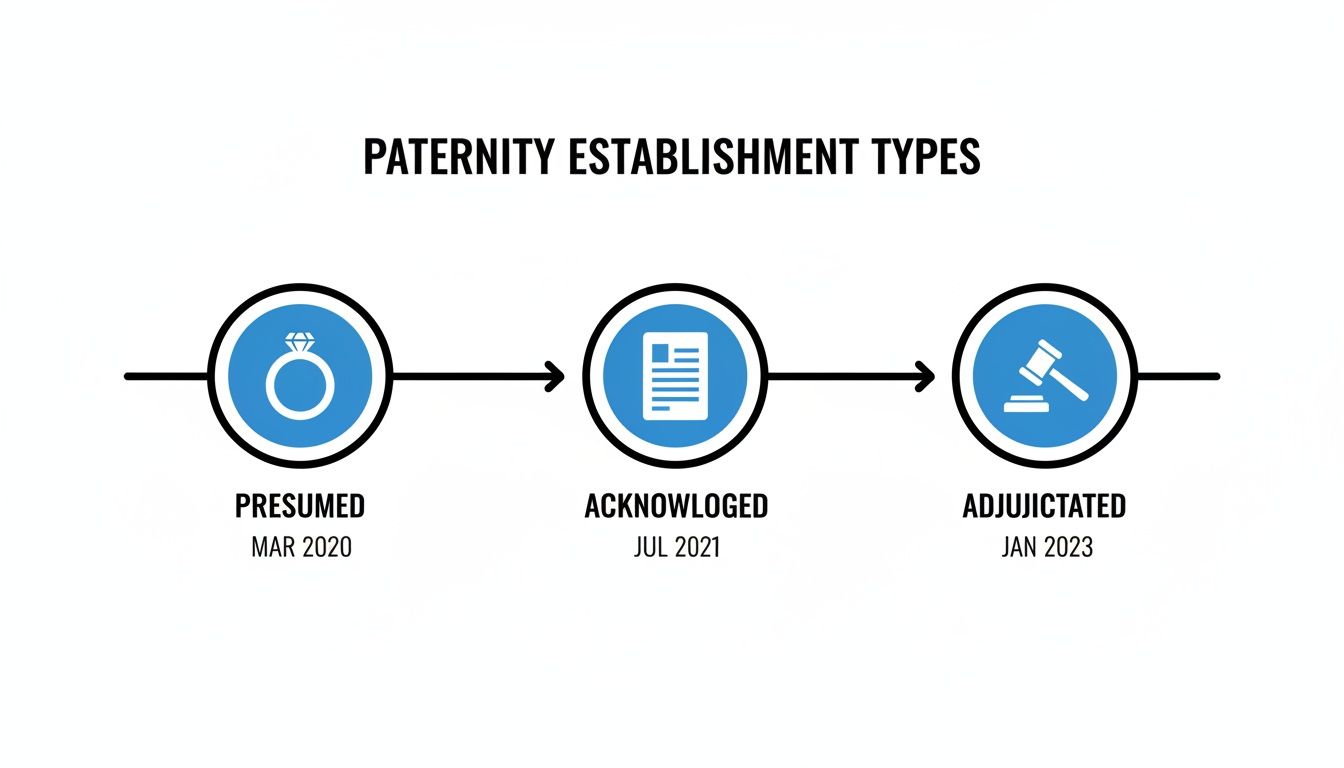
Whether you’re a presumed, acknowledged, or adjudicated father, each path gives you the same legal standing to ask the court for a possession schedule like the SPO.
The SPO for Parents Living Under 50 Miles Apart
The most common version of the SPO is for parents who live relatively close to each other. When you live nearby, the schedule allows for more frequent contact, including midweek visits that help maintain a strong bond.
Here’s a typical breakdown of the non-primary parent's time under this setup:
- Weekends: You'll have the kids on the first, third, and fifth weekends of a month.
- Holidays: Major holidays like Thanksgiving and Christmas are alternated each year, ensuring both parents get to create special memories.
- Summer: You get an extended period of possession, usually 30 days, which you can take all at once or break into shorter visits.
This structure ensures that even if you aren't the primary conservator, you have regular and significant time to parent your children. This kind of involvement is backed by a global shift in family policies. According to the State of the World's Fathers 2023 report, the number of countries offering paid paternity leave shot up from just 25% in 1995 to 63% in 2022. This trend shows a growing recognition of a father’s essential role.
The SPO for Parents Living Over 100 Miles Apart
Life happens, and sometimes parents end up living far apart. Texas law understands that a schedule with frequent handoffs isn't practical over long distances. For parents living more than 100 miles from each other, the SPO is adjusted to ease the travel burden while still protecting a father's visitation rights.
The goal remains the same: ensuring the child has consistent, meaningful contact with both parents. The schedule is simply tweaked to match the reality of the distance.
In a long-distance SPO, the non-primary parent usually gets:
- Choice of Weekends: You can often choose one weekend a month that works best, instead of being locked into the first, third, and fifth weekends.
- Every Spring Break: You get the kids for their entire spring break from school, every single year.
- Longer Summer Possession: To make up for the lack of midweek visits, you get a longer summer visit, typically 42 days.
This modified schedule acknowledges that quality time can sometimes be more important than frequency, especially when significant travel is involved. For a more detailed look at how these schedules work, you can learn more about child visitation and Standard Possession Orders in our detailed guide.
While the SPO provides a solid default, parents can always agree to a custom schedule that better fits their family’s unique needs, as long as it’s in the child's best interest.
When a Standard Schedule Does Not Fit Your Family
The Texas Standard Possession Order (SPO) is a solid starting point, but it’s designed for a "typical" family that may not look like yours. Your child’s well-being is the only thing that truly matters, and sometimes, the standard schedule isn’t what’s in their best interest. As a father, it is important to recognize when to advocate for a different schedule to protect your child and your relationship with them.
Fortunately, Texas law is flexible. Whether you’re dealing with a very young child, legitimate safety concerns, or you and the other parent have found a better arrangement, the court can and will deviate from the SPO. This ensures your visitation rights as a father are fair, practical, and truly serve your child's needs.
Possession Schedules for Children Under Three
Infants and toddlers operate on routine, predictability, and frequent, consistent contact with both parents. A long weekend away from their primary caregiver can feel like an eternity to a two-year-old and disrupt their sense of security.
Because of this, Texas Family Code Chapter 153 provides special guidelines for children under the age of three. Instead of the usual SPO, a judge is far more likely to order a "stair-step" plan. This often includes:
- Shorter, more frequent visits.
- No overnight stays initially for very young infants.
- A schedule that gradually increases in duration as your child gets older and more comfortable.
The entire goal is to help you build a strong, secure bond with your child without disrupting their need for a stable routine, ensuring you are a constant, reassuring presence from day one.
When the SPO Is Not in the Child’s Best Interest
The law presumes the SPO is in a child’s best interest, but that presumption can be challenged. If you have clear, convincing evidence that the standard schedule would put your child’s physical or emotional well-being at risk, a judge is required to create a different order.
The "best interest of the child" isn't just a legal phrase—it's the single most important rule in Texas family law. Under the Texas Family Code, it overrides everything else. If the SPO conflicts with that principle, the court must create a possession order that keeps the child safe.
What situations might justify deviating from the SPO? This typically involves serious issues like:
- A history of family violence committed by a parent.
- Evidence of child neglect or abuse.
- A parent’s ongoing struggle with substance or alcohol abuse.
- Extreme conflict between the parents that makes exchanges harmful to the child.
In these cases, a court might order supervised visitation, where your time with your child must happen with a neutral third party present. While restrictive, it is designed as a temporary safeguard to ensure your relationship can continue while any underlying safety issues are addressed.
Creating a Custom Schedule by Agreement
Not every deviation from the SPO arises from conflict. In fact, you and the other parent have the power to agree on your own custom schedule. The law encourages parents who can work together to build a calendar that fits their children's lives and their own work commitments.
As long as you both agree the schedule is in your child's best interest, you can present it to the judge to be signed and made into a legally enforceable order. This cooperative approach almost always leads to better outcomes and less stress for everyone involved—especially the children you are both working to protect.
Steps to Modify or Enforce a Custody Order

Getting a signed Possession Order can feel like the finish line. But what happens when that order is ignored? It is incredibly frustrating and painful when the other parent denies your court-ordered visitation, turning what should be joyful moments into sources of conflict.
Your court order is not a suggestion; it's the law. When your time with your child is consistently denied, you don’t have to accept it. The Texas legal system provides a clear path to hold the other parent accountable. On the other hand, life isn’t static. A possession schedule that worked two years ago might be impractical today. The law anticipates this, offering a way to adjust your order to fit your family's new reality.
When Your Visitation Rights Are Denied
If the other parent is blocking you from seeing your child according to the possession schedule, your first legal step is to file a Motion for Enforcement with the court. This action officially notifies the judge that the other parent is violating a court order and asks the court to step in and uphold your visitation rights.
When you file for enforcement, you can ask the court for several remedies:
- Make-Up Visitation: The judge can order extra possession time to make up for the periods you were wrongfully denied.
- Fines and Attorney’s Fees: The parent who violated the order may be required to pay a fine and cover your legal costs.
- Jail Time: For repeated or serious violations, the court has the authority to sentence the non-compliant parent to jail for contempt of court.
This process is about ensuring the court's orders are respected so your child can benefit from having you in their life.
Modifying an Outdated Custody Order
As life changes, your possession order should be able to change with it. A new job, a relocation, or a child’s evolving needs are all legitimate reasons to update your custody arrangement. To do this, you’ll file a Petition to Modify the Parent-Child Relationship.
However, you can’t request a change on a whim. Under the Texas Family Code, you must prove two key things:
- There has been a material and substantial change in circumstances since the last order was signed.
- Changing the order would be in the best interest of the child.
A “material and substantial change” is a significant life event that makes the current order unworkable or no longer beneficial for the child’s well-being.
Examples include:
- Relocation: One parent moves to a different city or state.
- New Work Schedule: A job change makes the current exchange times impossible.
- Child’s Preference: A child over 12 expresses a strong desire to live with the other parent.
- Change in a Parent's Lifestyle: A parent develops a substance abuse problem or begins living in an unsafe environment.
There's a growing legal trend recognizing the deep involvement of both parents. A 2021 study on the Hague Convention noted a significant increase in shared parenting, with 94% of taking mothers and 71% of taking fathers identified as joint primary carers. This shows that courts worldwide increasingly understand the essential role fathers play. You can read the full study on global parenting trends for more insight.
Whether you're fighting to enforce the rights you have or seeking to adapt them to new circumstances, you have powerful legal options. The key is to act decisively with an experienced advocate who can help you build the strongest case for what is truly best for your child.
Key Takeaways and Next Steps
Navigating visitation rights can feel like an uphill battle, but you don't have to walk this path alone. Remember: Texas law is built on a foundation that not only supports but encourages your active and meaningful involvement in your child’s life. Your presence matters, and the legal system provides clear avenues to protect it.
Understanding the legal framework is your greatest asset. The Texas Standard Possession Order provides a predictable roadmap for your time with your child, while the law’s flexibility allows for customized schedules when the standard model doesn't fit.
Here are the key takeaways to carry forward:
- Texas Law Is on Your Side: The court begins from the position that having you actively involved is in your child's best interest.
- The Possession Order Is Your Roadmap: This order is the legally enforceable tool that protects your time with your child.
- You Have Tools to Enforce Your Rights: A Motion for Enforcement is a direct path to hold the other parent accountable if your time is denied.
- Your Order Can Adapt as Life Changes: A Petition to Modify allows your possession schedule to evolve with your family's needs.
While this information empowers you, it cannot replace personalized legal advice from a trusted advocate who understands the nuances of your family’s story. Taking proactive steps now is the best way to secure your relationship with your child for years to come.
If you need help with a child custody or visitation case in Texas, our experienced attorneys can guide you every step of the way. Contact The Law Office of Bryan Fagan, PLLC today for a free consultation.
Frequently Asked Questions About Fathers' Visitation Rights
When you're fighting for your kids, questions and worries can be constant. The legal system often feels complex, but getting clear, direct answers is the best way to regain a sense of control. Here are some of the most common questions we hear from fathers about their visitation rights in Texas.
Can my child's mother deny visitation if I am behind on child support?
No. This is one of the most persistent myths in Texas family law. Child support and visitation are completely separate legal issues. A parent cannot legally withhold your court-ordered possession time as a penalty for unpaid child support. The law views your child’s right to financial support and their right to have a relationship with you as two distinct and equally important duties.
If this is happening to you, you have the right to file a Motion for Enforcement. Conversely, you cannot stop paying child support because you are being denied visitation. Both are court-ordered responsibilities that must be followed.
Do I have visitation rights if we were never married?
Your marital status has no bearing on your parental rights, but your legal status as the father is everything. If you haven't legally established paternity—either by signing an Acknowledgement of Paternity (AOP) or through a court order—then you do not have any enforceable visitation rights yet. For unmarried fathers, this is the critical first step.
To secure your rights, you must file a Suit to Adjudicate Parentage. Once the court legally recognizes you as the father, it will then create official orders for conservatorship, possession, and support, putting you on the same legal footing as a father who was married.
It’s crucial to understand this distinction: being a biological father is not the same as being a legal father in the eyes of the court. Taking the official step to establish paternity closes that gap and protects your relationship with your child.
What if my child refuses to go on a scheduled visit?
This is a heartbreaking and difficult situation for any father. Legally, a child does not get to decide whether to follow a court order. The custodial parent has a legal duty to make the child available for your scheduled possession time.
However, the situation becomes more nuanced as a child gets older. Texas law allows a child who is 12 years of age or older to speak with the judge in private about their wishes. While their preference is not the final word and doesn't give them veto power, a judge will listen carefully and take it into serious consideration.
If your child consistently refuses to go with you, it may be a symptom of a deeper issue. It could be a sign that the current order is no longer working or that it's time to seek a modification that better fits your child's needs as they mature.
If you need help with a child custody or visitation case in Texas, our experienced attorneys can guide you every step of the way. Contact The Law Office of Bryan Fagan, PLLC today for a free consultation.