Skip to content
When your child's future is on the line, understanding your rights matters most.
You may be reading this because you and your child's other parent were never married, and now everything feels uncertain. Maybe you're a mother trying to protect your child's stability. Maybe you're a father who loves your child greatly but has just learned that love and biology don't automatically create legal rights in Texas. That can feel harsh, confusing, and very personal.
Texas custody laws for unmarried parents follow a very specific path. The good news is that there is a path. If you know where you stand and what steps come next, you can move from worry to action and start building a stable legal foundation for your child.
Navigating Custody When You're Not Married
A lot of parents come into this situation thinking the law will “just know” who the parents are and sort things out fairly. Real life doesn't work that way.
Consider a common example. A father has been involved since the pregnancy, attended the birth, and helped care for the baby. He may assume that if problems arise later, he can ask the court for visitation. Then he learns something upsetting. Until Texas recognizes him as the legal father, he may not have the right to ask for custody or visitation at all.
For mothers, the pressure looks different. You may be carrying the full weight of daily parenting decisions while also worrying about whether the other parent will step up, create conflict, or disappear and reappear unpredictably. You need clarity too, especially if you want enforceable child support, a reliable possession schedule, or legal protection for your child's routine.
Practical rule: In Texas, informal parenting agreements may feel workable in the moment, but they don't offer the same protection as a court order.
That's why this area of family law matters so much. It isn't just about who loves the child more. It's about who has legal authority, who can make decisions, when each parent has time with the child, and what steps are required before a judge can step in.
Here's the heart of it. For unmarried parents, the starting line is not the same for both sides. That reality shapes everything that follows under Texas Family Code Chapter 153, including conservatorship, possession schedules, and decision-making rights.
The First Hurdle Why Paternity Is Everything
The biggest misunderstanding in Texas custody laws for unmarried parents is this: biological fatherhood is not the same as legal fatherhood.
Under Texas Family Code guidance discussed here, an unmarried mother automatically becomes the sole managing conservator with full legal and physical custody at the moment of the child's birth. Conversely, an unmarried father has no automatic custody or visitation rights until paternity is legally established, as confirmed by Texas Family Code §160.204.
That means an unmarried father can be present, committed, and listed on the birth certificate, and still have no enforceable right to possession, visitation, or decision-making unless paternity is legally established.
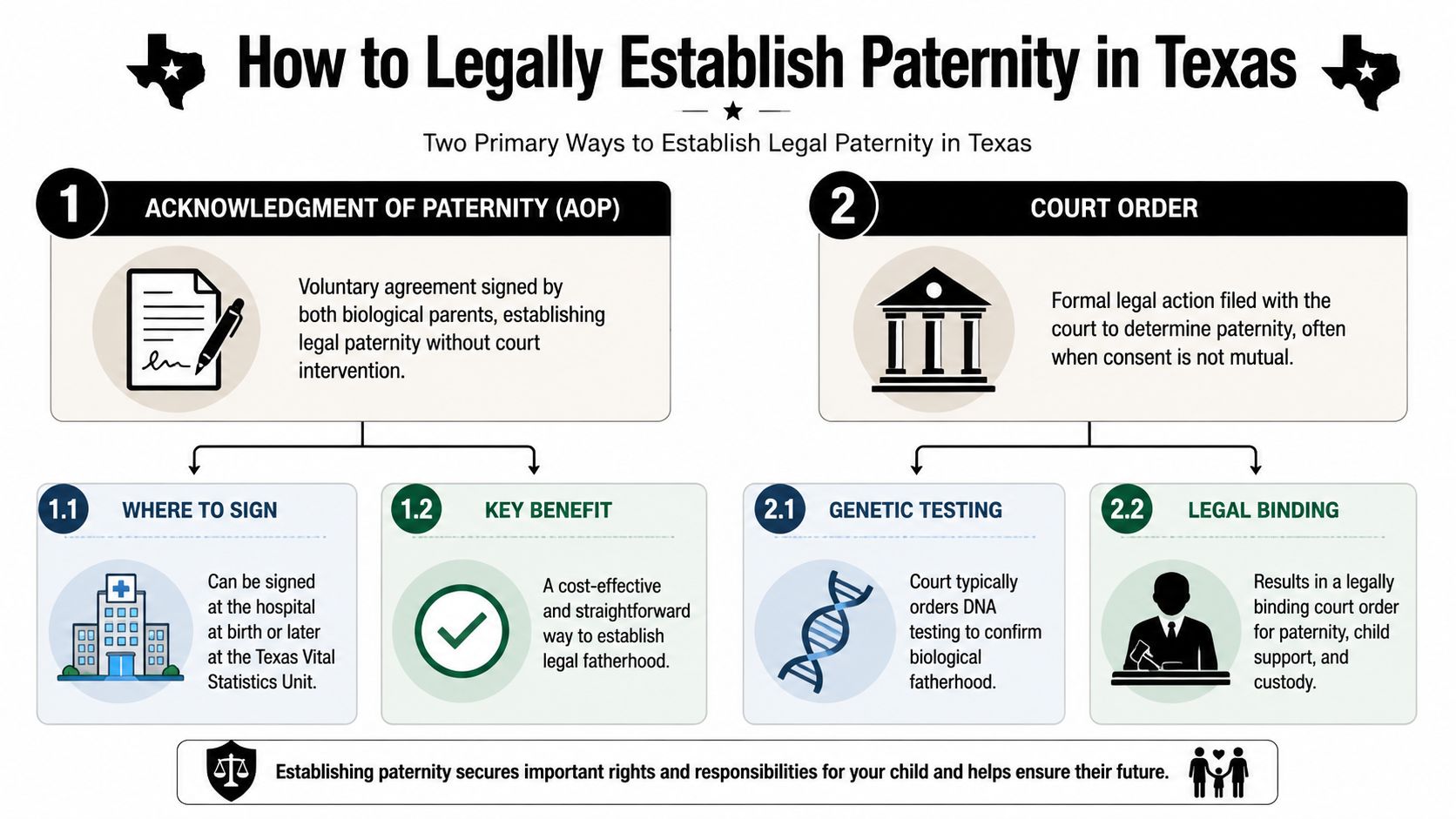
A simple visual helps make the process easier to understand:
What this means in daily life
This issue isn't abstract. It affects ordinary moments that matter to parents.
Without legal paternity, a father may not be able to demand time with the child, object to major decisions, or insist on being included in school and medical matters. If the parents are getting along, they may work things out informally. But if conflict starts, the father can discover that those handshake arrangements don't give him enforceable rights.
For mothers, this rule means the law gives you default authority at the beginning. But it can also leave you carrying all responsibility until a legal order addresses conservatorship, possession, and support.
A court can only protect rights that have been legally established first.
The two legal roads
Texas generally gives unmarried fathers two ways to move forward:
- Voluntary path: both parents sign an Acknowledgment of Paternity, often called an AOP
- Contested path: one parent asks the court to determine parentage, often with DNA testing
Later in the process, a father who has established paternity can ask for conservatorship and possession rights. But this first hurdle comes before those requests.
A short video can help if you're trying to picture how these issues play out in real Texas cases:
Why fathers need to act quickly
Some fathers wait because they believe things are “fine for now.” That can be a costly mistake. If the relationship between the parents changes, the father may be starting from behind. He may need to establish paternity before he can even ask for a possession order.
This is the hard truth many families don't hear early enough. Zero automatic rights means zero automatic protection. If you are an unmarried father in Texas, establishing paternity is not a technicality. It is the legal doorway to every other parental right.
How to Legally Establish Paternity in Texas
Once you understand the starting point, the next question is practical. How do you fix it?
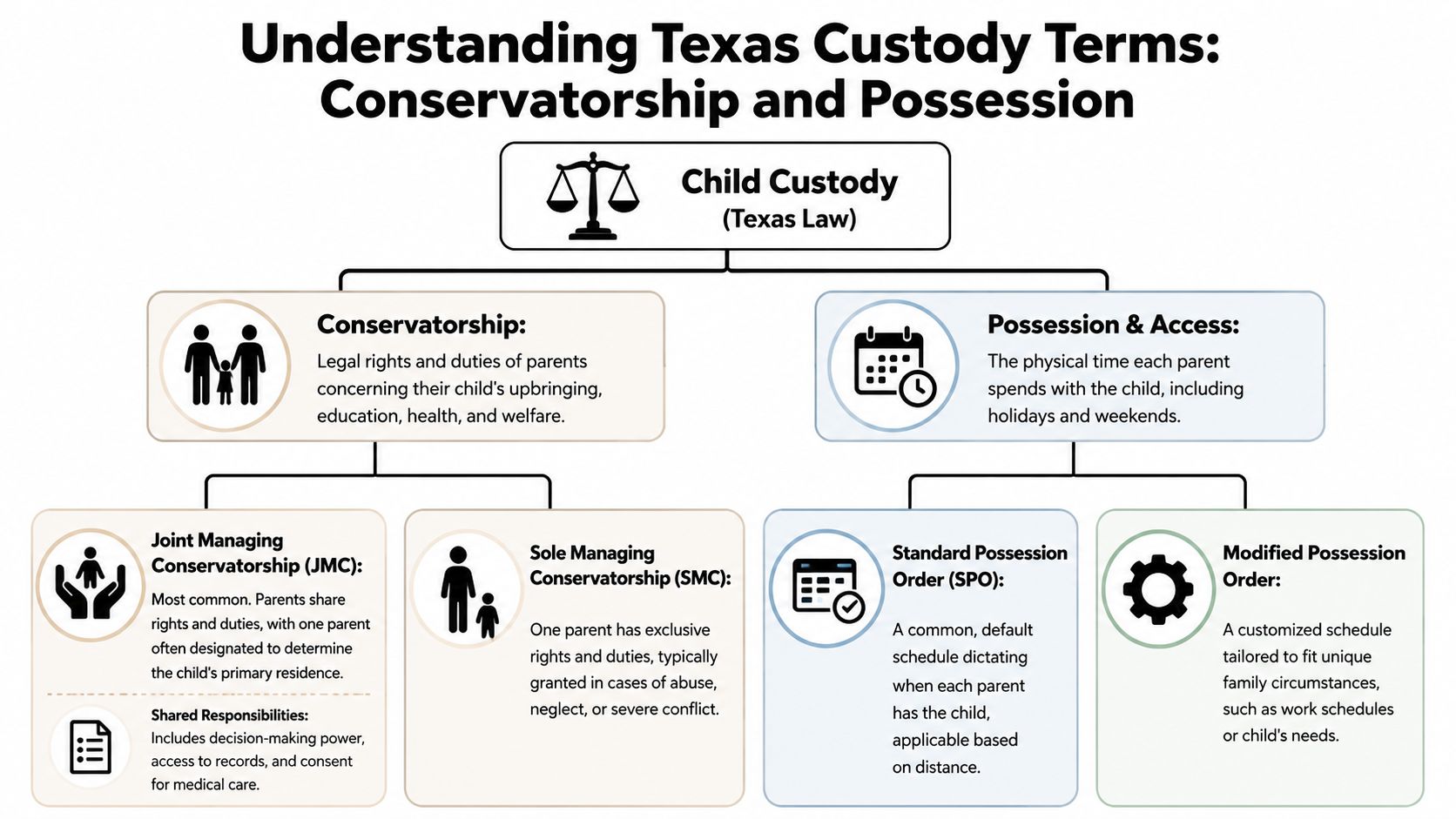
Texas gives unmarried parents two main ways to establish paternity. One is cooperative. The other is court-driven. Both can lead to legal parentage, but the right path depends on whether both parents agree.
Option one with agreement
If both biological parents agree who the father is, they can sign an Acknowledgment of Paternity. This is often done at the hospital, but it can also be completed later through the state's records process.
In plain English, the AOP is the form that tells Texas, “We both agree who the legal father is.” That agreement matters because it changes the father's status from someone claiming parenthood to someone the law recognizes as a parent.
If you want a fuller breakdown of that process, this guide on how to establish paternity in Texas is a helpful next read.
Option two through the court
If one parent won't sign, if there's a dispute, or if no AOP was completed earlier, the next step is a court case to adjudicate parentage. In that setting, the court can order genetic testing and then issue a ruling on legal parentage.
This route is more formal, but it exists for a reason. Some families need a judge to create clarity when trust has broken down or when one parent is blocking the process.
Here's a quick comparison:
| Path | Best fit | What happens |
|---|---|---|
| Acknowledgment of Paternity | Parents agree | Both sign paperwork establishing legal paternity |
| Court order | Parents disagree or no form was signed | The court may order DNA testing and decide parentage |
What happens after paternity is established
Legal paternity is the key that opens the next case. After that, a parent can ask the court for conservatorship, possession, access, and child support orders.
Families dealing with those issues often look for Chapter 153 representation, such as a Texas Child Custody Lawyer handling conservatorship, possession, and access matters under Texas law.
If you're a father, don't confuse “everyone knows I'm the dad” with “Texas has legally recognized me as the dad.” Those are not the same thing.
Understanding Texas Custody Terms Conservatorship and Possession
Once parentage is established, parents usually start hearing words that sound unfamiliar. Texas doesn't always use everyday words like “custody” and “visitation.” Instead, you'll see terms like conservatorship and possession and access.
That language can make the process feel more intimidating than it needs to be. The concepts are simpler than they sound.
Conservatorship means decision-making
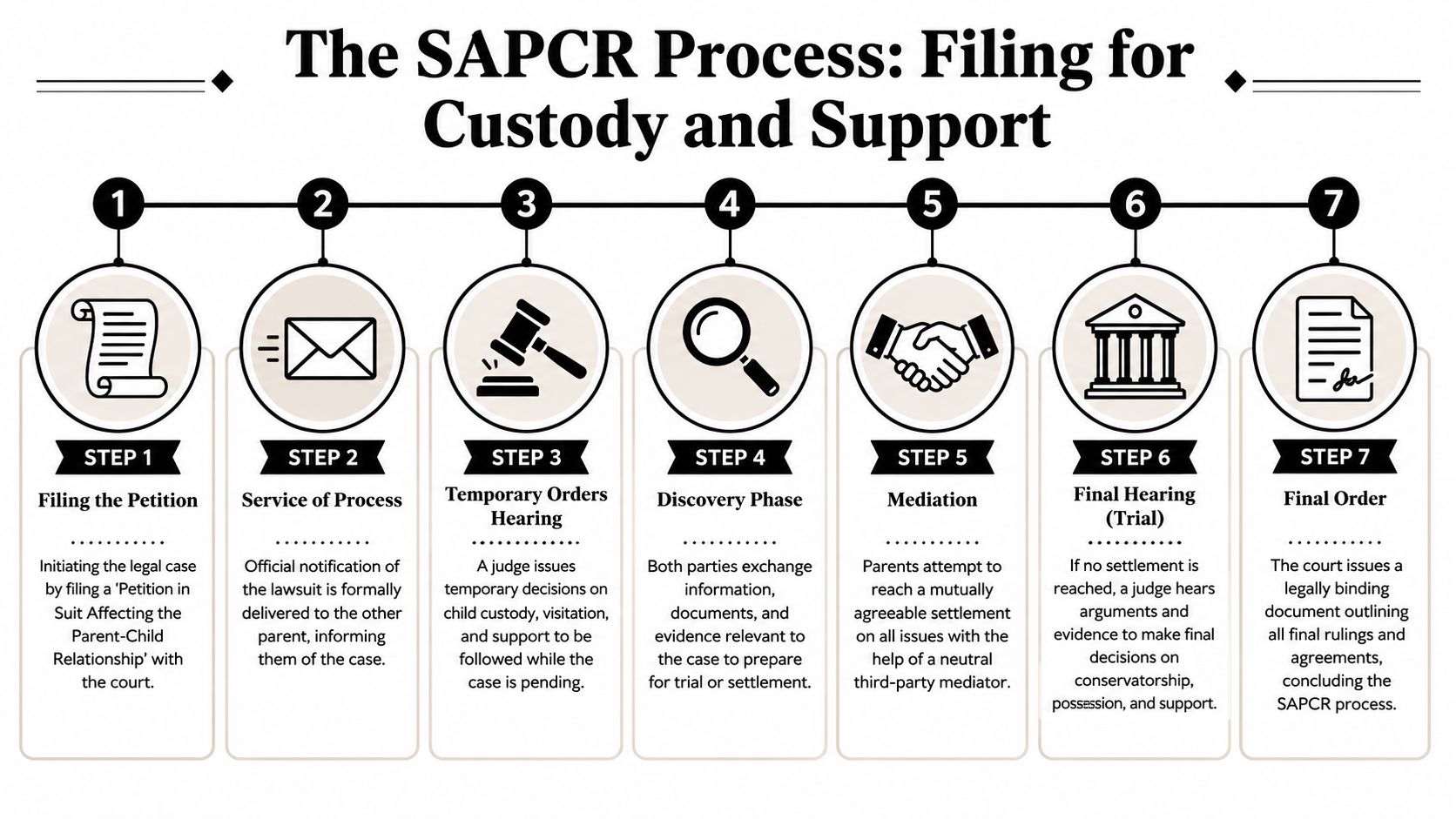
Think of conservatorship as the legal side of parenting. It covers who gets to make major choices about the child's life, including schooling, health care, and other important matters.
Texas often uses two main categories:
- Joint managing conservatorship means both parents share certain rights and duties regarding the child.
- Sole managing conservatorship means one parent has exclusive authority over key decisions.
If you want a plain-language overview of how those rights are assigned, this article on conservatorship in Texas breaks it down clearly.
Possession and access means parenting time
Possession and access is the calendar part. It answers questions like when the child stays with each parent, how weekends work, what happens on holidays, and where exchanges happen.
A lot of parents assume joint conservatorship means a perfect split of time. It doesn't. Decision-making rights and physical time are related, but they are not the same thing.
According to this explanation of Texas custody law for unmarried parents, once paternity is confirmed, Texas courts determine conservatorship based on the “best interest of the child” standard and may apply the Standard Possession Order (SPO) to establish a parenting schedule, which is the default timeline unless a different arrangement better serves the child's interests.
What “best interest of the child” really means
This phrase matters in every custody case. In plain language, it means the judge focuses on the child's needs, not the parents' frustration with each other.
Courts look at practical questions such as:
- Home stability: Which home arrangement gives the child consistency?
- Emotional needs: Who can meet the child's day-to-day and long-term needs?
- Safety concerns: Is there any history of violence, neglect, or harmful behavior?
- Parenting ability: Can each parent make sound choices for the child?
For parents trying to understand the default visitation framework, The Texas Standard Possession Order Explained gives a factual overview of how the default Texas visitation schedule works.
The SAPCR Process Filing for Custody and Support
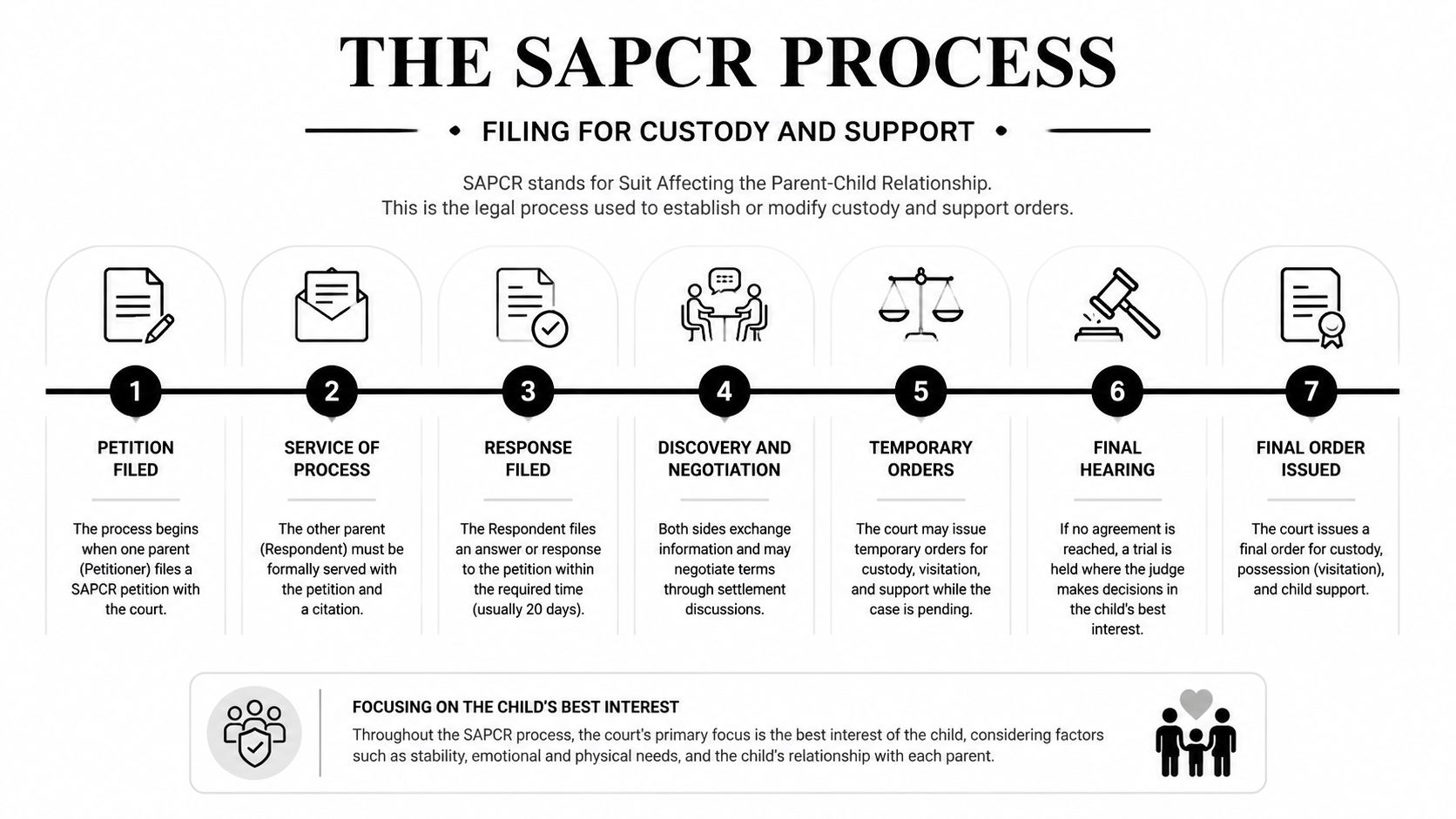
For unmarried parents, the court case that usually puts everything in writing is called a Suit Affecting the Parent-Child Relationship, often shortened to SAPCR.
This is the case that asks a judge to decide the legal structure for the child's future. It can address conservatorship, possession and access, and child support in one framework. Instead of living on guesswork or verbal promises, the family gets enforceable court orders.
How the case usually moves
Most SAPCR cases follow a sequence. The details vary, but the flow often looks like this:
- A petition is filed with the court asking for orders involving the child.
- The other parent is served or formally notified.
- Temporary orders may be requested if the family needs rules in place while the case is pending.
- Information is exchanged so each side can understand the facts.
- Mediation may occur if the parents are trying to reach an agreement.
- A final hearing or trial happens if no full agreement is reached.
- The judge signs a final order that controls the rights and duties of each parent.
That order matters because it becomes the rulebook. If one parent later refuses to follow it, the court has something concrete to enforce.
What the judge is looking for
Texas courts don't decide these cases by asking who is more upset or who tells the better story. The judge focuses on the child.
As explained in this discussion of SAPCR and unmarried parents in Texas, in a Suit Affecting the Parent-Child Relationship (SAPCR), courts apply the “best interest of the child” standard and presume shared parental responsibilities are appropriate, allowing unmarried fathers who have established paternity to seek joint managing conservatorship with equal decision-making rights.
That's an important point for fathers who started with no automatic rights. Once the legal foundation is in place, the court can consider shared parental responsibilities. The case shifts from “Do you have standing?” to “What arrangement serves the child best?”
The court's job isn't to reward one parent or punish the other. The court's job is to create a workable structure for the child.
Why temporary orders can matter so much
Some parents think the only hearing that matters is the final one. In reality, temporary orders often shape the day-to-day routine while the case is pending. They can address where the child stays, who makes certain decisions, and whether support is paid during the case.
That's why preparation matters early. Text messages, school records, medical information, and a clear timeline of caregiving can all matter depending on the dispute.
If you're trying to understand the paperwork side, this resource on the SAPCR form in Texas can help you get familiar with the process.
Urgent Situations and Special Circumstances
Some families can't wait for the normal pace of a custody case.
If a child is in immediate danger, a parent may need to ask the court for emergency relief or temporary orders quickly. These situations can involve abuse, threats, severe instability, or urgent concerns about a child's safety and well-being. The legal response depends on the facts, but waiting usually makes things harder.
Military deployment and incarceration
Parents in the military and parents coming out of incarceration often run into a painful misunderstanding. They expect access to resume automatically once they return home or are released.
That isn't how Texas law works. As explained in this Texas custody question involving unmarried parents, many fathers mistakenly believe release from prison or the end of military deployment automatically reinstates parental access, but without a court-ordered SAPCR, the mother retains sole conservatorship, and the father cannot force visitation or prevent relocation.
That can be devastating, especially for a parent who has been trying to rebuild life and reconnect with a child. But the answer is still action, not hopelessness. If you're in this position, you need to determine whether paternity has been established and whether a court order already exists.
Relocation and grandparent concerns
Relocation can become a flashpoint when there is no order defining rights. Parents may disagree about where the child should live, which school the child should attend, or whether a move will interfere with parenting time.
Grandparents can also have concerns, especially when they've been significantly involved in the child's care. In some cases, they may want to explore access or conservatorship issues. Families dealing with that question often benefit from reviewing resources focused specifically on grandparent access and custody in Texas.
Fast action matters most when a child's routine, safety, or access to a parent could change overnight.
Common Pitfalls and Your Next Steps
A lot of unmarried parents run into trouble during the quiet phase, when everyone is getting along well enough that court paperwork feels unnecessary. Then something changes. A new relationship starts, someone plans a move, communication breaks down, or one parent stops cooperating. That is usually the moment a father learns the hardest rule in this area of Texas law: until paternity is legally established and a court order is in place, he may have no enforceable rights to possession or decision-making.
That point is easy to miss because everyday parenting can look very different from legal parenting. A father may be present, loving, and involved for years. He may be on the birth certificate. He may pay support informally. But if the legal steps were never completed, Texas does not treat those facts as a substitute for established paternity and court-ordered rights.
One reliable explanation of that problem appears in this discussion of unmarried parent rights in Texas. The core lesson is simple. Do not assume informal involvement gives you legal protection.
Mistakes that create avoidable problems
- Waiting for conflict before acting: By the time a dispute starts, routines may already be set, and changing them can be harder.
- Treating the birth certificate like a court order: It may feel official, but it does not automatically give an unmarried father enforceable custody or visitation rights.
- Trusting verbal agreements: A handshake can work for a while. It cannot be enforced when the other parent changes course.
- Tying support to access: Paying child support does not automatically create visitation rights. Denying visits does not erase a support duty.
- Failing to keep records: School notices, medical updates, calendars, and saved messages can help show your role in the child's life.
Next steps you can take now
Start with the legal basics, then build outward. That approach works a lot like laying a foundation before putting up walls. If the foundation is missing, everything else feels unstable.
- Confirm where things stand legally. Find out whether paternity has been established, not just assumed.
- Gather your papers. Pull together the birth certificate, any acknowledgment of paternity form, court papers, child support records, school information, and medical records.
- Write out the current parenting pattern. Note who the child lives with, who handles appointments, who picks up from school, and how time with each parent has worked in practice.
- Focus on the child's routine. Judges care about stability. Clear notes about bedtime, school attendance, counseling, medical care, and extracurriculars can help show what arrangement supports the child best.
- Get organized. A legal case often turns on details. Even general planning resources, like these strategies for business growth, can offer useful ideas for tracking tasks, keeping timelines straight, and building better communication habits.
If you are an unmarried father, your next step is usually not to argue more forcefully with the other parent. It is to get the legal relationship recognized and then ask the court for clear orders. If you are a mother, your next step is often to put stable routines and enforceable boundaries in writing before confusion turns into a larger fight.
Small steps count here. Clear paperwork, careful records, and fast action can protect both your role as a parent and your child's sense of stability.
Key Takeaway
If you remember one thing, remember this: for unmarried fathers in Texas, parental rights do not start automatically. They begin when paternity is legally established and a court order defines conservatorship, possession, and support. For mothers, early legal clarity can protect stability, reduce conflict, and create enforceable rules that serve the child.
You don't have to solve everything today. But you do need to take the next right step.
If you need help with a child custody or visitation case in Texas, our experienced attorneys can guide you every step of the way. Contact The Law Office of Bryan Fagan, PLLC today for a free consultation.