Skip to content
A move can feel like hope and panic at the same time. You get a job offer in another city. Your parents finally have room for you and your child. A new spouse has to transfer. Or you need a safer, more stable place to rebuild. Then the next thought hits hard. Can you take your child with you?
For many Texas parents, that question comes up before a single box is packed. Mothers ask it. Fathers ask it. Grandparents helping raise a child ask it too. The answer usually starts in the same place. Texas courts focus on the child's stability and the child's relationship with both parents, not just the moving parent's reasons for wanting a fresh start.
That's why learning how to request permission to relocate with a child in Texas matters so much. If you have a current custody order, the law often limits where the child can live. Texas guidance explains that there is no automatic right to relocate with a child merely because a parent has primary custody, and most custody orders include a geographic restriction, so a parent who wants to move generally needs the other parent's agreement or court approval to change the order (Texas relocation guidance on geographic restrictions and permission to move).
That can feel intimidating. It's also manageable when you approach it the right way. A relocation case isn't just paperwork. It's a careful presentation of why the move helps your child, how you'll protect the child's bond with the other parent, and why the court should trust your plan.
Introduction When Life Requires a New Map
A parent may be offered a better work schedule in Houston, family support in San Antonio, or a housing opportunity in another state that makes daily life more secure. On paper, the move makes sense. In real life, the child has another parent, a school routine, and a court order that may already control where the child can live.
That tension is what makes relocation cases so emotional. You may feel guilty for wanting the move and frustrated that your own life choices don't feel fully yours. At the same time, the other parent may fear losing regular time, school involvement, and ordinary moments that matter just as much as holidays.
Texas family law doesn't treat relocation as a simple parenting preference. It treats it as a question about the child's welfare. Courts use the best interests of the child standard, which means the judge looks at what arrangement supports the child's overall well-being. In plain English, that includes stability, healthy relationships, and practical day-to-day needs.
Why this feels so personal
Parents often come into this process thinking the case will turn on one big fact. A new job. A remarriage. Better housing. Better schools. Those facts matter, but they rarely decide the case by themselves.
A judge usually wants to know more:
- Why now: Is this move tied to a real life change, or is it sudden and poorly planned?
- Why this place: What does the new location offer the child?
- What happens to the other parent: Can the child still have a meaningful relationship with both parents?
- How will daily life work: School, medical care, transportation, and visitation all have to make sense.
Practical reality: The strongest relocation requests are built around the child's life, not the parent's frustration with the current arrangement.
A relocation case is also a custody case
Many parents hear “relocation” and think there must be a special move-away form. In Texas, the issue is usually handled as a request to change an existing custody order. That matters because the court isn't starting from scratch. The judge is looking at an order that already exists and asking whether there's a good legal reason to change it.
If you're a joint managing conservator, that usually means both parents share important rights and duties regarding the child, even if one parent has the right to determine the child's primary residence. If you have a possession schedule, that's the calendar that sets out each parent's parenting time. A move can disrupt that schedule, so the court will want to know what new arrangement you're proposing.
Parents who do well in these cases usually start early, stay organized, and avoid treating the move like a done deal before the legal work is finished.
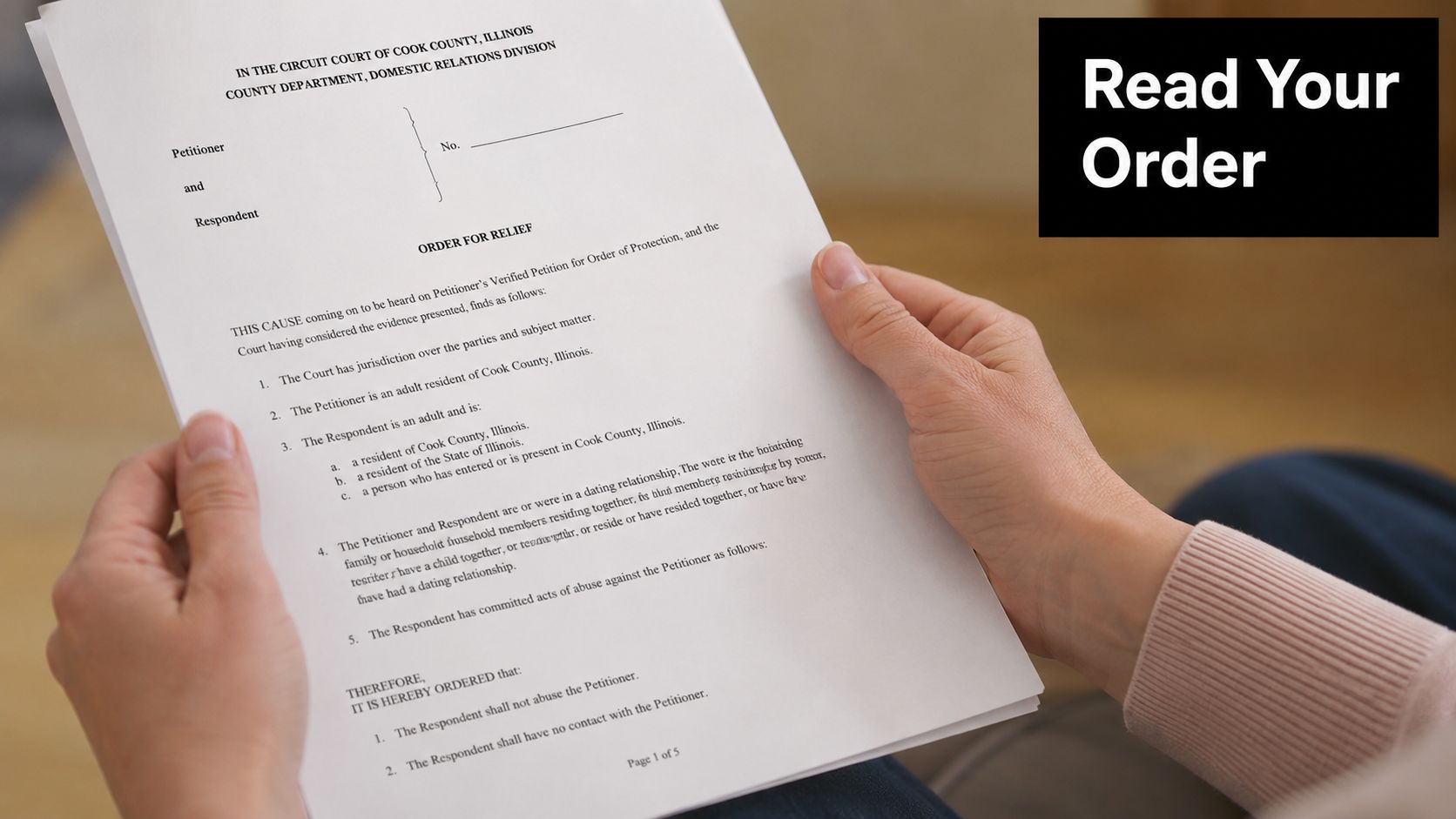
Your First Step Read Your Current Custody Order
Before you talk to the other parent about dates, schools, or moving trucks, pull out your current court order and read it carefully. This is the foundation of everything that follows.
Texas family-law guidance is clear that the procedural first step is to read the existing custody order for any geographic restriction. If the order limits the child's residence, relocation usually requires either the other parent's written agreement or a court-approved modification through a Suit Affecting the Parent-Child Relationship, often called a SAPCR (Texas relocation steps and SAPCR overview).
Look for the geographic restriction
Many Texas custody orders say the child's primary residence must remain within a certain county, a set of counties, or a region. That's the geographic restriction. It doesn't always use casual language like “you can't move.” Instead, it may appear in the section that gives one parent the right to designate the child's primary residence.
For a fuller breakdown of how these clauses usually work, this Texas guide on geographic restrictions in custody orders is a helpful companion resource.
Here's what to scan for in your order:
- Residence language: Look for wording about where the child's primary residence must be established.
- Conservatorship terms: Check whether the order names you and the other parent as joint managing conservators or sets another arrangement.
- Possession schedule details: Review weekends, holidays, school breaks, exchanges, and transportation terms.
- Notice requirements: Some orders require advance written notice for address changes, even before any relocation fight begins.
If the order is silent, don't assume you're free to move
Some parents read an order and don't see a clear restriction. That can create false confidence. A silent order doesn't automatically mean the move is risk-free. If the move changes how the other parent exercises possession or affects the current structure of the case, conflict can still follow quickly.
A custody order should be read as a whole document, not a single paragraph. Residence terms, conservatorship rights, and possession provisions all work together.
Written agreement can help, but it still needs care
If the other parent agrees to the move, that may reduce the conflict. Even then, casual texts and verbal promises aren't enough. A relocation that changes the legal order should be documented properly and approved through the court process so everyone has a clear, enforceable order going forward.
That protects both parents. It also protects the child from confusion later if schedules, school enrollment, or travel plans become disputed.
Proving the Move is in Your Childs Best Interest
A parent may have a real reason to move. A better job. Family support. Safer housing. In court, those facts matter only if they improve the child's life in a concrete, provable way.
That is the center of a relocation case. Judges usually focus less on whether the move helps the parent and more on whether the parent has done the hard work to show how the child will remain stable, supported, and closely connected to both sides of the family.

What a judge is likely to care about
Texas courts often evaluate relocation requests through practical questions. Why is the move happening now? What does the child gain in the new location? What will happen to the child's relationship with the other parent? Is there a realistic plan for school, transportation, medical care, and parenting time?
A persuasive case answers those questions with specifics, not broad promises.
| Court concern | What helps |
|---|---|
| Stability | A signed lease or housing plan, school enrollment details, and a workable daily routine |
| Relationships | A proposed schedule that protects meaningful time with the other parent |
| Education | School information tied to the child's actual needs, strengths, or challenges |
| Health | A plan for doctors, therapy, medication management, or special services |
| Parenting | Messages, calendars, and conduct showing you support the child's bond with the other parent |
Build your case around the child's daily life
I often tell parents to stop arguing the move in the abstract. Start with Monday morning.
Who gets the child to school? Who helps after school? What is the plan for tutoring, counseling, sports, medications, and bedtime? If the judge can picture a stable week in the child's new life, your request becomes more credible.
That is also why vague claims about a “better opportunity” usually fall flat. A better case shows the court what changes for this child, in this age group, with this school history, temperament, and family structure. If you want a closer look at how Texas courts evaluate those details, this resource on proving a child's best interest in Texas custody cases is a useful starting point.
Strong relocation requests anticipate the court's concerns
Many parents focus only on the upside of the new city. Judges also look hard at the downside.
If the other parent has attended school events, exercised regular possession, helped with homework, or handled medical appointments, the court will weigh what the child loses if distance makes that harder. Trying to minimize that relationship usually hurts the moving parent's credibility.
A stronger strategy is to address the concern directly. Show the court that you have thought through travel time, exchange costs, holiday schedules, video contact, and make-up time. The goal is not to pretend the move changes nothing. The goal is to show that you have a serious plan to preserve a meaningful parent-child relationship.
The most persuasive relocation cases are honest about the disruption and prepared with a child-focused plan to reduce it.
Show why this location fits this child
General statements about a new area being “better” are weak unless they connect to the child's actual needs. If school quality is part of your reason for moving, be prepared to explain what matters and why. Academic support, class size, commute time, extracurricular access, and neighborhood stability can all matter if they relate back to the child.
If you are comparing school options as part of your preparation, this guide to school districts for long-term stays can help you organize the questions a judge may expect you to have already considered.
Children's preferences can matter too, especially for older and mature children, but parents need to be careful. Coaching a child, rehearsing answers, or putting adult conflict on the child's shoulders can damage a case quickly. Courts tend to notice when a child's voice sounds borrowed.
How to Formally Request Relocation Through the Court
Once you know your order and understand what the court will care about, the next step is formal filing. Relocation is usually not handled by a simple letter to the judge. It begins with a request to modify the existing order.
Texas relocation cases are governed by Chapter 156 of the Texas Family Code. Texas family-law guidance states that the relocating parent must file a modification petition in the same county where the current order was made, and must prove both a material and substantial change in circumstances and that the move serves the child's best interests (Texas parental relocation and Chapter 156 modification process).
A helpful visual summary appears below.

The core filing usually starts with a modification petition
In many cases, the legal document is called a Petition to Modify the Parent-Child Relationship. In plain English, you are asking the court to change an existing custody order because circumstances have changed enough to justify a new arrangement.
“Material and substantial change in circumstances” sounds technical, but it usually means something meaningful has shifted since the current order was signed. Examples may include a job transfer, remarriage, significant family support in another location, or another major life development that affects the child's living situation.
For parents trying to understand the paperwork involved, this Texas custody modification forms resource can help you get familiar with the filing process.
The other parent must be formally notified
Filing the petition is not the end of the process. The other parent must receive formal notice according to court rules. That gives them the chance to respond, object, negotiate, or request their own relief.
Many families also go through mediation before a final hearing. Mediation is a structured settlement meeting where both sides try to reach an agreement with the help of a neutral third party. In relocation cases, mediation sometimes succeeds because parents can create more flexible long-distance schedules than a judge might order after a contested hearing.
This short video gives a practical overview of the process parents often face.
What the court will expect from your request
A strong filing doesn't just ask, “Can I move?” It usually needs to address:
- What has changed since the current order was entered.
- Where you want to move and why that location matters.
- How the child benefits from the move.
- What revised possession schedule you are proposing.
- How transportation and communication will work.
Filing first and moving later is far safer than moving first and hoping the paperwork catches up.
Gathering Evidence and Building a Compelling Case
Relocation cases are often decided long before the hearing starts. They turn on whether a parent can walk into court with a clear, documented plan that answers the judge's biggest question: how does this move improve the child's life while protecting the child's relationship with the other parent?
That is the real work here.
As noted earlier, Texas courts can react harshly when a parent relocates without permission. In practice, the safer strategy is to build the case first, file the right request, and gather proof that shows the move is thoughtful, stable, and centered on the child.

Build a record the judge can trust
A judge will hear plenty of promises. What carries weight is proof.
Start collecting documents early, before deadlines tighten and emotions rise. Good evidence usually shows two things at once. First, the move is legitimate and well planned. Second, you have taken the other parent's role seriously and built a proposal that keeps that relationship intact.
Useful evidence often includes:
- Employment records: Offer letters, transfer papers, pay information, or work schedules that show why the move is happening and why it makes sense now.
- Housing details: A proposed lease, mortgage information, photos, school zoning information, and neighborhood details that show the child will have a stable home.
- School, medical, and support information: Enrollment options, special education services, therapy continuity, doctors, extracurricular programs, or childcare arrangements.
- Family support proof: Statements, messages, or witness testimony showing who can help with pickup, childcare, emergencies, and daily routines in the new city.
- Parenting history: Calendars, report cards, appointment records, emails, texts, and activity records that show how involved you have been in the child's life.
The strongest files usually tell a complete story. A better job, standing alone, is rarely enough. A better job tied to stable housing, stronger family support, a workable school plan, and a realistic possession proposal is much more persuasive.
Anticipate the judge's concerns before the other parent raises them
This is where strategy matters. A relocation request gets stronger when it answers the hard questions up front instead of waiting for cross-examination.
For example, if the move increases distance, expect questions about missed school days, travel fatigue, transportation costs, and how often the child will see the other parent in person. If the child has special educational or medical needs, expect close attention to continuity of care. If your history with the other parent has been tense, expect scrutiny on whether you are supporting or limiting that parent-child relationship.
Address those points directly in your evidence and your proposed orders.
A revised possession plan can decide the case
Parents sometimes spend weeks gathering job and housing records, then treat the revised parenting schedule like an afterthought. That is a mistake. Judges want specifics.
A stronger relocation proposal usually covers:
| Issue | What a stronger proposal looks like |
|---|---|
| Weekends | Acknowledge that frequent short visits may no longer be realistic and propose a schedule that fits the distance |
| Holidays | Identify which holidays each parent will have, with exchange times clearly stated |
| Summer | Offer longer blocks of uninterrupted parenting time when school is out |
| Transportation | State who is responsible for booking, driving, paying, and handling delays or cancellations |
| Communication | Set regular phone or video contact that fits the child's age, school schedule, and activities |
Clarity helps. Vagueness hurts.
I often tell parents to test their proposed schedule against real life. Who buys the plane ticket? What happens if a flight is delayed? Where does the exchange happen? Can a young child handle the travel schedule you are proposing? Courts notice when a plan looks good on paper but falls apart in practice.
Credibility matters more than polished language
Parents help their case when they show preparation, flexibility, and respect for the other parent's role. They hurt it when they act as though the move is already settled and the court is there to approve a decision that has already been made.
These facts usually help:
- Careful planning: You researched the new community and can explain why it meets your child's needs.
- Reasonable conduct: Your communication with the other parent has been direct, calm, and documented.
- Specific proposals: Your schedule, travel plan, and communication plan are detailed enough to be enforced.
- Child-focused reasoning: You explain the benefits to the child, not just the benefits to you.
These facts often create problems:
- Last-minute announcements: Signing a lease, enrolling the child, or buying tickets before getting agreement or court approval.
- Hostile messaging: Texts or emails that suggest the other parent matters less once the move happens.
- Thin proof: General claims about better schools or better opportunities without documents to back them up.
- Acting first and asking later: Unauthorized relocation can damage credibility fast.
When parents want help organizing evidence, preparing exhibits, and pressure-testing a relocation proposal before mediation or a hearing, one option is to consult a Texas family-law firm that handles relocation and custody modifications, such as Law Office of Bryan Fagan, PLLC.
What If There Is No Custody Order in Place
Many parents often make a serious mistake. They assume that no court order means no legal barrier to moving. That assumption can create a fast-moving custody crisis.
Texas family-law guidance warns that when there is no formal custody agreement, moving without the other parent's consent can trigger emergency court intervention. The better practice is to file an initial SAPCR to establish rights and request permission to relocate at the same time, rather than moving first and creating a legal emergency (Texas guidance on moving without a custody agreement).
No order doesn't mean no rights
If there is no signed custody order, both parents may still have competing claims regarding the child. That's especially common after separation and before a divorce is finalized. One parent may believe they've been the main caregiver, while the other believes they still have equal say in where the child lives.
That kind of conflict can escalate quickly. A sudden move may lead the other parent to seek temporary orders, emergency relief, or restrictions on where the child can stay while the case is pending.
A better approach is to create structure before the move
If you're in this position, the goal is to create a lawful framework before relocation happens. That usually means filing an original custody case and asking the court to address conservatorship, possession, and the relocation issue together.
In plain English:
- Joint managing conservatorship means both parents may share major decision-making rights, even if one parent seeks the child's primary residence.
- Possession schedules set out when each parent has time with the child.
- Temporary orders can create short-term rules while the larger case is still pending.
Parents often believe moving first shows confidence. In court, it can look like poor judgment or interference with the other parent's rights.
If there's no current order, don't wait for conflict to force your timeline. A proactive filing usually gives you more control, more credibility, and a safer path for your child.
Your Next Steps and How an Attorney Can Help
A relocation case often turns on what the judge sees in the first few minutes. One parent arrives with a clear plan for school, housing, travel, and parent-child contact. The other arrives with a general statement that the move is necessary. Those are not equal presentations.
Your next step is to treat this like a case you must prove, not a request you hope the court will grant. Start with the facts you can document. Confirm the proposed living arrangements, school options, childcare plan, work schedule, and transportation details. Put together a parenting plan for after the move that shows respect for the other parent's time and keeps your child's routine as stable as possible.
Mediation is often the first real test of your preparation. A parent who comes in with workable terms has more room to shape the outcome. That may include extended holiday periods, virtual contact at set times, pickup and return terms, cost-sharing for travel, and rules for exchanging school and medical information. A parent who has no details usually ends up reacting instead of negotiating.
If the case goes to a hearing, credibility matters as much as emotion. Judges usually respond well to parents who answer directly, acknowledge the child's bond with the other parent, and show that they have thought through the hard parts of a long-distance arrangement. They are less receptive to parents who minimize the disruption, make vague promises, or suggest the other parent will easily adjust.
The practical side matters too. Interstate moves cost money, take planning, and affect how possession orders work in real life. If you are budgeting for the move itself, resources on Maryland to Texas car transport costs can help you account for transportation as part of a realistic relocation plan.
An attorney helps by pressure-testing your case before the court does. That includes identifying weak spots, organizing exhibits, preparing testimony, drafting proposed terms, and spotting arguments the other side is likely to raise. In many cases, the legal work is not just filing the right motion. It is presenting a plan the court can trust because it is specific, child-centered, and realistic.
The strongest request says three things clearly. This move benefits my child. I have a concrete plan to protect the child's relationship with the other parent. I can prove both.
If you need help with a child custody or visitation case in Texas, The Law Office of Bryan Fagan, PLLC can guide you through your options and help you prepare a strategy that fits your family's circumstances. Free consultations are available for parents, grandparents, and caregivers who need clear guidance on the next step.