
When your child’s future is on the line, navigating the child support system can feel overwhelming. Understanding your rights and responsibilities matters most, and that’s where the Texas Child Support Disbursement Unit, or SDU, comes in. Think of it as the state's official processing center for every court-ordered child support payment. Its purpose is to act as a secure, neutral hub, ensuring every dollar is accounted for and delivered correctly, providing stability for your child.
What Exactly Is the Texas Child Support Disbursement Unit?

It’s easy to get lost in the legal terms of a child support order, but the SDU’s role is refreshingly simple: it brings clarity and consistency to the payment process. It is not a court that makes decisions about how much support is owed. Instead, picture it as a specialized financial middleman with a single, vital job.
The SDU’s only function is to receive payments from the parent paying support (the obligor), create an official record of that transaction, and then send the funds to the parent caring for the child (the obligee). This centralized system was created to protect both parents by ensuring there's an undeniable, official log of every payment—a massive safeguard under the Texas Family Code.
The SDU's Core Responsibilities
The SDU's mission is straightforward but absolutely vital for your child's financial stability. It doesn't get involved in setting child support amounts or changing court orders—those decisions are made in the courtroom, based on the best interests of the child. The SDU sticks to the practical nuts and bolts of payment processing.
Here’s a quick look at what the Texas SDU handles day-to-day.
Key Functions of the Texas SDU at a Glance
| Function | What It Means for Your Family |
|---|---|
| Receiving Payments | The SDU is the only official place court-ordered payments should be sent. Paying the other parent directly is risky—the court may consider these "informal payments" that don't count toward your legal obligation. |
| Recording Transactions | Every payment is officially logged with the exact date and amount. This creates an ironclad payment history that can be used as evidence if a dispute ever arises, protecting both mothers and fathers. |
| Distributing Funds | Once the payment is recorded, the SDU sends the money to the receiving parent through direct deposit or a state-issued Texas Payment Card, ensuring consistent support for your child. |
This table makes it clear how the SDU keeps the process organized and fair for everyone involved.
The SDU serves as an impartial third party, ensuring that the process of paying and receiving child support is transparent and accountable. This eliminates "he said, she said" arguments over payments and provides peace of mind for both parents.
This structured approach removes guesswork and reduces potential conflict between co-parents. By acting as the official scorekeeper, the Texas Child Support Disbursement Unit helps ensure children get the consistent financial support they're legally entitled to, creating a more stable foundation for their future. It adds a much-needed layer of formality and protection to what can be a very emotional part of family law.
Why a Centralized System Is Better for Texas Families
When you're managing the challenges of co-parenting, the last thing you need is more uncertainty. Not long ago, that’s exactly what Texas families faced with child support. Payments were handled county-by-county, meaning a parent in Harris County had a completely different experience than one in Dallas County. This often led to lost checks, frustrating delays, and records that didn't match up.
This scattered approach created unnecessary friction and anxiety. A payment could easily get lost in the mail, or a clerk in one county might log it differently than a clerk in another. For the parent relying on that money, the constant worry was incredibly stressful. For the paying parent, the lack of a single, trustworthy record could spark frustrating disputes.
This is precisely why Texas, following a federal mandate, switched to a centralized system: the Texas Child Support Disbursement Unit (SDU). The mission was simple but powerful—create one reliable, transparent, and efficient system for every family in the state, no matter where they live.
Eliminating Confusion and Building Trust
The old way of doing things often left parents feeling powerless. If a payment was late, who were you supposed to call? If a check went missing, how could you prove you sent it? The SDU was designed to solve these problems by creating a single point of contact and an official, undeniable record of every transaction.
This move toward a single, statewide hub wasn't just a Texas thing. State Disbursement Units (SDUs) like ours grew out of pilot programs in the early 1990s aimed at making child support processing less of a headache. The federal government saw how well it worked, and a 1996 mandate required all states to set up their own SDUs. It quickly became the nationwide standard for child support enforcement, and Texas was one of the early adopters of a state-operated model to bring that stability to families. You can discover more about the national move to centralized systems to see how it benefits parents everywhere.
The Benefits of a Single Source of Truth
By funneling everything through one central location, the SDU offers huge advantages that protect both parents and, most importantly, provide stability for children. This isn't just about making paperwork easier; it's about reducing conflict so your child's needs are met on time, every time.
Here are the key benefits for both mothers and fathers:
- Uniform Record-Keeping: It doesn't matter if you live in El Paso and the other parent is in Beaumont. Every payment is recorded the exact same way, creating a single, official payment history that both parents and the courts can rely on.
- Reduced Payment Delays: With centralized processing and modern options like direct deposit and income withholding, the money moves much faster and more reliably from one parent to the other. No more "check's in the mail" excuses.
- Enhanced Accountability: The SDU's official record puts an end to the "he said, she said" arguments. The paying parent has definitive proof of every payment made, and the receiving parent has a clear, trustworthy record of what's come in.
This system helps foster a more cooperative co-parenting relationship by taking the guesswork and suspicion out of child support. When both parents can look at the exact same official record, it builds a foundation of trust and shuts down a major source of financial disputes.
Ultimately, creating the Texas Child Support Disbursement Unit was a game-changer for families. It replaced a messy, unreliable process with a dependable system built for transparency and stability. That way, your focus can stay where it belongs: on raising your child.
How the SDU Protects Both Parents
When you're co-parenting, financial disagreements can turn a stressful situation into a nightmare. The Texas Child Support Disbursement Unit (SDU) acts as a vital, neutral record-keeper, creating a financial shield for both parents. Think of it as an official scorekeeper, eliminating the ambiguity that can poison a co-parenting relationship by creating an undeniable record of every single transaction.
The SDU is like a shared, verified financial ledger managed by an impartial third party. This system was designed specifically to put an end to the classic "he said, she said" fights over whether a payment was made, when it was sent, or for how much.
Protection for the Parent Receiving Support
For the parent who receives child support (the obligee), the SDU’s official record is your strongest tool for enforcement. Life is unpredictable, and if payments suddenly stop, you need more than just your word to prove it. The SDU’s payment history provides concrete, court-admissible evidence of what has been paid—and just as importantly, what has not.
This official paper trail is everything when you need to enforce a court order. If you have to go back to court because of non-payment, the SDU’s records do the talking for you, showing the judge a clear history of every missed or partial payment. It removes all doubt and strengthens your case for getting the support your child is owed.
Safeguards for the Parent Making Payments
For the parent making the payments (the obligor), the SDU offers an equally powerful form of protection. When you send your court-ordered child support through the official system, you get an undeniable receipt for every dollar. Each payment is logged with a date and amount, creating an ironclad history that proves you are meeting your obligations.
This record is your safeguard against any false claims of non-payment. If a dispute ever arises, you don't have to scramble for old bank statements or crumpled receipts. Instead, you can simply point to the official SDU record as definitive proof that you've done your part.
According to the Texas Family Code, all court-ordered support must be paid through the state's disbursement unit. Payments made directly to the other parent are often considered "gifts" in the eyes of the court and may not be credited toward your legal support obligation.
This is exactly why sticking to the official channel is so critical. The SDU's role as a single, centralized collection and disbursement point is mandated by Texas courts for a reason: it keeps things clear and fair for both parents. While direct payments might seem easier in the moment, they often lead to disputes down the road. By processing everything through the SDU, you maintain an authoritative record that can be a lifesaver. You can discover more insights about SDU payment processing and see why it's the safest route.
Ultimately, this official record is the best evidence you can have in any legal proceeding. It builds accountability, fosters trust, and dramatically reduces the potential for financial fights, letting you and your co-parent focus on what truly matters: raising your child. By using the SDU as intended, you ensure every payment is counted and your legal duties are officially met.
Your Step-by-Step Guide to the Payment Process
Once a judge finalizes a child support order, the big question for both parents is, "What happens now?" The good news is that the Texas Child Support Disbursement Unit (SDU) has a clear, reliable system for making and receiving payments. Let's walk through how it works, so you can feel confident about what to expect.
Think of the SDU as a secure middleman. Its entire purpose is to manage the flow of funds from one parent to the other, creating an official paper trail for every single dollar. This protects everyone involved and keeps the process transparent.
Here's the basic journey of a child support payment:
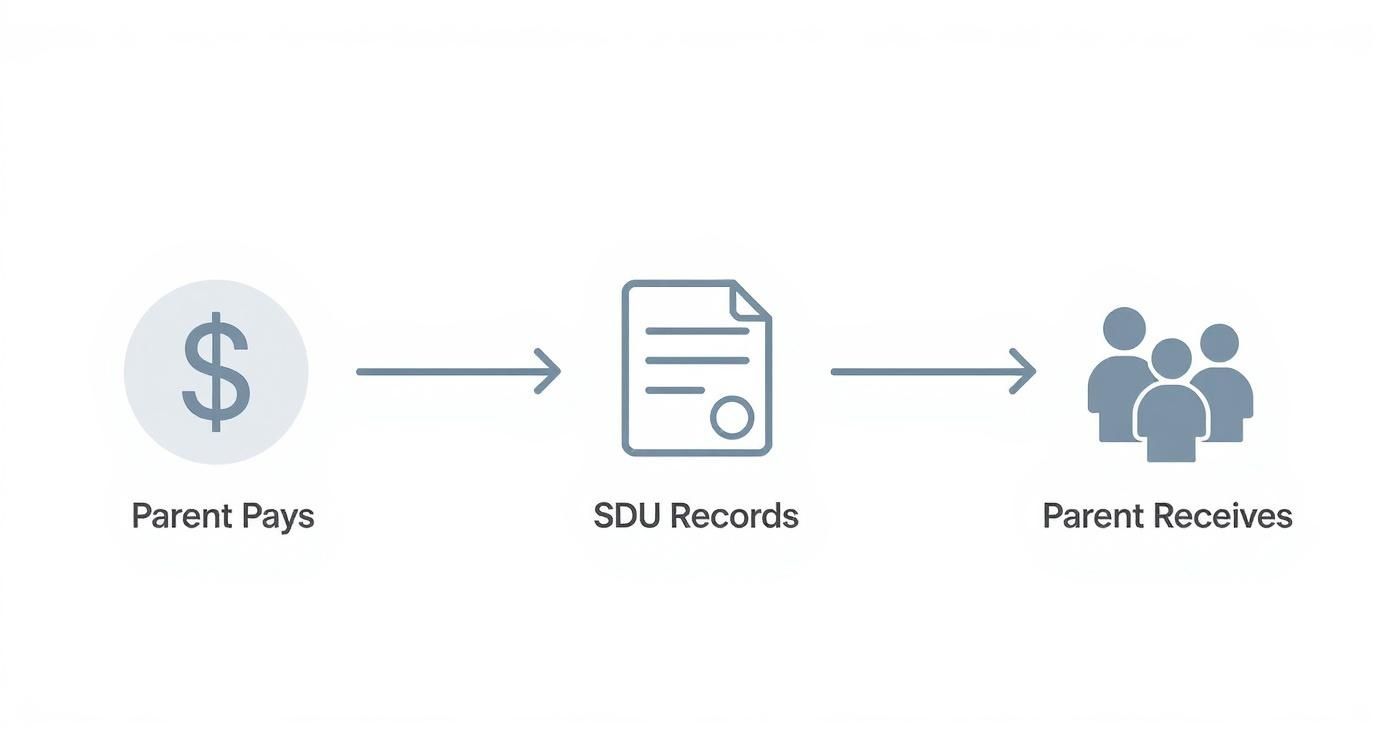
This simple three-step process ensures every payment is documented before it's distributed. It’s a system built for accountability.
For the Parent Making Payments (Obligor)
If you are the parent ordered to pay child support, you have several ways to send the money to the SDU. One thing is critically important: always use an official channel. Under the Texas Family Code, handing cash directly to the other parent is often treated as a "gift" and might not count toward your legal support obligation. Protect yourself by sticking to the approved methods.
Here’s a breakdown of the most common ways to send child support payments through the SDU.
Payment Options for Noncustodial Parents
| Payment Method | How It Works | Best For |
|---|---|---|
| Income Withholding | An Order to Withhold Income is sent to your employer. They deduct the support from your paycheck and send it directly to the SDU. | Parents with traditional W-2 employment. This is the court's preferred method because it's automatic and consistent, ensuring your child's needs are met on time. |
| Online Payments | You can make secure payments using Smart e-Pay on the Office of the Attorney General's (OAG) website. | Self-employed individuals, gig workers, or anyone who wants the convenience of paying with a card or bank transfer online. |
| Payment by Mail | Mail a check or money order to the SDU's central processing center in San Antonio. Always include your case number for proper credit. | Parents who prefer not to use online systems or who don't have a traditional employer for income withholding. |
While you have options, Texas courts strongly favor income withholding because it ensures payments are consistent and on time, which is ultimately in the best interests of the child.
For the Parent Receiving Payments (Obligee)
As the parent receiving support, you also have choices for how you get the money after the SDU processes it. The OAG will reach out to help you set up your preferred method so funds arrive quickly and securely.
You have two main options for getting paid:
- Direct Deposit: The SDU can deposit child support funds straight into your checking or savings account. This is the fastest and most reliable way to get the money, usually making it available to you almost immediately after processing.
- Texas Payment Card: If you don’t have a bank account or simply want to keep the funds separate, you can opt for the Texas Payment Card. It works just like a debit card—your support payments are automatically loaded onto it, and you can use it anywhere that accepts debit cards.
You’ll need to fill out a form from the OAG to make your choice. Once it’s set up, the process is seamless. It's also important to remember that a child support order can't be put in place until legal fatherhood is confirmed. You can learn more about this crucial first step in our detailed guide on establishing paternity in Texas.
The key takeaway for both parents is this: the system is designed to create a clear, official record. Using these established channels is the best way to protect yourself legally and ensure your child gets the financial support they deserve without confusion or conflict.
By understanding how this process works, you can manage your role in it effectively. The SDU brings a much-needed sense of structure and reliability to what can be a challenging part of co-parenting.
How to Track Payments and Access Your Records Online
One of the biggest sources of anxiety in any child support case is uncertainty. Is the payment on its way? Did it get processed? Thankfully, the days of waiting by the mailbox for a paper statement or spending your lunch break on hold are long gone.
The Texas Office of the Attorney General (OAG) provides powerful online tools that give you 24/7 access to your case information. This isn't just about convenience; it's about giving you peace of mind and direct control over your financial records from the comfort of your home.
Using the OAG’s Child Support Portal
Your main resource is the OAG's official Child Support Portal. The first step is to create an account, for which you'll need your case number and some other personal details. Once you're set up, you can log in anytime to get a full picture of your case.
Think of the portal as your central hub for everything related to your child support. Here's a quick look at what you can do:
- View your complete payment history: You can see a detailed log of every single payment made and received, along with dates and specific amounts.
- Check a recent payment's status: Find out instantly if a payment has cleared the Texas Child Support Disbursement Unit and when it was sent to you.
- Keep your info current: Moved recently or changed your phone number? You can update your contact details right in the portal to make sure the OAG can always reach you.
Below is a snapshot of the login page for the Child Support Interactive portal—this is your gateway to all your records.
The system is designed to be user-friendly and secure, allowing both parents to log in and see their own case details while maintaining privacy.
Requesting Official Payment Records
Sometimes, you need more than just a quick look at your payment history online. If you are preparing for a court hearing to modify or enforce your order, you will likely need an official, certified copy of your payment record. This isn't just a printout; it's a formal document that carries real weight in a legal setting.
A certified payment record from the SDU is undeniable proof of your payment history. In any legal proceeding, this official document can eliminate any "he said, she said" arguments over what has or hasn't been paid.
Getting these records is a straightforward process through the OAG. You can usually start the request right from the online portal or by getting in touch with the Child Support Division. This documentation is also a fantastic tool for personal budgeting and financial planning, giving you a completely accurate ledger of your obligations.
Our goal is to help you feel empowered and informed, not overwhelmed. Having direct access to your payment history puts the control back in your hands, building confidence and reducing the stress that often comes with managing child support.
Solving Common SDU Problems
Even a system as organized as the Texas Child Support Disbursement Unit can have its hiccups. When you’re counting on that money for your child’s needs, any delay or mistake can feel like a crisis. It’s completely normal to feel anxious, but the good news is there’s a clear path to getting answers and sorting things out.
The key is to be proactive. Instead of worrying, you can take specific, concrete steps to get the situation back under control. Knowing who to call, what to have ready, and how to follow up makes all the difference in turning a stressful problem into a solved one.
First Steps for Troubleshooting Payment Issues
Whether a payment is late, the amount seems off, or you’re running into trouble with your Texas Payment Card, your first call should always be to the Office of the Attorney General (OAG) Child Support Division. They are the official agency managing the SDU and can pull up your case details to see exactly what’s going on.
Before you call, take a moment to gather your information. Having these details handy will make the call go smoother and less stressful.
- Your 10-digit case number: This is the most important piece of information you'll need.
- The other parent’s full name: Have it ready in case they need to verify it.
- Specific payment details: Know the exact date and amount of the payment you're questioning.
- A clear summary of the problem: For example, "I can see the payment was withheld by the employer on the 15th, but it hasn't shown up in my account yet."
Common Problems and How to Address Them
Let’s walk through some of the most frequent challenges parents face and the practical steps you can take to resolve them.
Problem 1: A Payment is Delayed or Missing
It’s easy to panic when money you’re expecting doesn't show up. First, log into the OAG's online portal to see if the payment has been processed. If there's no sign of it, contact the OAG directly. They can track down whether the employer sent the payment and if there's a hold-up in their system.
Problem 2: The Payment Amount is Incorrect
If the amount you receive is different from what’s in your court order, there could be a few reasons. The paying parent's income might have changed, or it could simply be an administrative error. If the amount is consistently wrong, it may be time to seek a modification of your court order. A substantial change in circumstances can justify a legal adjustment, and our guide on how to modify child support in Texas can walk you through that process.
Problem 3: Issues with the Texas Payment Card
If your card is lost, stolen, or not working, you need to immediately call the card services number. You can find it on the back of your card or on the OAG's website. They are the ones who manage the card itself and can issue a replacement or fix any transaction problems.
Maintaining trust in the system is paramount. The efficient operation of the SDU is crucial for ensuring custodial parents receive timely payments and safeguarding against mismanagement. The state takes this responsibility seriously, although audits have sometimes identified areas needing improvement in security and system controls. For more details on this, you can read the full audit findings on the SDU's operations.
By taking these measured steps, you can tackle problems head-on. Remember, you have a right to get clear answers about the financial support your child depends on. Don't be afraid to reach out to the OAG and keep following up until your issue is completely resolved.
Key Takeaway: Your Family's Next Steps
Figuring out the Texas Child Support Disbursement Unit is a huge step in handling your family’s financial and legal responsibilities. The most important thing to remember is that the SDU is a tool—one designed for accuracy and transparency to protect both parents and, most importantly, the children caught in the middle. Whether you’re setting up your first payment or addressing an issue, the key is to keep clear records and stick to official channels.
When you use the SDU as intended, you are ensuring every dollar is accounted for and that you are meeting your legal obligations. This creates the stable financial ground your child needs to thrive. For a deeper dive into your specific duties, you can get a complete overview of Texas child support laws from our expert team.
It's easy to get lost in the numbers, but child support is just one piece of the puzzle. Creating a healthy, communicative co-parenting relationship is absolutely vital for your child's well-being. For families looking for more holistic support, it's worth it to explore co-parent counselling options as a next step.
Navigating all these systems can feel complicated and overwhelming. But you don’t have to do it alone. Having a trusted advocate in your corner can make all the difference, ensuring your rights are protected and that your child’s best interests always come first.
If you need help with a child custody or visitation case in Texas, our experienced attorneys can guide you every step of the way. Contact The Law Office of Bryan Fagan, PLLC today for a free consultation.